

The low taper mullet has become one of the most requested cuts at barbershops right now. It blends a clean, close fade with longer hair left at the back. That mix gives you a style that looks sharp up front and a little wild in back. Guys love it because it works with almost any hair type, from straight to curly. It’s also easier to maintain than people assume.
A low taper mullet isn’t the mullet from decades ago. This version feels modern, intentional, and much more wearable. The taper keeps things tidy near your hairline, while the back adds personality and movement. You don’t need a bold personality to pull one off. Whether you want a subtle low taper mullet or something bolder, your barber can shape it around your face and lifestyle. It’s flexible, low-maintenance, and genuinely fun to style.
WHAT IS A LOW TAPER MULLET
A low taper mullet combines a tight, close fade near the hairline with longer hair left at the back. The fade blends smoothly into the length instead of cutting off sharply.
This cut suits most face shapes and hair types, from straight to curly. It works for casual days, the office, or nights out, and needs only light upkeep.
FACE SHAPE AND HAIR TYPE GUIDE
Your face shape and hair texture shape how a low taper mullet looks on you. Round faces benefit from added height, while square jaws pair well with softer, textured layers.
Straight hair wears the cut sleek and controlled. Curly and wavy hair add volume and natural movement. Fine hair needs texturizing products, while thick hair holds shape with less effort.
VARIATIONS
1) Low Taper Mullet (Baseline)

This is the classic version, a close fade blending into moderate length at the back. Clean lines up front give it a polished, everyday foundation.
It suits oval and square faces best and works across most hair types. A light matte pomade keeps it tidy. Maintenance stays low, and it fits office or casual settings.
2) Low Taper Mullet Fade

Here, the fade sits slightly tighter than the baseline, giving sharper contrast near the skin. The back stays untouched, creating a bolder front-to-back difference.
Guys with thick or wavy hair get the most definition from this fade. A matte clay adds hold. It needs trims every month and suits weekend or social occasions best.
3) Low Taper Mullet Straight Hair

Straight hair gives this mullet a smooth, streamlined finish with minimal frizz. The back lies flat, so the length reads clean rather than shaggy.
It flatters oval and long face shapes especially well. A lightweight sea salt spray adds texture without weight. Upkeep is easy, and it works for both professional and relaxed settings.
4) Low Taper Mullet Curly Hair
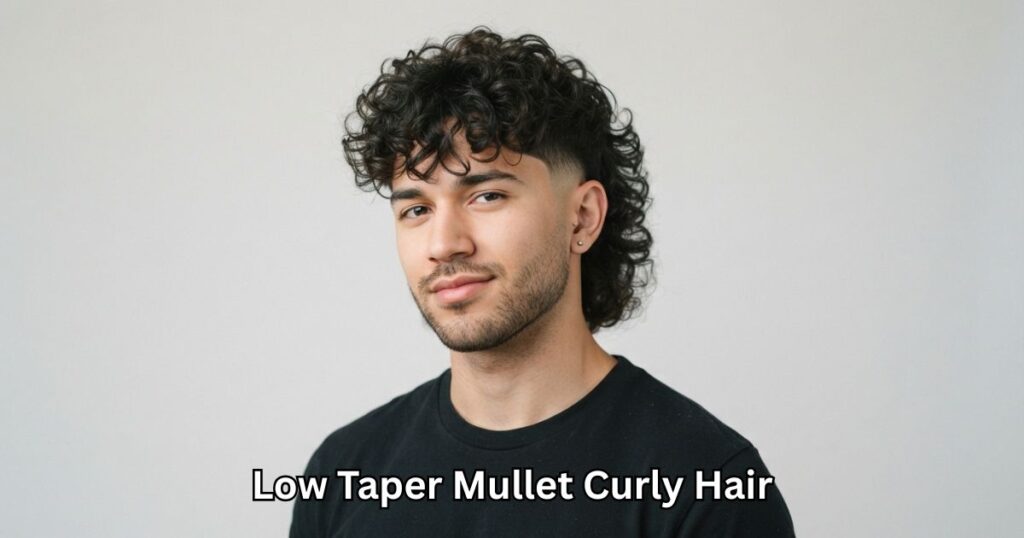
Curls turn this cut into something with serious volume and bounce. The top puffs naturally, while the back forms loose, shaggy layers full of movement.
Round and heart-shaped faces balance well against the extra height. A curl-defining cream keeps shape without crunch. Maintenance runs moderate, and it shines at casual gatherings or creative workplaces.
5) Low Taper Mullet Wavy Hair

Wavy hair sits somewhere between straight and curly, giving this mullet effortless texture. The waves add natural separation without needing much product.
Square and oval faces suit this version particularly well. A matte pomade or texturizing spray enhances the wave pattern. Upkeep stays minimal, making it a strong pick for daily, low-effort styling.
6) Modern Mullet Taper Fade
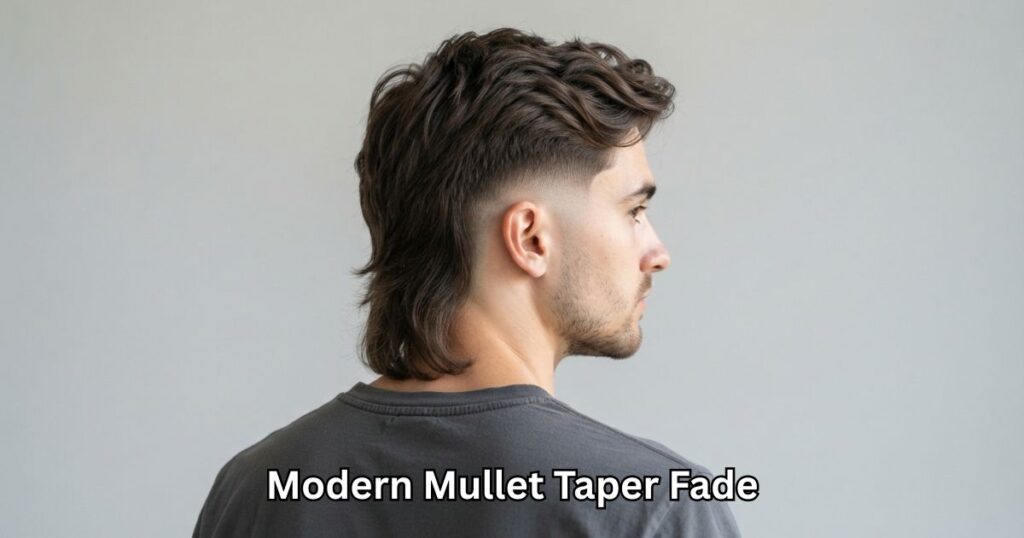
This variation leans into sharper contrast, with a crisp taper fade meeting noticeably longer back length. It feels bolder and more fashion-forward than traditional cuts.
It suits confident stylers with oval or square faces and thicker hair. Styling clay defines the top. Expect monthly trims, and save this look for social events or creative environments.
7) Taper Mullet Fade
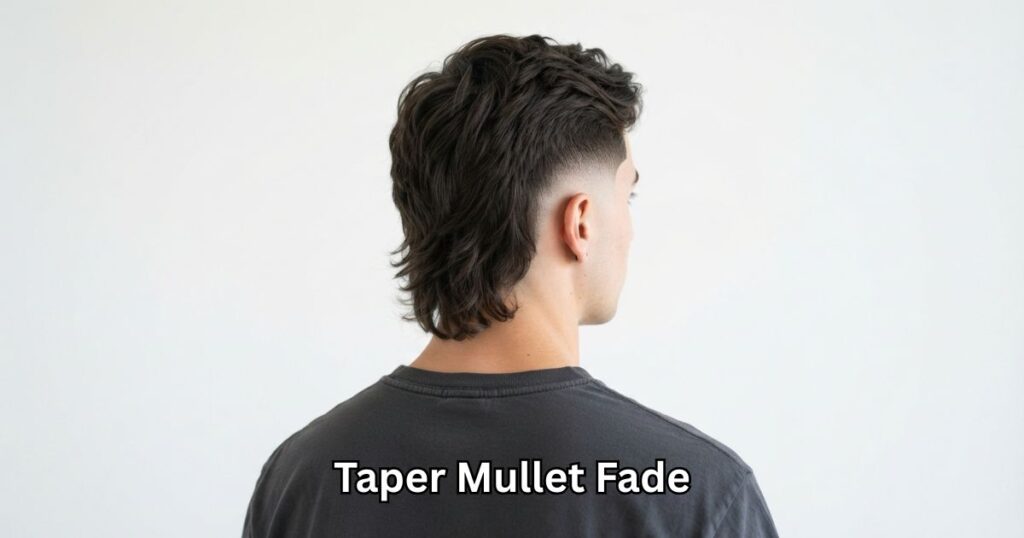
A close cousin to the modern version, this cut keeps the fade tighter and the back a touch shorter overall. It’s a subtler, more wearable take.
Most face shapes handle this well, especially with straight or wavy hair. A light pomade finishes the style. Maintenance is easy, and it transitions comfortably between work and weekend plans.
8) Mid Taper Mullet
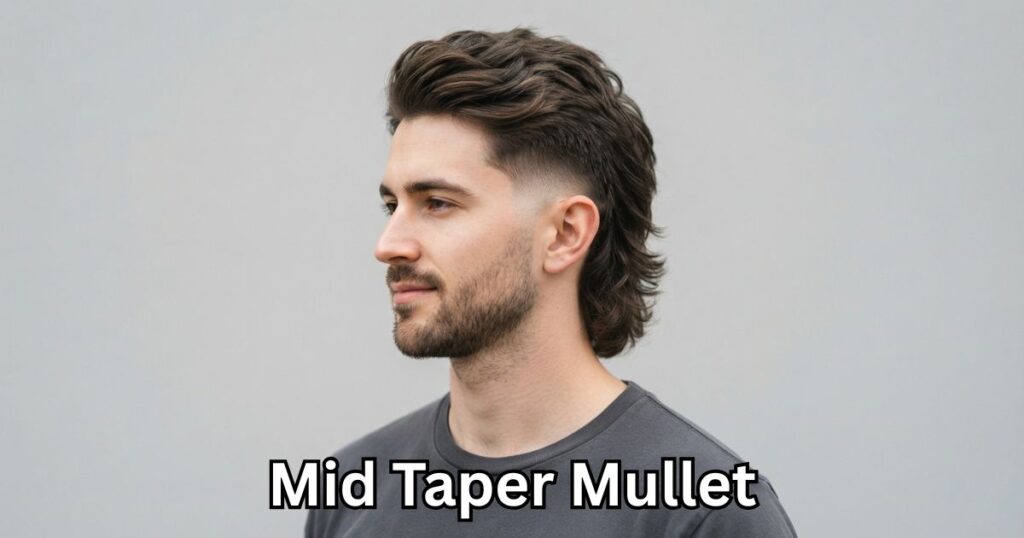
Starting the fade slightly higher than a low taper, this version adds a bit more contrast on the sides while keeping the back length intact.
Round faces gain extra vertical balance from the higher start point. Thick and wavy hair holds the shape well. Trims every five weeks keep it sharp, fitting both casual and semi-formal settings.
9) High Taper Mullet
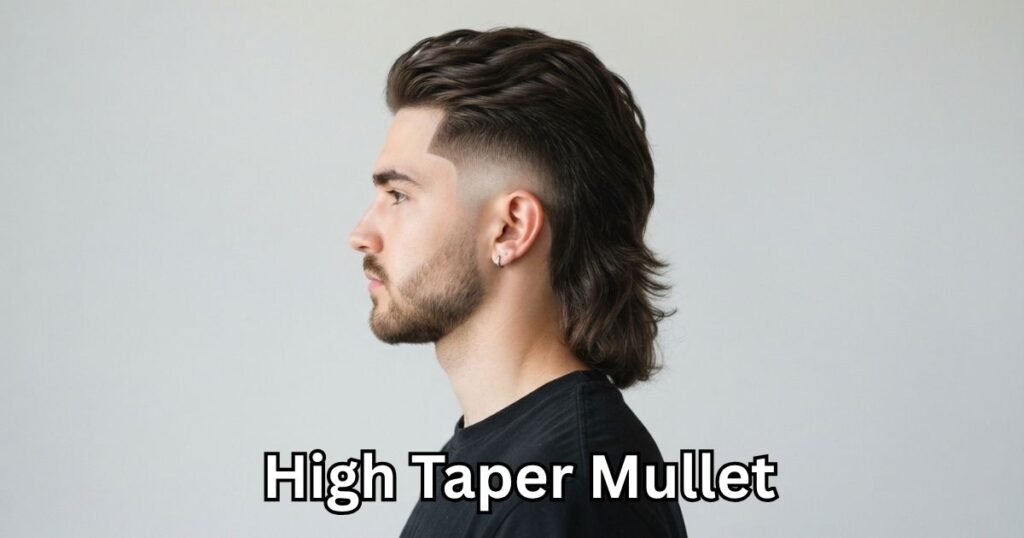
This is the boldest take, with the fade climbing high up the sides before meeting a longer, fuller back. Contrast is the whole point here.
Oval and square faces carry the drama best. Curly or thick hair adds impact up top. It demands frequent trims and suits statement-making occasions rather than conservative workplaces.
10) Tapered Mullet

A broader term covering any mullet with a gradual, blended fade rather than a blunt cut. It’s less about specific length and more about smooth transitions.
This works across nearly every face shape and hair type. Products vary by texture, though a matte finish suits most. Maintenance depends on chosen length, making it a flexible everyday option.
11) Short Low Taper Mullet
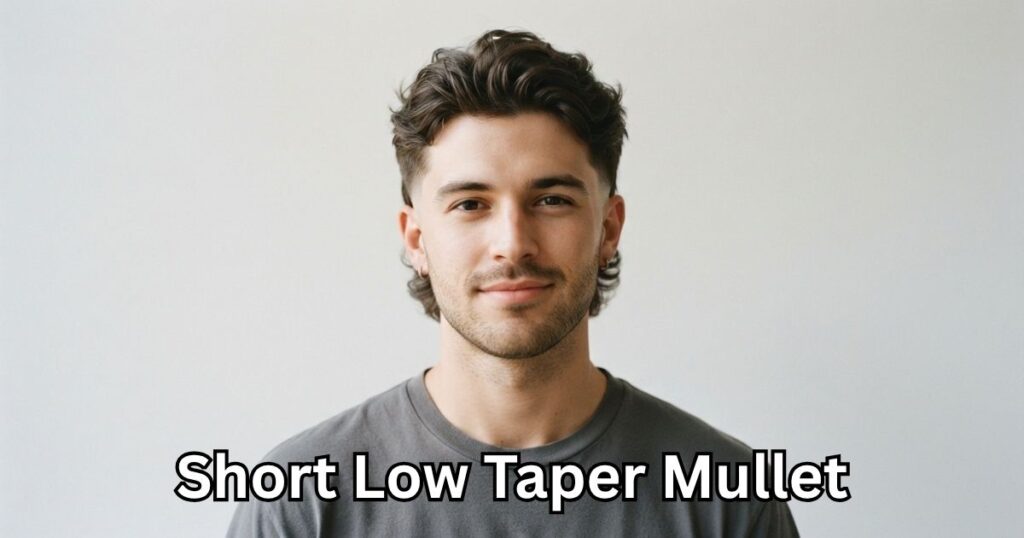
A subtler entry point, this version keeps the back length minimal while still nodding to mullet style. It’s ideal for first-timers testing the cut.
Long and oval faces suit the compact silhouette. Fine hair benefits from this shorter approach. Upkeep stays low, and it works comfortably in professional settings without drawing too much attention.
12) Low Taper Mullet Middle Part
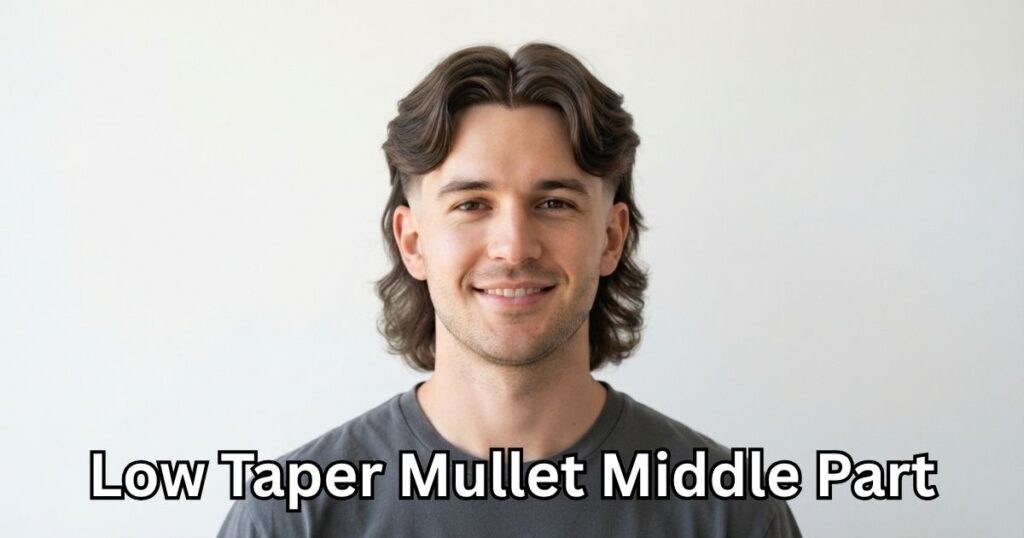
Adding a middle part splits the top into two soft sections, giving a laid-back, slightly retro edge to the classic shape.
Square and heart-shaped faces balance nicely with the center part. Straight or wavy hair holds the part best. A light hold spray maintains it, and it suits casual, everyday occasions easily.
13) Low Taper Mullet Flow
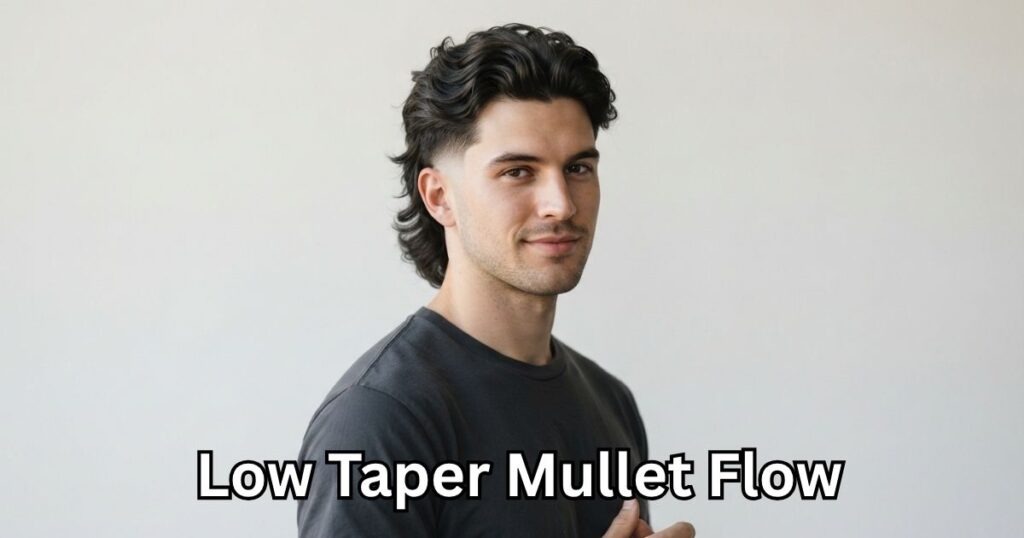
This version leans into longer, swept-back top hair that flows into the mullet’s back length, creating one continuous, wind-blown silhouette.
Oval faces handle the extra length best. Wavy or curly hair enhances the flowing effect naturally. A light cream tames flyaways. Expect moderate upkeep, suited for casual or athletic-inspired styling.
14) Men’s Low Taper Mullet
A broad, everyday version built for versatility rather than drama. It balances a clean taper with a manageable, non-flashy back length.
It suits nearly any face shape and adapts across hair types with ease. A basic matte pomade covers most styling needs. Low maintenance makes it practical for work, school, or daily wear.
15) Low Taper Mullet Fade for Wavy, Curly, Straight

This category simply highlights how the same cut shifts across textures, sleeker for straight hair, fuller for curly, and textured for wavy strands.
Every face shape finds a version that fits within this group. Product choice shifts with texture, from sea salt spray to curl cream. Maintenance varies, but all suit versatile, everyday occasions.
HOW TO STYLE IN THREE STEPS
Start with slightly damp hair and apply a small amount of product, whether that’s clay, pomade, or sea salt spray. Work it evenly from roots to ends.
Next, blow-dry on low heat while shaping the top with your fingers. Finish by smoothing the back layers into place, letting natural texture show through for a lived-in result.
Also Read: Boys Mullet Haircut Guide: 12 Best Styles and Fades for 2026
BARBER INSTRUCTIONS
Bring a reference photo and use specific language, since “mullet” alone means different things to different barbers. Mention taper height, fade tightness, and desired back length clearly.
Ask for a low taper starting near your hairline, blended sides, and layered back length. Request textured, not blunt, ends up top. Specific requests prevent disappointing, hard-to-fix results.
CARE AND UPKEEP
Regular trims every four to six weeks keep the taper crisp and prevent the back from looking neglected rather than intentional. Skipping visits blurs the whole shape quickly.
Wash with a gentle shampoo two to three times weekly, and condition the longer back regularly. Trim split ends often, and use lightweight products to avoid weighing down fine or thin hair.
FINAL THOUGHTS
This guide to the low taper mullet covers everything you need before your next barber visit. It’s a cut that fits almost any face shape or hair type. You can keep it simple or try a bolder version. Either way, it stays easy to style and maintain.
A low taper mullet gives you the best of both worlds. Clean and sharp up front. Fun and expressive in back. Talk to your barber, bring reference photos, and don’t skip your trims. Once you try a low taper mullet, you’ll understand why so many guys keep coming back to it.
FAQs
What is a low taper mullet?
A low taper mullet blends a close fade near your hairline with longer hair left at the back. It looks clean up front and playful in back.
Who does a low taper mullet suit?
Almost anyone can wear a low taper mullet. It works well with straight, wavy, or curly hair, and flatters most face shapes when your barber adjusts the length.
How often should you trim a low taper mullet?
Plan on visiting your barber every four to six weeks. This keeps the fade sharp and stops the back from looking overgrown or messy between appointments.
What products work best for a low taper mullet?
Sea salt spray adds texture for straight or wavy hair. Matte pomade or clay gives curly hair definition and hold without looking greasy or weighed down.
Is a low taper mullet hard to maintain?
Not really. A low taper mullet is fairly low-maintenance. Regular trims, light styling products, and basic care keep it looking sharp with minimal daily effort.

Serena Luna, the voice behind JournalHair. I share the latest hairstyle ideas, haircut trends, and easy hair inspiration to help you find your perfect look every day.
