

A mid blowout taper gives you the best of both worlds: clean tapered sides and plenty of volume on top. The mid blowout taper starts around the middle of the sides, then blends smoothly toward the temples and neckline. Up top, the hair stays fuller so you can create that lifted, blow-dried shape. It works with straight, wavy, curly, and coily hair, making it a flexible choice for men who want texture without losing structure.
The mid blowout taper also gives you plenty of styling freedom. You can wear it fluffy and textured, sweep it into a fringe, or slick it back for a sharper finish. The key is keeping enough length on top for volume. With the right haircut, blow dryer, and styling product, your mid blowout taper can look fresh without turning your morning routine into a full-time job.
What Is a Mid Taper Fade Blowout?
A mid taper fade blowout combines neatly graduated sides with a tall, airy top dried upward. The contrast feels polished yet relaxed, so barbers and guys everywhere really love it.
This section breaks down the haircut piece by piece. You will learn how the taper, fade and blowout work together and why each element matters before sitting in the chair.
What Makes It a Blowout?
A blowout means drying the top with heat and a brush or fingers, lifting roots upward. The result is height, fullness and a soft, cloud-like shape, rather than flat.
Without that dried-in lift, the same cut simply looks like a taper. Direction, tension and airflow from the dryer are what create the signature volume that most people notice first.
Where Does the Mid Taper Start?
A mid taper begins roughly at the temple, around an inch above the ear. From there the hair shortens gradually down toward the neckline and sideburns in a smooth line.
That placement sits between a subtle low taper and a dramatic high one. It keeps the look balanced, flattering and suitable for nearly any head shape and your daily routine.
What Does a Mid Taper Fade Blowout Look Like?
Picture short, softly faded sides that melt upward into a full, lifted top. The edges stay tidy while the crown carries height, movement and visible texture from every angle.
Side views show a clean gradient, and front views reveal a rounded, fluffy silhouette. Hair rarely lies flat, which gives the whole cut a lively, youthful and thoroughly modern energy.
Mid Taper vs. Mid Blowout Taper
A standard mid taper describes only the sides and back, whatever the top is doing. It can be flat, combed, spiky or cropped without ever changing what it is called.
The mid blowout taper specifically adds a dried, lifted top. Choose it when volume is the priority and you want the taper acting as a supporting frame for that fullness.
25 Best Mid Taper Fade Blowout Styles
These twenty-five looks cover every texture, length and personality, from conservative to bold. Each one builds on the same mid taper foundation with a different top and a styling finish.
Browse the groups below, save the photos you like, and note the details barbers will ask about. Length, part and texture all matter when finally choosing your favorite look today.
Classic Mid Taper Blowouts
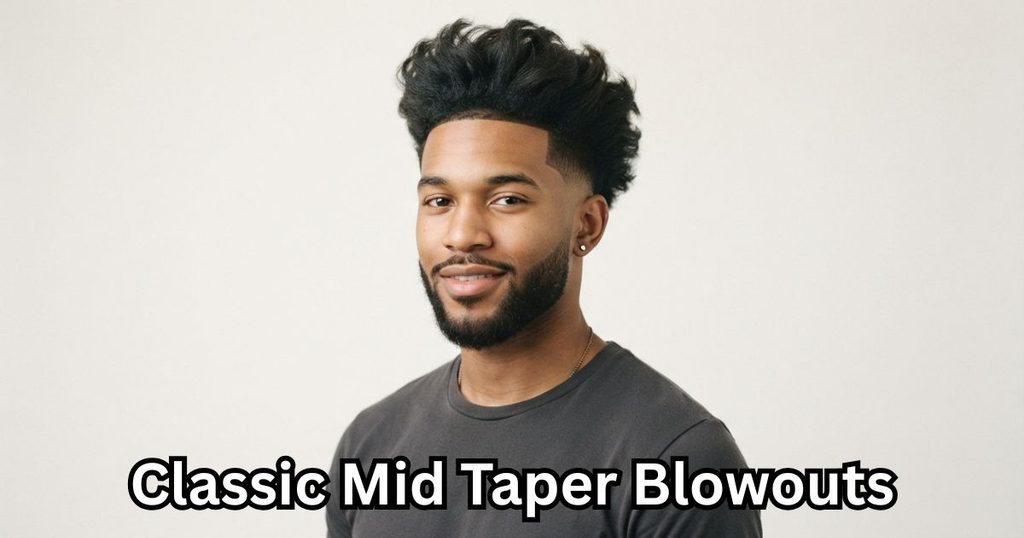
1. Classic Mid Taper Fade Blowout
The classic mid taper fade blowout keeps the sides clean while pushing longer hair upward and outward. It creates balanced volume with a polished shape that feels masculine and versatile.
This cut suits oval, square, and round faces, especially with straight or wavy hair. Use volumizing mousse and lightweight clay. Moderate maintenance works for school, work, dates, and weekends.
2. Edgar Blowout Mid Taper
The Edgar blowout mid taper combines a sharp front edge with lifted volume behind it. The contrast creates a structured silhouette while keeping the overall haircut youthful, bold, and textured.
It suits oval, round, and square faces with straight or thick wavy hair. Apply matte clay sparingly for control. Regular touch-ups keep the sharp finish ready for casual outings or parties.
3. Textured Mid Taper Blowout
The textured mid taper blowout uses separated strands, airy height, and natural movement across the top. Tapered sides keep the messy texture controlled while giving the haircut definition and shape.
Oval, square, and diamond faces suit this style, especially with wavy or thick hair. Sea salt spray adds texture, while lightweight clay creates separation. Maintenance stays moderate for everyday wear.
4. Fluffy Mid Taper Blowout
The fluffy mid taper blowout creates soft, rounded volume across the top while keeping the temples and neckline neatly tapered. Its airy finish looks youthful without appearing overly styled.
Round, oval, and oblong faces can wear this shape with straight or wavy hair. Volumizing mousse builds lift, while styling cream keeps strands soft. Moderate upkeep suits casual occasions.
Blowout Styles By Hair Texture
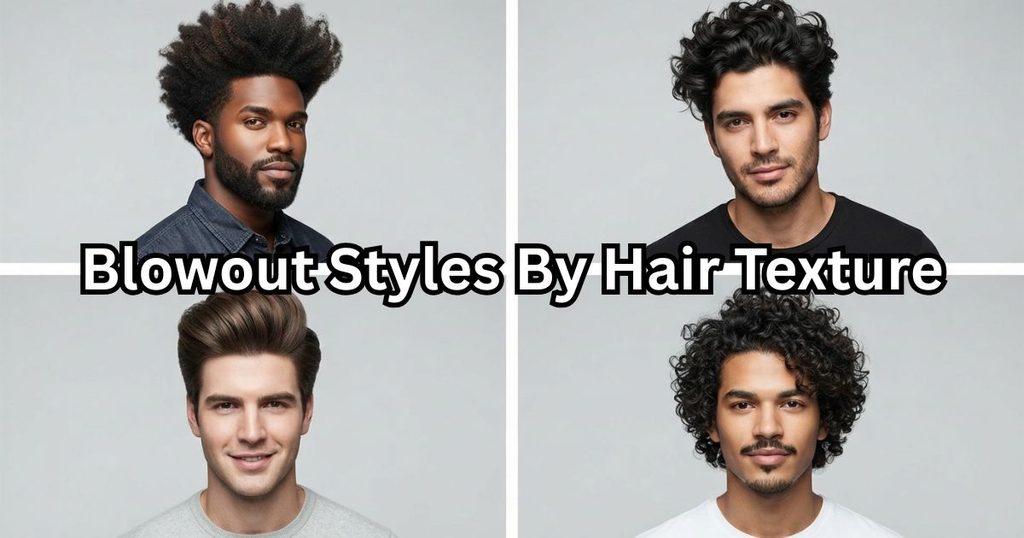
5. Straight Hair Mid Taper Blowout
Straight hair gives this mid taper blowout a clean, airy appearance with strong lift. The longer top can move upward, backward, or outward while tapered sides maintain structure and balance.
Oval, square, and diamond faces work especially well with straight hair. Use volumizing mousse before blow-drying, then lightweight clay for definition. Moderate maintenance makes it practical for workdays and weekends.
6. Wavy Mid Taper Blowout
The wavy mid taper blowout combines natural bends with lifted volume, creating movement without looking overly styled. Tapered sides sharpen the outline while allowing the waves to remain noticeable.
Oval, square, and heart-shaped faces suit this version, particularly with medium-density waves. Sea salt spray enhances texture, while styling cream controls dryness. Moderate maintenance makes it ideal for dates and weekends.
7. Curly Mid Taper Blowout
The curly mid taper blowout leaves defined curls longer across the top while gradually cleaning the temples and neckline. The result delivers noticeable volume without hiding your natural curl pattern.
Oval, square, and round faces can wear this style when crown height stays balanced. Curl cream defines strands, while a diffuser builds volume. Regular taper touch-ups keep it polished daily.
8. Afro Blowout Mid Taper
The Afro blowout mid taper keeps natural volume prominent while shaping the temples, sides, and neckline into a cleaner outline. The result feels bold, balanced, textured, and confidently expressive.
Oval, round, square, and oblong faces can suit this style depending on top height. Curl cream maintains moisture and definition. Moderate upkeep focuses on taper touch-ups and shape control.
9. Mid Taper Blowout For Thin Hair
A mid taper blowout for thin hair uses strategic length and upward styling to make the top appear fuller. Tapered sides create contrast without removing unnecessary density from delicate strands.
Oval, diamond, and slightly round faces benefit from added height. Volumizing mousse builds lift, while texture powder provides body without heaviness. Keep maintenance moderate with regular trimming around the sides.
Mid Taper Blowout With Different Top Styles
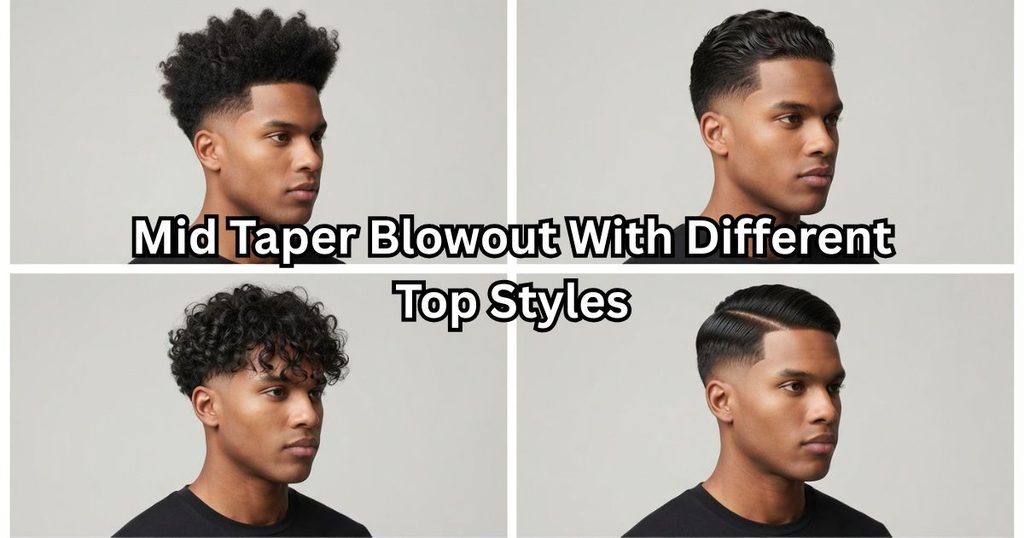
10. Pompadour Mid Taper Blowout
The pompadour mid taper blowout pushes the top upward and backward, creating rounded height at the front. Tapered sides prevent the dramatic volume from making the haircut appear overly bulky.
Oval, square, and oblong faces suit this shape with thick straight or wavy hair. Volumizing mousse supports height, while medium-hold pomade controls movement. Daily styling suits polished occasions.
11. Quiff Mid Taper Blowout
The quiff mid taper blowout builds noticeable height toward the front while keeping the remaining top textured and flexible. Its lifted shape looks sharp without becoming excessively formal or rigid.
Oval, square, and round faces suit the balanced height, especially with straight or wavy hair. Mousse creates volume, while matte clay provides hold. Moderate styling works for school, work, and dates.
12. Faux Hawk Mid Taper Blowout
The faux hawk mid taper blowout concentrates volume through the center, creating a pointed silhouette without completely shaving the sides. Tapered edges make the dramatic shape easier to wear daily.
Round and square faces benefit from vertical center volume, while oval faces offer flexibility. Sea salt spray adds texture, then matte clay defines the ridge. Moderate upkeep suits parties and weekends.
13. Fringe Mid Taper Blowout
The fringe mid taper blowout leaves the front falling toward the forehead while the remaining top receives airy volume. Tapered sides provide contrast, creating a softer yet structured overall silhouette.
Oval, diamond, and oblong faces suit this shape because fringe can reduce forehead height. Straight or wavy hair works best. Styling cream controls movement, while moderate maintenance keeps everything balanced.
14. Flipped Fringe Blowout
The flipped fringe blowout sweeps the front upward and slightly backward, creating movement around the forehead while preserving the soft, airy volume associated with a classic blowout hairstyle.
Oval, round, and heart-shaped faces work well with this shape. Straight or wavy hair responds easily to mousse and blow-drying. Moderate maintenance makes it suitable for school, dates, and weekends.
15. Side Part Mid Taper Blowout
The side part mid taper blowout combines a defined part with lifted hair flowing upward and outward. Tapered sides create a neat silhouette while keeping the top visibly full and textured.
Oval, square, and diamond faces pair naturally with this style. Straight or wavy hair holds the part well. Use mousse and light pomade for control. Moderate upkeep suits offices and dinners.
16. Slicked-Back Mid Taper Blowout
The slicked-back mid taper blowout pushes the longer top away from the face while maintaining volume near the roots. Tapered sides keep the overall finish sharp, clean, and balanced.
Oval, square, and oblong faces suit this shape with straight or wavy hair. Lightweight pomade provides control without stiffness. Daily styling takes effort, while moderate maintenance suits offices, dinners, and formal events.
17. Middle-Part Mid Taper Blowout
The middle-part mid taper blowout divides the top evenly, allowing both sides to fall outward with soft volume. Tapered sides keep the center part looking clean instead of overly bulky.
Oval and oblong faces suit this balanced shape, while round faces benefit from added height. Straight or wavy hair creates the easiest part. Sea salt spray and styling cream provide natural movement.
Bold And Modern Variations
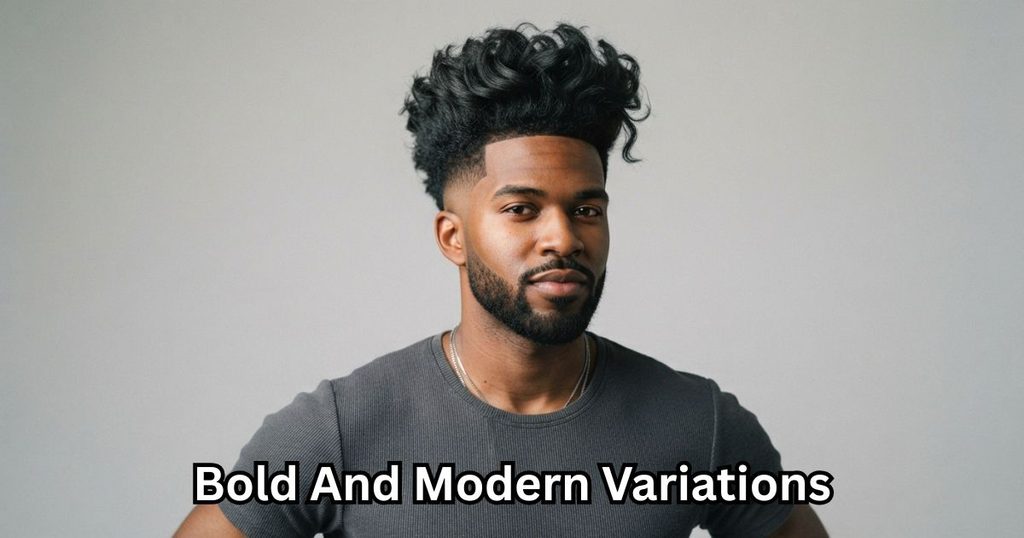
18. Mid Taper Burst Fade Blowout
The mid taper burst fade blowout adds curved tapering around the ears while preserving substantial top volume. This creates a dramatic silhouette that feels more distinctive than a traditional mid taper.
Round, oval, and square faces can wear this variation with curly, wavy, or thick straight hair. Texture cream or curl cream enhances movement. Moderate maintenance keeps the curved taper defined.
19. Mid Taper Blowout With Design
A mid taper blowout with design adds a shaved line, geometric detail, or freestyle pattern to the tapered area. The design transforms a familiar haircut into a personalized statement.
Oval, square, and round faces suit this bold option across different hair textures. Mousse, cream, or clay can style the top. Frequent touch-ups preserve the design, making it perfect for parties.
20. Blonde Mid Taper Blowout
The blonde mid taper blowout combines lighter color with lifted volume, making the top immediately noticeable. Tapered sides create contrast while the brighter shade emphasizes texture and movement.
Oval, square, and diamond faces work well with this variation. Straight and wavy hair showcase the color clearly. Use color-safe products and lightweight styling cream. Higher maintenance suits events and social settings.
21. Disconnected Mid Taper Blowout
The disconnected mid taper blowout creates a noticeable break between the fuller top and shorter sides. That contrast gives the haircut a stronger, fashion-forward silhouette with plenty of visual impact.
Oval, square, and oblong faces handle this shape well with thick straight, wavy, or curly hair. Matte clay emphasizes separation without heaviness. Moderate upkeep suits weekends, parties, and trend-focused environments.
22. Undercut Blowout Mid Taper
The undercut blowout mid taper combines a fuller upper section with significantly shorter sides, creating dramatic contrast around the head. The lifted top becomes the main visual feature immediately.
Oval, square, and oblong faces usually suit this bold shape, especially with thick straight or wavy hair. Volumizing mousse builds height, while matte clay adds definition. Regular maintenance preserves contrast.
23. Drop Fade Blowout
The drop fade blowout curves downward behind the ears, creating a rounded transition that follows the head shape. A fuller top adds volume while the back feels carefully sculpted and clean.
Oval, round, and square faces can benefit from this curved outline. Straight, wavy, curly, and coily hair can work with proper adjustments. Choose mousse or curl cream based on texture.
24. Heavy Crown Blowout
The heavy crown blowout keeps extra length around the crown, creating fullness toward the back of the head. The mid taper controls the lower sections while preserving noticeable volume above.
Oval, oblong, and square faces benefit from balanced crown height. Thick, wavy, and curly hair support this shape particularly well. Volumizing mousse and light clay add lift. Moderate upkeep works well.
25. High-Volume Mid Taper Blowout
The high-volume mid taper blowout pushes maximum height through the top while keeping the temples and neckline clean. The result creates a dramatic, youthful shape with strong visual presence.
Oval and oblong faces suit substantial height, while round faces should keep volume controlled. Thick straight, wavy, curly, and coily hair can create fullness. Mousse and texture powder provide lasting lift.
Which Mid Taper Blowout Works Best for Your Hair Type?
Hair type decides how much lift you can expect, how long the top must be, and which products work. Start here before choosing any single one of the styles above.
Each texture below comes with realistic expectations, ideal lengths and product suggestions. Treat them as starting points, then fine-tune with your barber based on density, growth patterns and any cowlicks.
Straight Hair
Straight hair gives the smoothest, sleekest blowout, though it can fall flat quickly. Leave three to four inches on top and rely on root lift to keep the shape longer.
Volumizing mousse, a vent brush and cool air setting make the difference. Pair it with a quiff, side part or pompadour, and expect trims about every three weeks or so.
Wavy Hair
Wavy hair already has body, so the blowout simply amplifies it. Aim for a slightly longer top, around four inches, and let the natural bends add movement and extra texture.
Sea salt spray, light cream and a diffuser enhance the pattern without frizz. Textured fringes, middle parts and side parts suit wavy hair, with trims needed roughly monthly or sooner.
Curly Hair
Curly hair offers natural volume, so the blowout focuses on stretching and shaping rather than adding lift. Ask for four to five inches on top to account for curl bounce.
Curl cream, leave-in conditioner and a diffuser define coils. Burst tapers, fringes and curly quiffs look great, and moisture matters more than frequency, though monthly trims keep the shape tidy.
Coily Hair
Coily hair shrinks dramatically, sometimes losing half its length when dry. Request a longer top, then use a blowout or stretching method to reveal the true volume and final shape.
Leave-in conditioner, shea butter and an afro pick keep strands soft and lifted. Afro blowouts, drop fades and sharp edges look striking, with trims or line-ups roughly every two weeks.
Fine or Thin Hair
Fine hair needs strategic help, since long strands collapse and thin areas show easily. Keep the top moderate, use layers for support, and dry the roots first for lasting lift.
Lightweight mousse, volumizing powder and a cool-shot finish avoid heaviness. Textured quiffs, fringes and side parts are flattering, and trims every three weeks prevent the shape looking tired or thin.
Which Mid Taper Blowout Suits Your Face Shape?
Face shape influences where volume should sit, how high the taper should go, and which fringe works. A few simple adjustments can balance proportions beautifully without changing the whole haircut.
Check your shape in a mirror with hair pulled back, then compare it with the guides below. Remember that jawline, forehead height and hairline all influence the final visual result.
Oval Face
Oval faces are balanced, so nearly every mid taper blowout works. You can experiment freely with pompadours, quiffs, fringes and parts without worrying about correcting proportions or hiding any angles.
Moderate height keeps the symmetry intact, while extreme volume slightly lengthens the face. Choose a mid taper height at the temple, then adjust top length according to your daily lifestyle.
Round Face
Round faces gain definition from height and angular lines. Build volume at the crown, keep the sides tight, and consider a quiff, pompadour or faux hawk to elongate the face.
Avoid wide, side-heavy volume, which makes the face look rounder. A slightly higher taper and a sharp part add structure, and a textured top prevents the cut looking overly severe.
Square Face
Square faces already have strong jawlines, so softer textures on top create balance. Choose a textured fringe, loose waves or a relaxed side part rather than rigid, geometric, heavy styling.
A mid taper complements the angles nicely, particularly with a slightly blurred temple fade. Moderate volume works well, and extremely boxy tops can quietly exaggerate the jaw and forehead corners.
Diamond and Oblong Faces
Diamond faces need softness at the forehead and jaw, while oblong faces need reduced height. Fringes, side-swept volume and moderate tops balance both shapes without making the face appear narrower.
Add width through the sides of the top instead of straight height, and keep the taper subtle. Middle parts, flipped fringes and textured quiffs usually look sharp on these proportions.
How to Ask Your Barber for a Mid Taper Fade Blowout
Clear communication prevents most haircut disappointments. Knowing the vocabulary, bringing references and describing the top separately from the sides gives your barber exactly what is needed to deliver the result.
The sections below cover scripts, taper height, top length, edge preferences, guard numbers and photos. Use whichever pieces fit your situation, and speak up early if anything looks slightly off.
The Exact Barber Script
Try saying: mid taper fade on the sides and back, starting at the temple, blending into a natural neckline. Leave the top around four inches, textured, for a blowout style.
Add: keep the temple soft, no harsh line, and clean the edges lightly. Finish by asking the barber to show you how to blow-dry the top before leaving the chair.
Tell Your Barber Where You Want the Taper to Start
Point to the spot, usually the temple or just above the ear. Saying mid taper without showing the height can lead to results that sit higher or lower than expected.
If you want something safer, request a slightly lower mid taper and ask the barber to check progress together. Starting conservative is smart because hair cannot be added back later.
Choose Your Top Length and Volume
For a proper blowout, aim for three to five inches on top, longer for curls and coils. Shorter tops still lift, but they produce a tighter, noticeably less dramatic shape.
Tell your barber how much volume you want, using words like subtle, medium or maximum. Request point-cutting or texturizing if the top feels heavy, flat or difficult to manage daily.
Natural Edge or Sharp Edge-Up?
A natural edge softens the hairline and grows out gracefully, while a sharp edge-up creates crisp geometry. Decide based on your workplace, your grooming routine and how often you visit.
Sharp lines look dramatic but fade within days, requiring frequent touch-ups. Natural edges are forgiving, which makes them ideal for beginners and anyone avoiding weekly barber visits or constant trips.
Guard Numbers and Lengths to Discuss
Most mid tapers begin around a number two or three guard and blend down to a one or zero. Lengths vary, so describe the look instead of relying on numbers.
Discuss the top using inches or finger widths, as guards only apply to clippers. Mention if you want scissor-over-comb work, because it gives softer blending than most clipper-only fades alone.
Reference Photos vs. Explaining the Cut
Photos communicate length, texture and mood faster than words. Choose pictures showing the front, side and back, and ideally someone whose hair type and density very closely resemble your own.
Words still matter, so pair photos with a short script describing taper height, top length and edge style. The combination removes guesswork and protects against mismatched expectations between both parties.
How to Style a Mid Taper Fade Blowout at Home
Styling takes about ten minutes once you learn the routine. The key is working with damp hair, drying the roots first, and using products sparingly to protect volume and movement.
Below you will find the basic routine, texture-specific tweaks, product advice, volume tricks and ways to prevent buildup. Practice a few times and your blowout will feel almost entirely automatic.
Basic Step-by-Step Styling Routine
Towel-dry until damp, apply mousse from roots to ends, then blow-dry upward and back using a round or vent brush. Dry the front first to set the direction and shape.
Finish with a cool-air blast to lock the shape, then rub a pea-sized amount of clay between your palms and work it through the top. Mist with light flexible spray.
Styling Straight, Wavy, Curly and Coily Hair
Straight hair needs strong root lift, wavy hair benefits from diffusing, curly hair wants cream and gentle stretching, and coily hair thrives on moisture before blow-drying with a comb attachment.
Work in sections, keep heat moderate, and avoid brushing dry curls aggressively. A heat protectant helps every texture, especially if you blow-dry daily or often use a really high-temperature setting.
Choosing the Right Product for Your Hair Type
Fine hair prefers mousse and powder, thick hair handles paste and clay, wavy hair likes sea salt spray, and curly or coily hair needs cream, gel or daily leave-in conditioner.
Match hold to the occasion: light products for relaxed days, stronger formulas for events. Always choose matte finishes if you dislike shine, and try small amounts before adding any more.
How to Create Maximum Blowout Volume
Dry the roots against their natural growth direction, lifting with your fingers or a brush. Use the nozzle to focus airflow and apply tension for maximum height and lasting fullness.
Add volumizing powder at the roots after drying, then finish with cool air. Avoid over-brushing, since too much combing flattens the structure you just created and weakens the overall hold.
How to Avoid Using Too Much Product
Start with a pea-sized amount, warm it fully in your palms, and apply from the back forward. Product applied unevenly at the front often creates greasy, flat, heavy-looking patchy sections.
If the top feels sticky or looks shiny, rinse and restyle with half the amount. Clarifying shampoo once a week prevents buildup that weighs down volume and dulls natural texture.
How to Maintain a Mid Taper Fade Blowout
Maintenance combines regular barber visits with simple home habits. A well-cared-for blowout stays fuller, sharper and healthier, and the taper keeps its crisp gradient for longer between each barber appointment.
The next sections explain touch-up timing, keeping the top full, protecting the edges and growing out gracefully. Small routines add up, saving time and money across the entire month ahead.
How Often Do You Need a Touch-Up?
Most guys need a taper refresh every two to four weeks, depending on how sharp they like the sides. Higher contrast looks fade faster and call for much shorter intervals.
Hair growth averages half an inch monthly, though it varies. Book your next appointment before leaving the shop, and schedule neckline cleanups sooner if your hair grows quite quickly there.
Keeping the Top Looking Full
Wash with volumizing shampoo, condition only the lengths, and avoid heavy oils at the roots. Sleeping on a satin pillowcase reduces friction, frizz and flattening, and preserves shape between washes.
Trim the top every four to six weeks to remove split ends and keep density even. Refresh volume mid-week with a quick blast of dry heat and a little powder.
Maintaining the Taper and Edge-Up
Use a trimmer to tidy the neckline between visits, but avoid touching the taper itself. Small cleanups extend sharpness, while overzealous trimming can ruin the blend and create patchy gaps.
Moisturize the scalp, protect it from sun, and exfoliate gently to prevent ingrown hairs. Healthy skin makes faded sides look cleaner, and edge lines stay visible for longer after cuts.
Growing Out the Cut Between Appointments
As the taper grows, the gradient softens and the top gets heavier. Embrace a slightly shaggy phase, then use texture products to disguise uneven areas until your next barber visit.
If you plan a longer grow-out, ask for fewer taper layers so the sides blend smoothly into longer hair. This approach works well for transitioning into mid-length styles and beyond.
Common Mid Taper Fade Blowout Mistakes to Avoid
Even a great haircut can disappoint when small errors pile up. Most mistakes involve communication, product use, or ignoring how your particular hair behaves when it dries in real life.
Review the eight pitfalls below before your next appointment. Catching them early saves time, protects your hairline and ensures the blowout looks as good at home as in the mirror.
Taking the Taper Too High
A taper that climbs above the temple turns into a high taper, shrinking the top and exposing more scalp. It also demands more frequent upkeep, which many people greatly underestimate.
Ask your barber to start at the temple, then check the line in the mirror before blending further. Gradual progress keeps proportions flattering and avoids regret during the following weeks.
Removing Too Much Upper-Side Volume
Cutting the upper sides too short breaks the connection between sides and top, making the blowout look disconnected and top-heavy. Volume depends on that supporting area for balance and shape.
Request scissor-over-comb blending above the taper line and keep a little length there. This preserves natural shape, supports the top and creates a seamless, cloud-like silhouette that looks balanced overall.
Using the Same Approach for Every Hair Type
A technique that works on straight hair may fail on coils, and vice versa. Different textures need different lengths, products, drying methods and cutting strategies for the blowout to succeed.
Tell your barber your natural texture, mention past problems, and be honest about styling effort. Customizing the plan avoids copying photos that were never designed for your particular hair texture.
Ignoring Shrinkage
Curly and coily hair springs up once dry, sometimes appearing half as long. Judging length while hair is wet or stretched leads to tops that feel disappointingly short later on.
Ask the barber to leave extra length and explain your expected finished height. When in doubt, cut conservatively; you can shorten the top later but cannot easily restore removed hair.
Using Too Much Product
Heavy pomade and excess gel weigh down airy volume, leaving the top flat, greasy or stiff. A blowout depends on lightness, so restraint matters more than strong hold or shine.
Use lightweight mousse, a touch of clay and flexible spray, layering gradually. If the top starts clumping, comb through gently and add a little powder to restore separation and fullness.
Overdoing the Edge-Up
A hairline pushed back too far looks harsh, ages the face and leaves little room for growth. It also exaggerates forehead height, which clashes with a voluminous, softly fluffy blowout.
Request a natural, lightly cleaned hairline and avoid razor-sharp shapes unless you commit to weekly visits. Softer edges grow out kindly and suit professional environments more comfortably than sharp ones.
Forgetting the Back and Crown
Styling the front while ignoring the crown creates a flat, uneven silhouette. The back view matters, because a cowlick or thin patch can disrupt the entire blow-dried shape from behind.
Dry the crown first, lifting against its growth pattern, and use a mirror to check the back. Ask your barber to blend the nape smoothly into the taper every time.
Confusing a Mid Taper With a Burst Fade
A mid taper follows the hairline evenly around the head, while a burst fade curves around the ear and leaves the nape longer. The two look noticeably different up close.
Name the cut clearly, show a photo, and describe where the curve should begin. Saying the wrong term can produce a very different result, especially around the ear and neckline.
Also Read: Low Taper Fade Wavy Hair: 25 Stylish Cuts to Try in 2026
Mid Taper Blowout vs. Other Haircuts
Several haircuts resemble the mid taper blowout, which causes plenty of confusion at the barbershop. Understanding the differences helps you request the right cut and avoid unwanted surprises or disappointment.
Each comparison below highlights taper height, top styling, upkeep and the overall vibe. Use them to decide whether the blowout truly fits your personality, routine, schedule and overall grooming budget.
Mid vs. Low vs. High Taper
A low taper sits near the ear and neckline, a mid taper starts around the temple, and a high taper begins well above the ear. Higher placement creates dramatic contrast.
Low tapers suit conservative workplaces, mid tapers balance both worlds, and high tapers deliver bold edge. For blowouts, the mid taper usually supports volume best without exposing too much scalp.
Mid Taper Blowout vs. Burst Fade
A mid taper wraps evenly around the head, while a burst fade creates a curved, semicircular fade around the ear. The burst fade feels bolder, leaving the nape somewhat longer.
Choose the mid taper for versatility and easier maintenance. Choose the burst fade for curly or coily hair, dramatic shape and a modern, dimensional finish that frames both ears.
Blowout vs. Slick Back
A blowout lifts hair upward for volume, while a slick back combs everything flat toward the rear. The blowout feels casual, while the slick back looks polished and quite formal.
Choose the blowout for texture and movement, or the slick back for sleek sophistication. A slicked-back blowout combines both, adding lift at the front for a refined, modern, balanced compromise.
Blowout vs. Pompadour
A pompadour sweeps hair upward and backward in a structured wave, while a blowout is looser and airier. The pompadour feels sculpted and formal, and the blowout looks truly effortless.
Pompadours need strong pomade and precise combing, whereas blowouts rely on mousse, clay and dryer technique. Pick the pompadour for events and the blowout for daily wear and relaxed confidence.
Mid Taper Blowout vs. Undercut
An undercut features a sharp disconnection between short sides and long top, whereas a mid taper blends gradually. The taper looks softer and more versatile, and the undercut looks bolder.
Choose the taper for workplace-friendly polish and easier grow-out, or the undercut for dramatic contrast and street style. Both pair with blowouts, but the undercut needs far more frequent maintenance.
Is a Mid Taper Fade Blowout Right for You?
This haircut suits most guys, but lifestyle, hair density and styling patience still matter. Be honest about how much time you will spend each morning before you commit to it.
The final sections cover lifestyles, low-maintenance options, professional settings and situations where another haircut makes more sense. Use them as a quick checklist before booking your very next barber appointment.
Best for Different Lifestyles
Active guys enjoy the blowout because it survives sweat, wind and movement better than rigid styles. Students and creatives appreciate the expressive volume, which looks effortless even on rushed mornings.
Busy professionals can wear a restrained version, while social butterflies might choose bolder variations. Match the top length, taper sharpness and product choice to your schedule, budget and unique personality.
Best Options for Low-Maintenance Wearers
If you dislike styling, choose a natural, textured version with a soft edge and moderate length. Wavy and curly hair particularly shine here, requiring only product and a quick air-dry.
Fluffy and textured styles forgive imperfection, while sharp pompadours and designs demand constant attention. Book trims monthly, keep products minimal and let natural volume do most of the real work.
Best Options for School, Work and Professional Settings
Classic, side-part and slicked-back versions look polished in schools, offices and interviews. Keep the taper clean, the top moderate and the product matte to maintain a professional impression all day.
Avoid extreme height, bold color and heavy designs if dress codes are strict. A subtle mid taper with controlled volume remains versatile, respectable and comfortable across nearly every working environment.
When to Choose a Different Haircut
Skip the blowout if your hair is extremely thin, heavily receding or too short to lift. Very strong cowlicks and zero styling time also make other cuts far more practical.
Consider a buzz cut, crop or taper instead, and talk through realistic options with your barber. The best haircut flatters your features, fits your lifestyle and makes you feel confident.
Final Thoughts
The Mid Blowout Taper: 25 Best Styles, Barber Instructions & Styling Guide shows how versatile this haircut can be. A mid blowout taper gives you clean tapered sides with plenty of volume up top. You can keep it textured, fluffy, curly, or slicked back. The right version depends on your hair type, face shape, and daily routine. With the right cut, your mid blowout taper can look sharp without feeling overdone.
Keep your styling routine simple and choose products that match your hair. A mid blowout taper needs regular touch-ups to keep the taper clean. Still, the extra volume makes the effort worthwhile. Whether you prefer a classic finish or a bold variation, this haircut gives you plenty of room to make it your own.
FAQs
How do you ask a barber for a mid blowout taper?
Tell your barber you want a mid taper around the temples and neckline, with plenty of length and volume left on top.
Is a mid blowout taper good for curly hair?
Yes, curly hair works great with a mid blowout taper. Keep enough length on top so your curls can build natural height and shape.
How often should you get a mid blowout taper touch-up?
Most people need a touch-up every two to three weeks to keep the taper clean, especially around the temples, sides, and neckline.
How do you style a mid blowout taper at home?
Apply volumizing mousse to damp hair, blow-dry upward while lifting the roots, then finish with light texture clay for separation and hold.
Is a mid blowout taper easy to maintain?
A mid blowout taper needs moderate maintenance. Keep the sides trimmed regularly and refresh the top with your blow dryer and lightweight styling products.

Serena Luna, the voice behind JournalHair. I share the latest hairstyle ideas, haircut trends, and easy hair inspiration to help you find your perfect look every day.
