

The ivy league hairstyle has been a men’s grooming staple for decades, and it’s not going anywhere. You’ve probably seen it on guys who look put-together without trying too hard. Short sides, longer top, clean lines. That’s the classic recipe. But the ivy league hairstyle today isn’t stuck in the past. Barbers have added fades, textures, and modern twists that keep it fresh for 2026.
What makes the ivy league hairstyle so popular is its versatility. It works in the office and on the weekend. It suits straight hair, curly hair, and everything in between. You don’t need a ton of product or a complicated routine. Just a good cut and a few smart styling habits. Whether you’re new to this look or switching things up, the ivy league hairstyle delivers a clean, timeless result every time.
What Is the Ivy League Haircut?
The ivy league haircut is a classic men’s style with short, tapered sides and a longer top you can comb, brush, or leave textured. It started on East Coast college campuses and never really left. Barbers love it because it’s easy to customize.
Unlike a basic crew cut, the ivy league gives you length to work with on top. That means more styling options and a look that shifts from buttoned-up to relaxed depending on the day. It’s structured but never stiff, which is exactly why it’s stuck around this long.
How to Ask Your Barber for an Ivy League Haircut
Walking into a barbershop without the right words can lead to a cut you didn’t ask for. Start simple: tell your barber you want an ivy league haircut with short, tapered sides and enough length on top to style. That phrase alone gets you most of the way there.
From there, get specific. Mention your preferred fade height (low, mid, or high), whether you want a hard part cut in, and how much texture you like on top. Bring a photo if you’ve got one. Barbers work faster and more accurately when they can see the goal instead of guessing from a description.
Best Ivy League Haircut Styles for Men
Classic Ivy League Haircut

This is the original blueprint: short tapered sides, a fuller top brushed neatly to one side. It’s polished without trying too hard, and it’s the version most people picture first.
The classic works on nearly every face shape and suits straight or slightly wavy hair best. You’ll need a light pomade and a comb. Maintenance is easy, and it fits office days just as well as weekends out.
Modern Ivy League Haircut
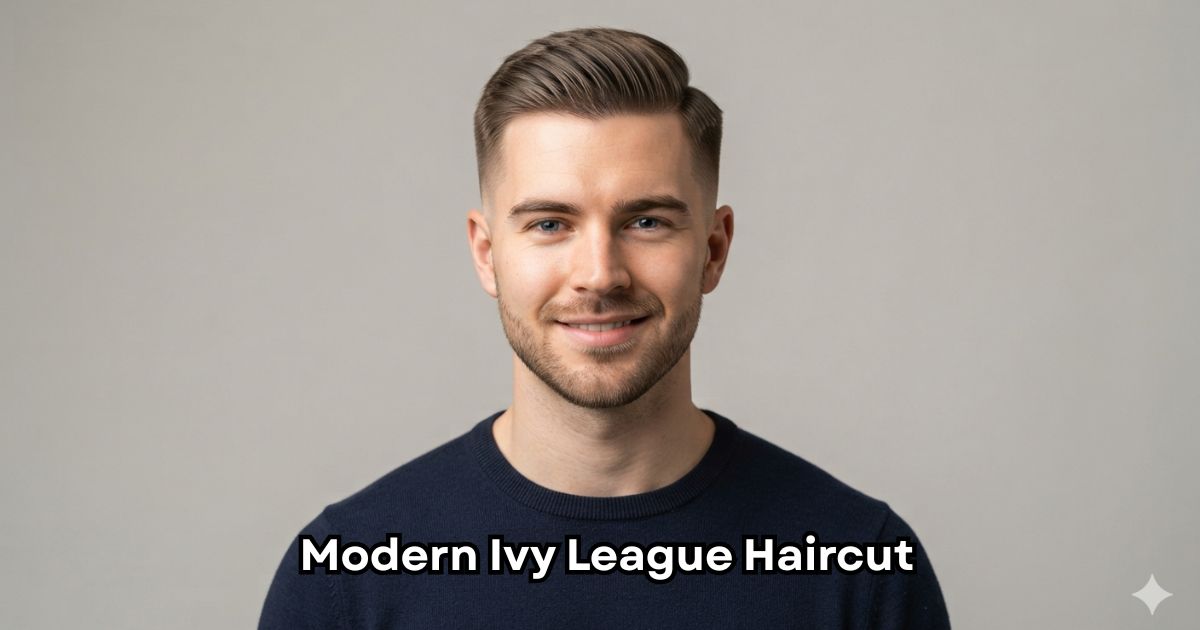
Think of this as the classic with sharper edges. A crisp fade replaces the soft taper, and the top gets a bit more texture for movement instead of a flat, combed finish.
Guys with square or oval faces pull this off effortlessly, and it handles thick or medium hair well. Styling clay gives you that lived-in texture. Trims every three to four weeks keep the fade sharp for work or nights out.
Textured Ivy League Haircut (Textured Top)

Here, the top gets choppy, layered texture instead of a smooth comb-over finish. It’s less structured, more relaxed, and gives the whole cut a lived-in, effortless quality.
This style loves thick or wavy hair since texture already exists to work with. Round and oval faces benefit most. A matte paste adds grip without shine. Maintenance sits at medium, and it works for casual or business-casual settings alike.
Ivy League Haircut with Taper Fade
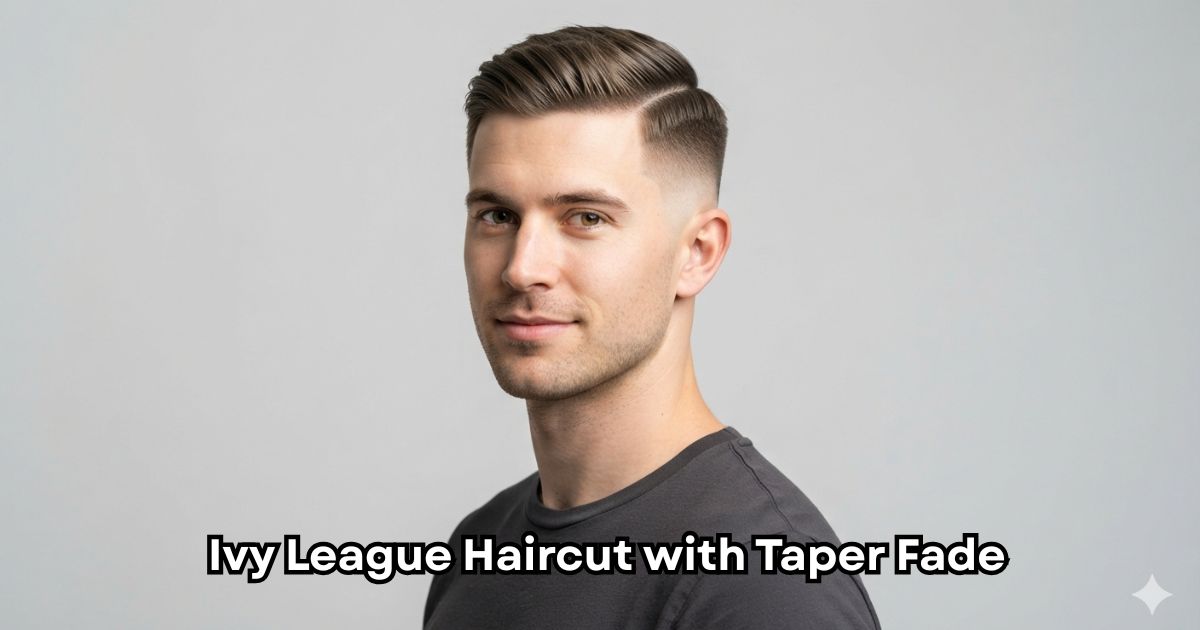
The taper fade blends the sides gradually into the skin, no harsh lines, just a smooth gradient that keeps things clean without looking severe.
Almost any face shape handles a taper well, and it flatters straight or fine hair especially. You won’t need much product for the sides, just something light on top. Regrowth is forgiving, so you can stretch trims to five or six weeks.
Ivy League Haircut with Low Fade

A low fade keeps the fading close to the hairline, so the transition stays subtle. It reads as more conservative than higher fades, which makes it a safe office choice.
Oval and heart-shaped faces suit this best, and it works on most hair textures without a fuss. A light cream keeps the top controlled. It’s low-key on maintenance and appropriate for interviews, weddings, or client meetings.
Ivy League Haircut with Mid Fade
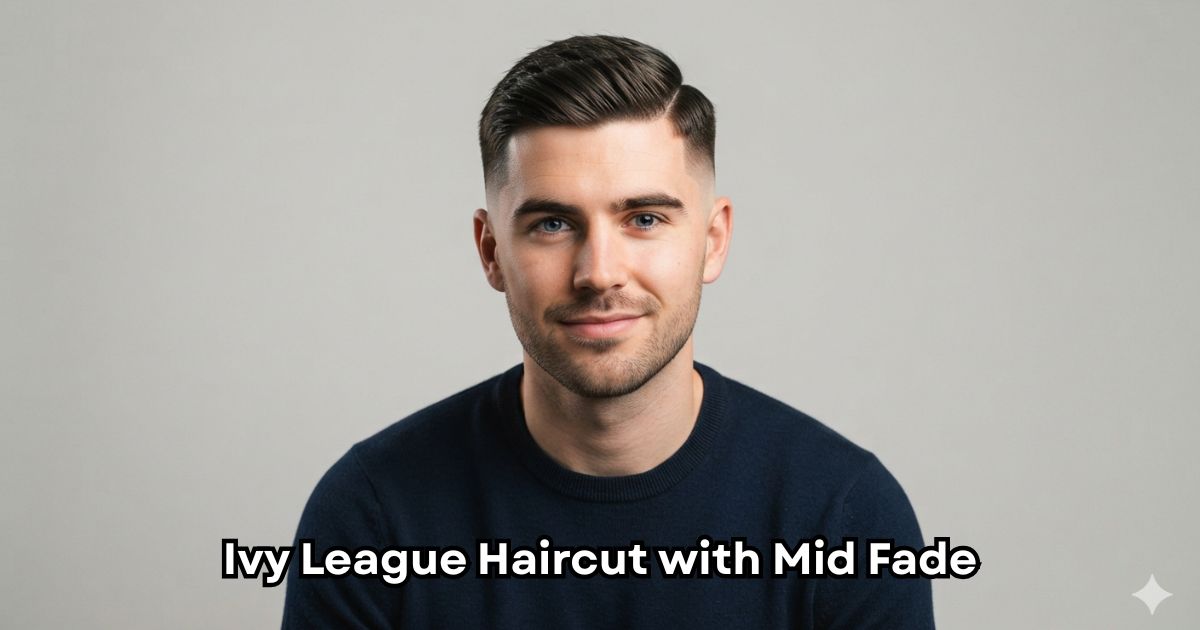
The mid fade starts higher, around the temple area, creating more visible contrast between the short sides and the longer top. It’s bolder than a low fade but still wearable anywhere.
Square and diamond faces get great definition from this placement, and thick hair holds the contrast especially well. Styling clay or paste works best here. Expect trims every three weeks to keep that fade line crisp.
Ivy League Haircut with High Fade

A high fade pushes the taper well above the ear, leaving a dramatic gap between short sides and a much longer top. It’s the boldest fade option in the ivy league family.
Round faces benefit from the added height and structure this creates. Thick, coarse hair holds up best against the contrast. You’ll want a stronger hold pomade. This one needs frequent trims, roughly every two to three weeks.
Messy Ivy League Haircut

Forget the comb. This version skips precision for a tousled, just-rolled-out-of-bed finish that still reads as intentional rather than sloppy.
Guys with wavy or curly hair get the most natural results here, and oval or square faces wear it well. A sea salt spray or texturizing powder does the heavy lifting. Maintenance stays low, and it’s perfect for casual days or weekend plans.
Curly Ivy League Haircut

Curls add natural volume and texture to the ivy league shape, so the top has built-in movement without much effort from you.
This works best on round or oval faces, obviously suits curly or coily hair, and thrives with the right moisture. A curl cream or light gel defines without weighing curls down. Maintenance runs medium since curls need consistent hydration between cuts.
Wavy Ivy League Haircut
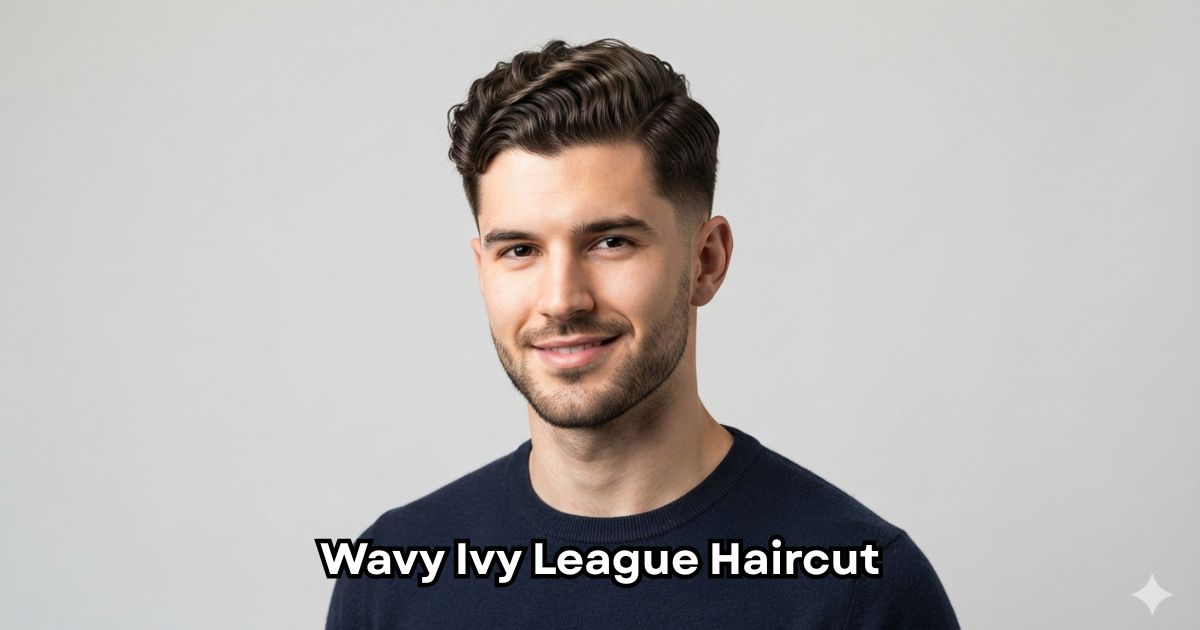
Waves bring a relaxed, textured quality to the ivy league, sitting somewhere between the crisp lines of straight hair and the volume of curls.
Oval and square faces handle this well, and it’s tailor-made for wavy hair types specifically. A texturizing spray enhances the natural pattern instead of fighting it. It’s low-maintenance day to day, great for beach trips or laid-back office settings.
Also Read: 20 Best Long Loc Styles for Men to Try in 2026
Straight Hair Ivy League Haircut

Straight hair gives the ivy league its sharpest, most controlled version, since strands lie flat and lines stay crisp with minimal effort.
This suits nearly every face shape, though oval faces see the cleanest results. A pomade or light wax keeps things smooth. Maintenance is straightforward, and the polished finish suits formal events and everyday office wear equally well.
Thick Hair Ivy League Haircut

Thick hair gives this cut serious volume on top, so you get height and body without needing extra product to fake it.
Square and heart-shaped faces balance well against thick hair’s natural fullness. It suits straight, wavy, or curly textures alike. A stronger hold cream keeps things in place all day. Trims every four weeks manage the bulk before it gets unruly.
Long Ivy League Haircut

This version stretches the top length further than usual, giving you more to style, whether that’s a slick-back, a side part, or loose texture.
Oval and long face shapes handle the extra length best, and thick or wavy hair supports the volume needed. A stronger pomade or gel is essential here. Maintenance runs higher since more length means more upkeep between visits.
Short Ivy League Haircut

Compact and low-fuss, this take keeps the top shorter than usual while still leaving enough length to add texture or a subtle part.
Round faces gain definition from the shorter profile, and it suits fine or thin hair especially well since there’s less to weigh down. A light matte product works fine. Maintenance is minimal, ideal for guys who don’t want a daily styling routine.
Ivy League Crew Cut

This hybrid trims the top shorter than a traditional ivy league while keeping the tapered sides that define the style. It’s a practical middle ground.
Square and oval faces suit the tighter proportions well, and it works across nearly all hair types including thick and curly. A small amount of texturizing paste is all you need. It’s genuinely low-maintenance and fits gym days, work, and everything between.
Ivy League Buzz Cut

The most stripped-down version: sides and top both cut close, keeping just enough length up top to hint at the ivy league shape.
This works on almost any face shape, especially round or oval, and suits any hair type without complication. You barely need product, maybe a touch of matte cream for texture. Maintenance is the lowest of the bunch, perfect for busy schedules or hot climates.
Ivy League Undercut
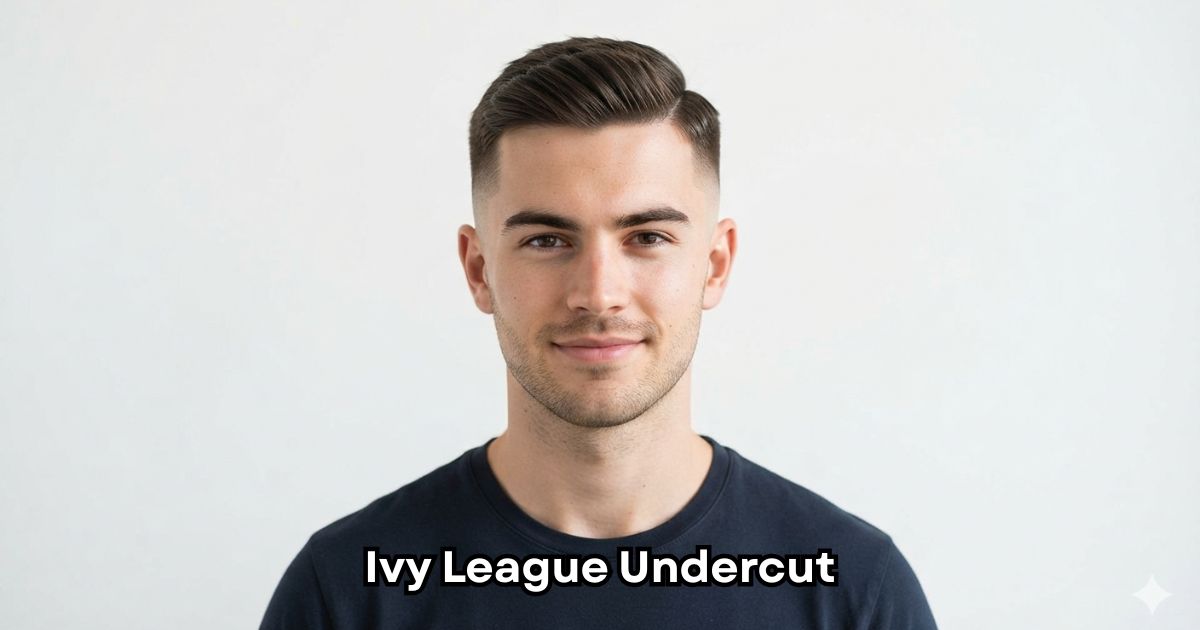
The undercut version creates sharp contrast, with sides cut dramatically short beneath a much longer, more voluminous top section.
Oval and square faces get the most flattering balance from this contrast. Thick or wavy hair provides the best volume for styling. A strong-hold pomade is non-negotiable. Expect higher maintenance, both in styling time and trim frequency, roughly every two to three weeks.
Ivy League Quiff

This variation pushes the front section up and back, creating height at the front that tapers into the rest of the ivy league shape.
Round faces benefit most from the added height and length illusion. Straight or wavy hair holds a quiff shape best. A strong pomade or gel keeps the lift all day. Daily styling is required, so factor that into your morning routine.
Ivy League Haircut with Hard Side Part

A hard part adds a shaved line dividing the part, giving the whole cut a sharper, more graphic finish than a standard comb-over.
Oval and heart-shaped faces suit this detail especially well, and it works best on straight or fine hair where the line stays visible. A light-hold pomade keeps the part crisp. The line needs refreshing every two weeks, so factor that into upkeep.
Side-Swept Ivy League Hairstyle
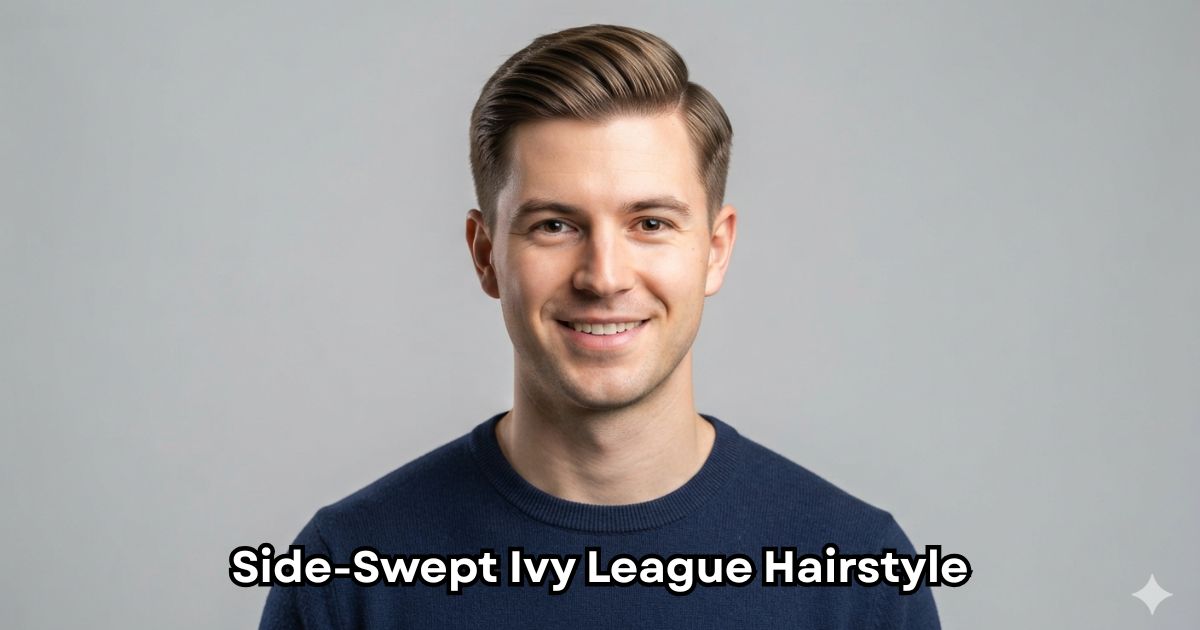
Instead of a hard, defined part, this style sweeps the top diagonally across the forehead for a softer, more casual finish.
Square and round faces gain a flattering angle from the sweep. It suits straight or wavy hair that moves easily in one direction. A light cream or gel adds hold without stiffness. Maintenance stays moderate, and it works well for both work and weekend settings.
How to Style an Ivy League Haircut
Start with damp, towel-dried hair, not soaking wet. Apply a dime-sized amount of pomade, clay, or cream, working it evenly through your fingers before combing it through your hair. Product choice depends on finish: pomade for shine, clay or paste for matte texture.
Comb or brush the top in your preferred direction, whether that’s a side part, straight back, or loose texture. For extra hold, blow-dry on low heat while directing hair with a comb or your fingers. Let it cool before touching up, since hair sets as it cools, not while it’s hot.
Ivy League Haircut Maintenance Tips
Trim frequency depends on your fade. High fades and hard parts need touch-ups every two to three weeks to stay sharp, while classic or longer versions can stretch to five or six weeks between cuts. Ask your barber which schedule fits your specific style.
Wash your hair two to three times a week, not daily, since over-washing strips natural oils and leaves hair drier and harder to style. Use a light conditioner if your hair tends toward frizz or dryness, especially with curly or coily textures.
Final Thoughts
Choosing the right style from this Ivy League Haircut guide comes down to what fits your hair type, your face shape, and your daily routine. Whether you want something classic or a fresh, modern take, there’s an ivy league hairstyle here for you. It’s a cut that never really goes out of style.
The ivy league hairstyle works for almost any guy, in almost any setting. It’s sharp for the office, easy for weekends, and simple to maintain. Talk to your barber, pick your favorite variation, and give the ivy league hairstyle a try. You’ll see why it’s stayed popular for so long.
FAQs
What is an ivy league hairstyle?
It’s a classic men’s cut with short sides and a longer top, styled with a side part. It’s polished, versatile, and works for almost any occasion.
Is the ivy league haircut the same as a crew cut?
Not quite. A crew cut keeps the top short all over, while the ivy league leaves more length up top for styling options like a side part or texture.
How often should you get an ivy league haircut trimmed?
It depends on the style. Fades need trims every two weeks, while classic or longer versions can go four to five weeks between visits.
Does the ivy league hairstyle work with curly hair?
Yes, it works great with curly hair. The natural curl adds volume on top, and a curl cream keeps the texture defined without frizz.
What products work best for styling an ivy league haircut?
A pomade or clay usually does the trick. Pomade gives a sleek finish, while clay adds texture for a more relaxed, natural look.

Serena Luna, the voice behind JournalHair. I share the latest hairstyle ideas, haircut trends, and easy hair inspiration to help you find your perfect look every day.
