

Getting your kid ready for their next haircut. A low taper fade is one of the easiest styles to ask for. It keeps things short and clean near the ears and neck. The top stays a little longer. This gives your child a neat, put-together look without going too short. It’s a great pick for school days, picture day, and everything in between.
A low taper fade also grows out nicely. You won’t need to rush back to the barber every week. It works for straight hair, curly hair, and everything in between. Bring a photo to the barber. Say “low taper fade” so there’s no mix-up with a mid or high fade. This small step makes a big difference. Your child walks out looking sharp, and you walk out happy too.
What Is a Low Taper Fade for Kids, and at What Age Can Boys Get One?
There’s no minimum age for a low taper fade. Barbers give this cut to toddlers, school-age boys, and teens alike, adjusting the blend and length to suit each child’s comfort and hair type.
That said, most parents wait until around age three or four, once a child can sit still long enough for clippers near the ears. Older boys usually handle the process with zero fuss.
What Is a Low Taper Fade for Kids & Boys?
A low taper fade keeps the shortest hair close to the neckline and ears, fading upward into slightly longer length. The top stays fuller, giving kids a neat, balanced shape that’s easy to maintain.
Barbers favor this cut because it works on nearly any head shape. It suits curly, straight, or coily hair, needs minimal daily styling, and holds its shape well between trims.
How Does a Low Taper Fade Actually Work?
Clippers start with a small guard near the hairline, then switch to progressively longer guards moving upward. This blending creates a soft gradient instead of one harsh line where lengths meet.
The result feels barely-there at first glance. It suits boys who want a clean look without an obvious fade, and it works for everyday school wear or dressier family occasions.
What Is the Difference Between a Taper and a Fade?
A taper trims hair gradually shorter without ever reaching bare skin, while a fade blends down to skin level at some point. Tapers look softer; fades create sharper contrast near the hairline.
Most kids do best with a taper alone or a low taper fade hybrid. Skin fades suit older boys with thicker, coarser hair who want a bolder, more defined silhouette.
What Makes the Low Taper Fade Different from Mid and High Fades?
Height sets these apart. A low fade starts near the ear, a mid fade climbs to temple level, and a high fade begins well above that, creating far more visible contrast.
Low fades suit younger kids and conservative dress codes. Round or square face shapes especially benefit, since the subtle blend avoids adding extra width near the temples.
Why Is the Low Taper Fade So Popular for Boys Right Now?
Search interest and salon requests for this cut have climbed steadily since 2023, driven largely by social media trends and celebrity kids sporting variations of the style at public events.
Parents like it because it’s forgiving between appointments. Teachers and coaches rarely object to it, and it flatters nearly every hair texture, from loose waves to tight curls.
The TikTok Effect: How a Viral Meme Made Every Kid Want This Haircut
Short clips of kids requesting specific fades from barbers, complete with dramatic reveals, racked up millions of views. Boys started bringing screenshots straight from their phones into the barbershop chair.
The trend normalized boys taking interest in their own style earlier than before. Curly-haired and coily-haired kids especially embraced textured tops paired with clean, low-fade sides.
Why Parents Love This Haircut Too
Beyond looking sharp, this cut buys time. A low taper fade grows out evenly, so families aren’t booking emergency trims every ten days just to keep things tidy.
It also photographs well for school pictures and family events. Straight or fine hair holds the shape especially long, often stretching maintenance visits to five or six weeks.
What Are the Best Low Taper Fade Styles for Kids & Boys in 2026?
Fifteen variations dominate barbershop requests this year, each pairing the same low, subtle fade with a different top style. Face shape, hair texture, and daily activity level all influence the best pick.
Active kids tend toward shorter, low-maintenance tops, while style-focused teens lean into height, texture, or slicked finishes. A skilled barber can adjust any version for comfort and growth patterns.
1. Low Taper Fade with Textured Crop

Choppy, uneven layers on top pair with a subtle faded base for a modern, effortless-looking finish. This style suits thick or wavy hair and works well for oval or square face shapes.
A matte clay or texturizing paste defines the crop without shine. Maintenance sits around every four weeks, and it suits both school days and casual weekend outings equally well.
2. Low Taper Fade with Curly Top
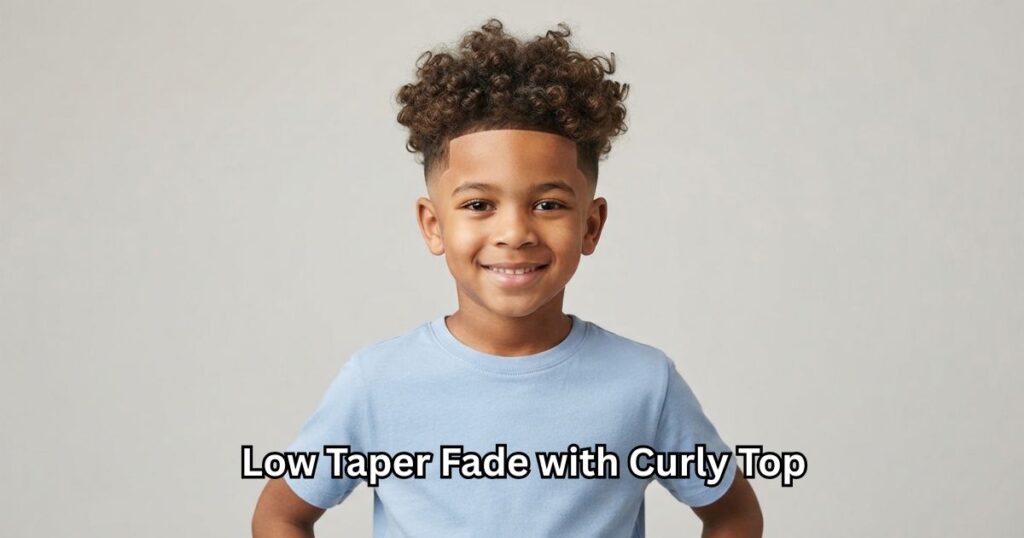
Natural curls stay long and bouncy on top while the sides fade low and clean underneath. This combination flatters round and heart-shaped faces by adding visible height at the crown.
A lightweight curl cream keeps ringlets defined without weighing hair down. It suits curly-haired boys of any age and needs trims roughly every five to six weeks.
3. Low Taper Fade with Comb Over

A side part directs longer top hair across the head, while the low fade keeps the sides tidy and understated. Straight or wavy hair holds this style with the least daily effort.
A small amount of pomade adds hold and a soft sheen. It suits square and oval faces particularly well, and works nicely for school photos or formal family events.
4. Low Taper Fade with Pompadour

Extra volume and height at the front create a bold, polished silhouette, balanced by the understated low fade beneath. Thick, straight, or wavy hair builds this shape most easily.
A strong-hold pomade or gel keeps the front upright through the day. This pairing suits round faces well, adding vertical length, and fits dressier occasions especially nicely.
5. Low Taper Fade with Buzz Cut

Uniform short length on top meets a barely-there fade at the base for a clean, no-fuss silhouette. Fine or thin hair looks fuller with this style than with longer alternatives.
Styling products aren’t really necessary here, which makes mornings faster for busy families. It suits active kids in sports, and maintenance runs about every three to four weeks.
6. Low Taper Fade with French Crop
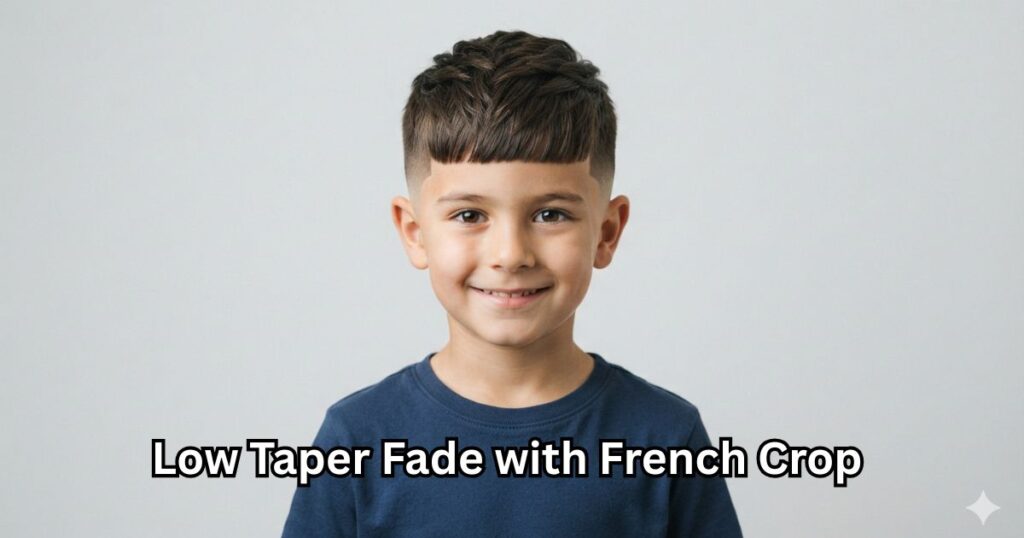
A blunt fringe sits forward over the forehead, paired with tight sides that fade low near the ears. Straight or slightly wavy hair holds the fringe shape most reliably.
A matte paste adds texture without excess shine. This look suits oval and heart-shaped faces, and it’s become a favorite among both younger boys and style-conscious teens alike.
7. Low Taper Fade with Mohawk / Faux Hawk

A raised center strip contrasts sharply with closely faded sides for a striking, statement-making look. Thick or coarse hair holds the center height with the least amount of product.
A strong gel or wax keeps the strip upright throughout active days. This pairing suits square or oval faces and works especially well for special occasions or photo days.
8. Low Taper Fade with Side Part
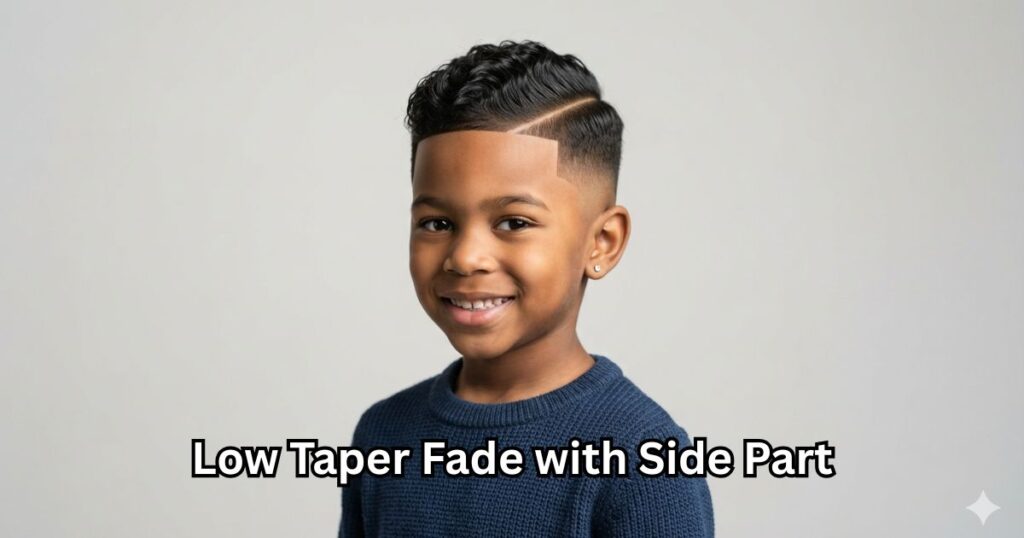
A crisp, defined line separates longer top hair from a low, subtle fade beneath, creating a classic, tidy appearance. Fine or straight hair holds a side part most cleanly.
A light-hold gel keeps the part visible without stiffness. This combination suits nearly every face shape and remains one of the most requested school-appropriate cuts around.
9. Low Taper Fade with Afro Top (for Black Kids)

Natural curl volume stays full and rounded on top, while the low fade trims sides and neckline neatly underneath. Coily or 4C hair textures shape beautifully into this look.
A curl-defining cream or leave-in conditioner keeps shrinkage manageable and shape consistent. It suits round and square faces well, and needs trims roughly every four to five weeks.
10. Low Taper Fade with Broccoli Cut
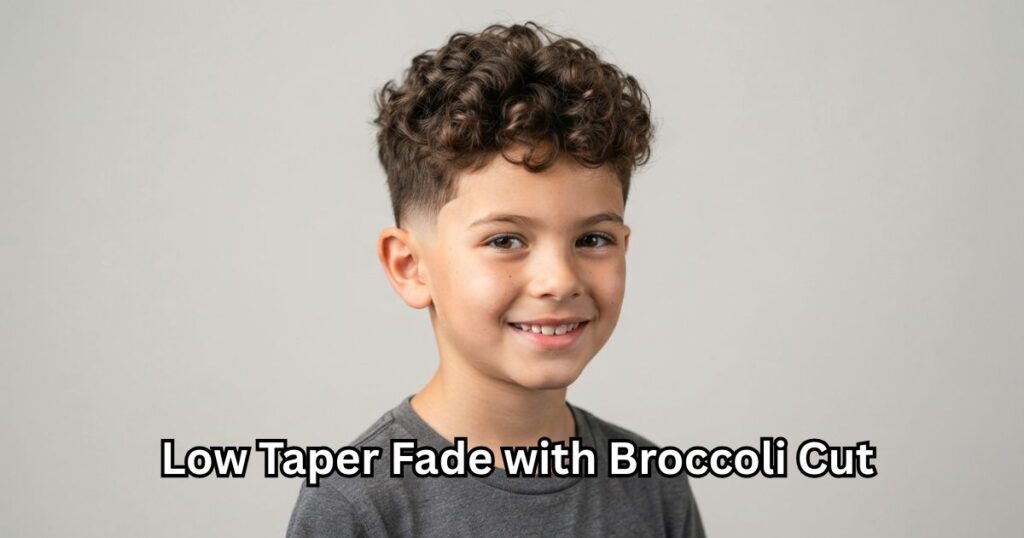
Tight curls sit piled loosely on top, resembling small florets, while the low fade keeps everything grounded and neat beneath. Curly or coily textures achieve this shape most naturally.
A light curl gel or mousse enhances definition without crunch. This playful style suits younger boys especially, and works for both casual days and more relaxed family gatherings.
11. Low Taper Fade with Crew Cut
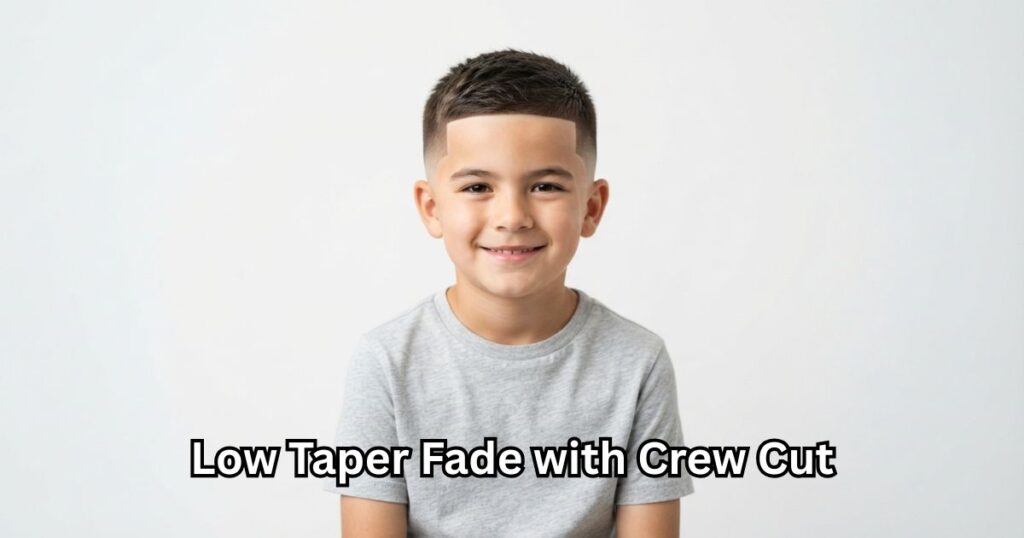
Short, even length on top tapers gradually into the low fade below, creating a timeless, tidy military-inspired shape. Straight or thick hair suits this cut with minimal daily upkeep.
Little to no product is needed most days. This combination flatters most face shapes, suits active kids well, and typically needs trims every three to four weeks.
12. Low Taper Fade with Slicked-Back Top

Top hair sweeps backward in one smooth motion, contrasting against a subtle, low-faded base for a sharp, put-together look. Straight or wavy hair slicks back most reliably.
A pomade with light shine holds the style through the day. This pairing suits oval and square faces particularly well, and fits formal events or picture days nicely.
13. Low Taper Fade with Spiky Top
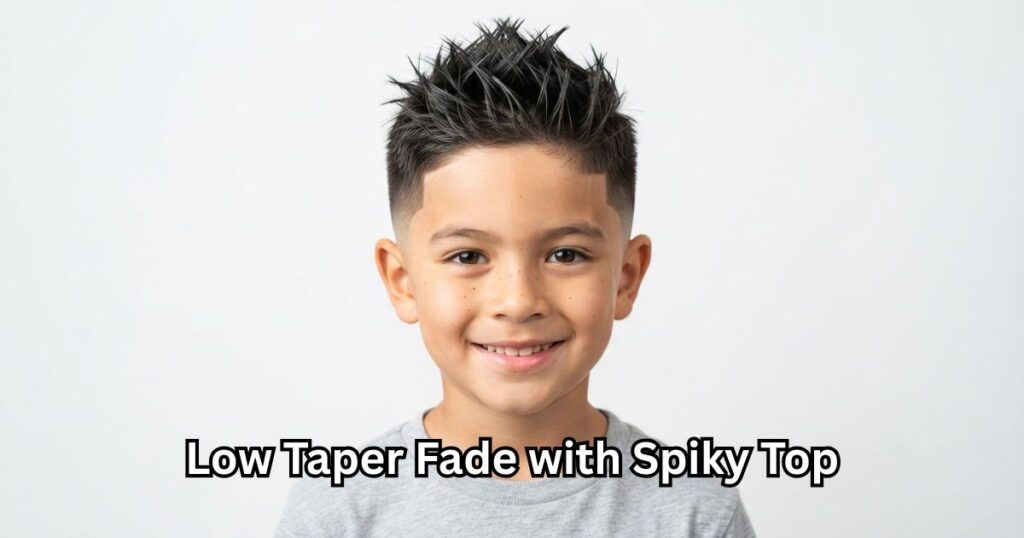
Short spikes stand upright across the crown, paired with a clean, understated fade for contrast underneath. Thick or coarse hair holds spikes best without extra product buildup.
A strong-hold wax or gel creates definition at each spike’s tip. This look suits round faces well, adds height, and remains popular for casual, everyday school wear.
14. Low Taper Fade with Modern Mullet
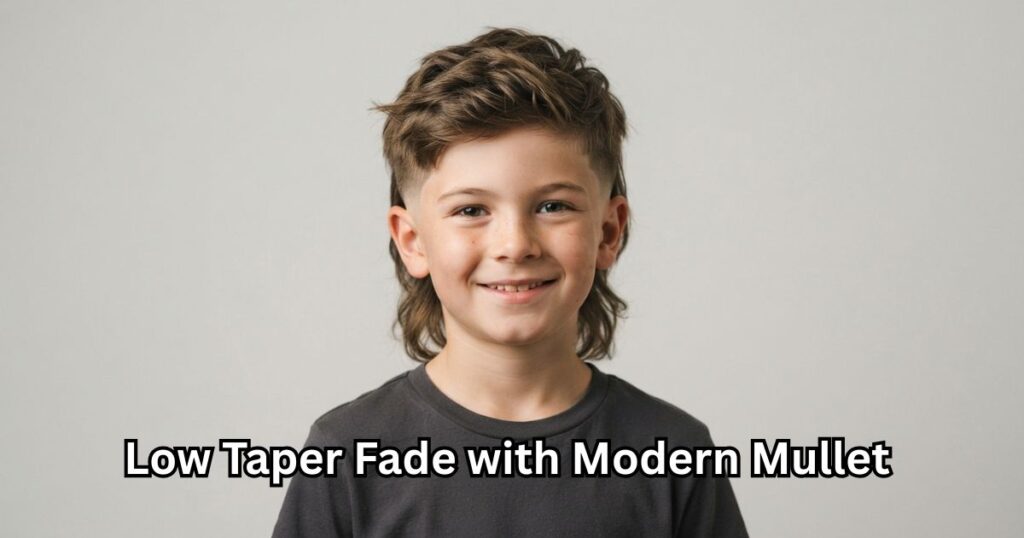
Shorter sides and a low fade meet noticeably longer length left at the back, creating a playful, retro-inspired silhouette. Straight or wavy hair carries this shape most smoothly.
Minimal product keeps the back natural and loose. This trendy pairing suits oval and heart-shaped faces, and has become a favorite among fashion-forward tweens and teens alike.
15. Low Taper Fade with 360 Waves (for Black Boys)

Tight curl patterns brushed consistently create a rippling wave effect on top, paired with a low fade that keeps edges crisp and defined. Coily hair produces waves most easily.
A wave pomade paired with a durag at night locks the pattern in place. This style suits square and round faces, and needs regular brushing to maintain definition.
Which Low Taper Fade Works Best for Your Child’s Hair Type?
Hair texture changes how a low taper fade grows out and how much daily styling it needs. Matching the cut to natural texture keeps mornings simple and results consistent.
Curl pattern, thickness, and density all factor in here. A barber familiar with different textures can adjust guard sizes and top length so the fade blends smoothly for years.
Low Taper Fade for Curly Hair Boys
Curls add natural volume, so the top can stay shorter than expected while still looking full and shaped. A low fade keeps the sides neat without fighting the curl pattern.
Curl cream or gel enhances definition without frizz. This pairing suits nearly all face shapes, needs trims every five to six weeks, and fits both casual and dressy occasions.
Low Taper Fade for Straight Hair Boys
Straight strands fall flat and smooth, making side parts, comb overs, and slicked styles especially easy to achieve on top of a low fade base underneath.
A light pomade or matte paste adds texture and hold. This combination suits oval and square faces well, requires trims roughly every four weeks, and styles quickly each morning.
Low Taper Fade for Wavy Hair Boys
Waves add subtle texture without full curl volume, giving the top natural movement that pairs nicely with a clean, low-faded base along the sides and neckline.
A sea-salt spray or light cream enhances the natural wave pattern. This look suits heart and oval faces particularly well, and holds shape for roughly four to five weeks.
Low Taper Fade for Thick Hair Boys
Thick strands hold volume and height easily, making pompadours, spiky tops, and textured crops especially achievable when paired with a low, subtle fade underneath.
A strong-hold gel or clay manages bulk without excess shine. This combination suits round and square faces, needs more frequent thinning, and trims every three to four weeks.
Low Taper Fade for Fine Hair Boys
Fine strands need volume-building styles, since flat lengths can look thin against a fade. Buzz cuts, crew cuts, and short crops all suit this hair type especially well.
A lightweight volumizing spray or mousse adds fullness without weight. This pairing suits most face shapes, holds shape for roughly four weeks, and styles fast with little effort.
Low Taper Fade for Black Kids (Afro / 4C Hair)
Tightly coiled hair shrinks significantly, so barbers often leave extra length on top to achieve the desired final shape once curls settle into their natural pattern.
A leave-in conditioner and curl cream prevent dryness and define shape. This combination suits round and square faces, needs trims every four to five weeks, and holds definition well.
Also Read: The Ultimate Straight Hair Mullet Guide for Every Face Shape
Which Low Taper Fade Suits Your Child’s Face Shape?
Face shape influences how much height or width a hairstyle should add. The right pairing balances proportions naturally, without requiring drastic length changes or unusual styling routines.
A barber can usually spot face shape within seconds and suggest adjustments. Small tweaks, like added crown height or softened sides, make a noticeable difference in the finished look.
Low Taper Fade for Round Faces
Added height on top elongates a round face, so pompadours, spiky tops, and textured crops work especially well paired with a clean, low-faded base underneath.
Avoid styles that add width at the sides. A lightweight gel builds vertical height without heaviness, and this pairing suits nearly every hair texture from straight to coily.
Low Taper Fade for Oval Faces
Oval faces suit almost any top style, since proportions are already balanced. Side parts, French crops, and slicked-back tops all pair beautifully with a subtle, low fade.
There’s little need to correct for width or length here. Most styling products work well, and this face shape offers the most flexibility when choosing a top style.
Low Taper Fade for Square Faces
Softer, rounded top styles balance a square jawline nicely, making curly tops and textured crops especially flattering when paired with a low, understated fade underneath.
Avoid overly sharp, geometric lines up top, which can emphasize angles further. A light curl cream or texturizing paste softens the overall silhouette without sacrificing shape.
Low Taper Fade for Heart-Shaped Faces
A heart-shaped face narrows toward the chin, so styles with fuller sides or a soft fringe, like the French crop, help balance proportions against a low fade base.
Avoid excessive height at the crown, which can exaggerate forehead width. A matte paste keeps the fringe soft and natural, suiting most hair textures without added bulk.
How Much Does a Kid’s Low Taper Fade Haircut Cost?
Prices typically fall between a basic child’s trim and a full adult fade service, since blending takes extra time and precision compared to a simple length cut.
Many shops offer flat kids’ rates regardless of style complexity. Ask upfront about pricing, and consider a loyalty punch card if your family plans on visiting every few weeks.
Final Thoughts
This guide to low taper fade kids styles covers every option your family needs. From curly tops to buzz cuts, there’s a low taper fade kids look for every face shape and hair type. It’s neat, it’s easy, and it grows out well between trims.
Picking a low taper fade kids style doesn’t have to be hard. Bring a photo. Talk to your barber. Ask about maintenance and products. A good low taper fade kids cut fits school days and special occasions alike. Your child walks out looking sharp, and you walk out relieved.
FAQs
What is a low taper fade for kids?
A low taper fade keeps hair short near the ears and neckline, blending upward into longer hair on top. It’s neat, subtle, and school-friendly.
At what age can a kid get a low taper fade?
Most barbers start around age three or four, once a child sits still comfortably. There’s really no strict minimum age required.
How often should kids get a low taper fade trimmed?
Plan on visiting the barber every three to four weeks. This keeps the fade line sharp and stops it from looking grown out.
Does a low taper fade work for curly hair?
Yes, curly hair works great with a low taper fade. The curls stay full on top while the sides stay neat.
How much does a low taper fade cost for kids?
It usually costs a bit more than a basic trim, since blending takes extra time. Many shops offer a flat kids’ rate.

Serena Luna, the voice behind JournalHair. I share the latest hairstyle ideas, haircut trends, and easy hair inspiration to help you find your perfect look every day.
