

The mid taper mullet is having a real moment right now. It takes a classic taper fade and pairs it with real length in the back. The sides stay clean and sharp. The back keeps that mullet energy alive. It’s a style that works for almost any hair type, from straight to curly to wavy. You don’t need a bold personality to pull it off. You just need the right barber and a little patience while it grows in.
This cut sits in a sweet spot. It’s not too loud and not too boring. A mid taper mullet gives you structure up front and freedom out back. It suits the office just as easily as it suits a weekend out. Once you try a mid taper mullet, going back to a plain fade feels flat.
Mid Taper Fade Mullet Explained: What Makes This Combo Work
A mid taper mullet blends two ideas into one cut. The sides fade cleanly from the middle of your head, while the back holds onto real length instead of disappearing under the clippers.
That contrast is the entire appeal. Short sides read as tidy and controlled, while the longer back adds movement and personality. Neither half competes. Together, they create a shape that feels balanced, not chaotic.
Why It’s Everywhere in 2026
Barbershops keep seeing requests for this cut because it photographs well and grows out gracefully. Social media helped push it back into the mainstream after years of stricter, shorter fades dominating.
Guys also like that it works across settings. A mid taper mullet can look sharp in an office and loose on a weekend, without needing a full restyle. That flexibility keeps demand climbing steadily.
Pros and Cons: What You’re Signing Up For
The upside is real versatility. You get a low-maintenance taper on the sides paired with expressive length in back, and the cut adapts easily to straight, wavy, or curly textures without much fuss.
The downside shows up between appointments. Tapers grow out faster than the back section, so the sides can look uneven within a few weeks. Regular trims keep the shape from drifting apart.
8 Best Mid Taper Fade Mullet Styles
Not every mid taper mullet looks the same, and that’s the point. Texture, length, and finishing technique change the whole personality of the cut, even when the underlying structure stays identical.
Below are eight variations worth bringing to your barber. Some lean classic and polished, others lean shaggy or detailed, and a couple work specifically for stricter workplace dress codes.
Classic Cuts: The Everyday Options
1. Classic Mid Taper Mullet
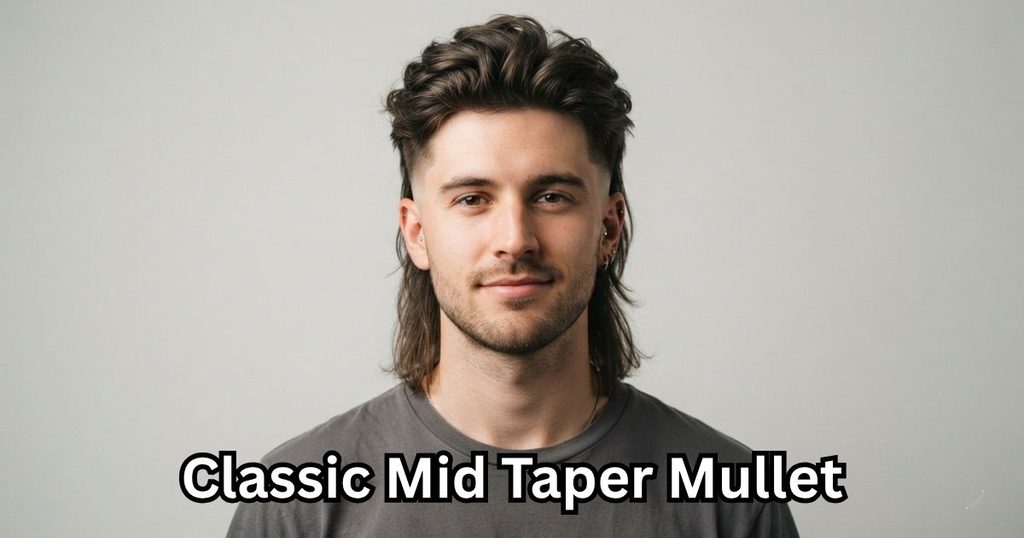
This version keeps things simple. Clean taper on the sides, moderate length in back, no heavy texturizing involved. It suits round, oval, and square faces equally well without much adjustment needed.
Straight and wavy hair holds this shape best since it falls naturally into place. A light pomade keeps things controlled. Maintenance stays easy, with touch-ups every three weeks maintaining the sharp taper line.
2. Wavy Mid Taper Mullet
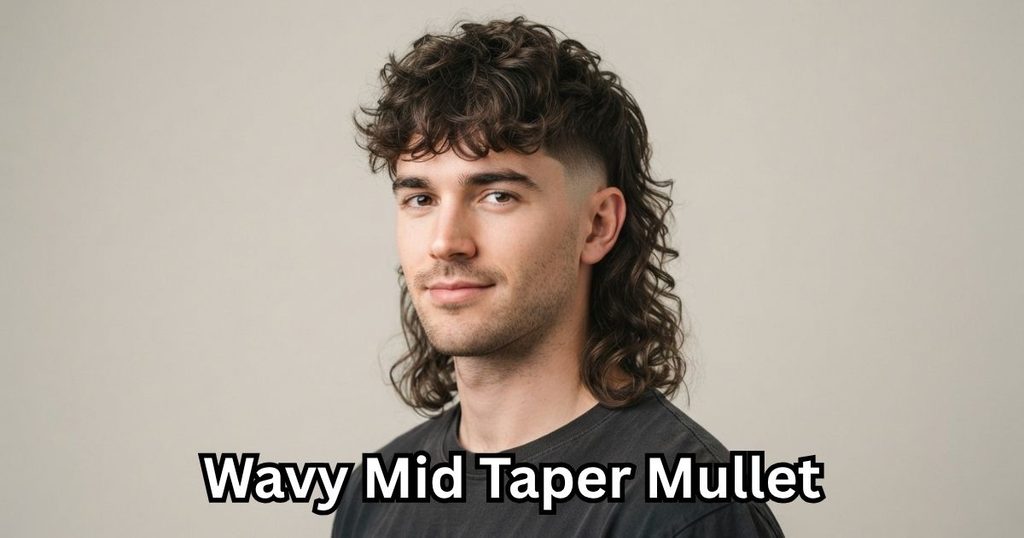
Natural waves do most of the styling work here, adding texture to the back without any extra effort on your part. This style flatters oval and heart-shaped faces particularly well.
A sea salt spray enhances the wave pattern without weighing hair down. It suits casual and semi-formal occasions alike. Maintenance is moderate, since waves hide slight growth better than a razor-sharp finish.
3. Curly Mid Taper Mullet
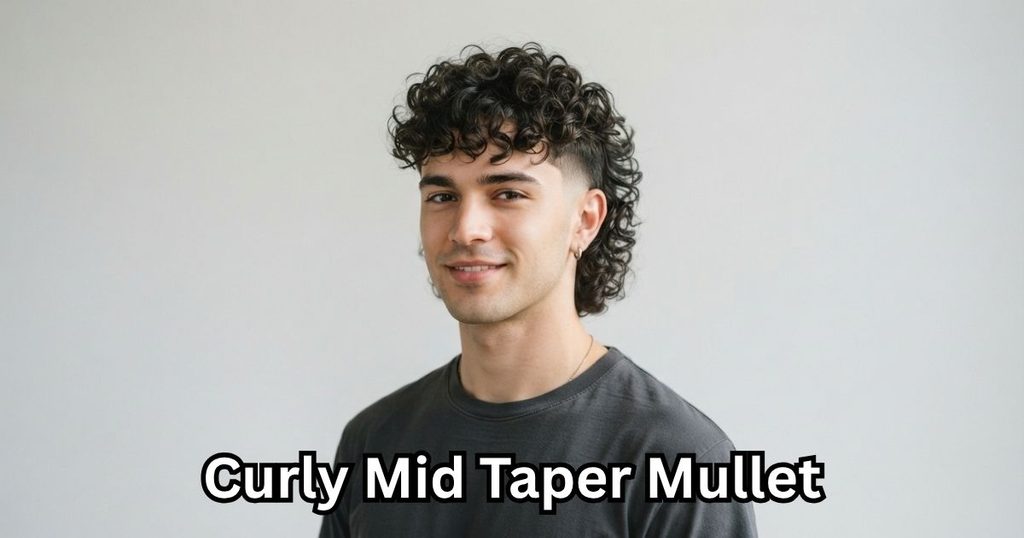
Curls add volume and bounce to the back section, creating a fuller silhouette than straight or wavy versions. This look works especially well for square and diamond face shapes needing softness.
A curl-defining cream prevents frizz without flattening the pattern. Barbers usually cut curly hair dry to account for shrinkage. Expect moderate upkeep, since curls mask regrowth longer than sharper, straighter styles.
Textured Cuts: More Movement, More Attitude
4. Textured Mid Taper Mullet
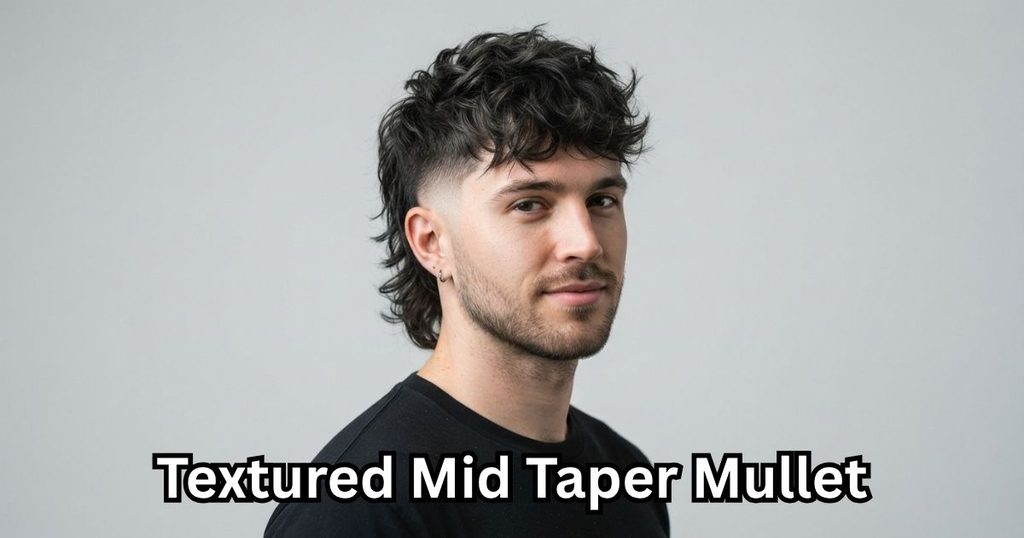
Choppy layers throughout the top and back give this version extra depth and dimension. It suits thick or medium-density hair best, since fine hair can struggle to hold the layered texture.
Long and rectangular faces benefit from the visual movement this style adds. A matte texturizing paste creates separation without shine. Maintenance runs moderate, with occasional trims needed to keep layers from softening.
5. Shaggy Mid Taper Mullet
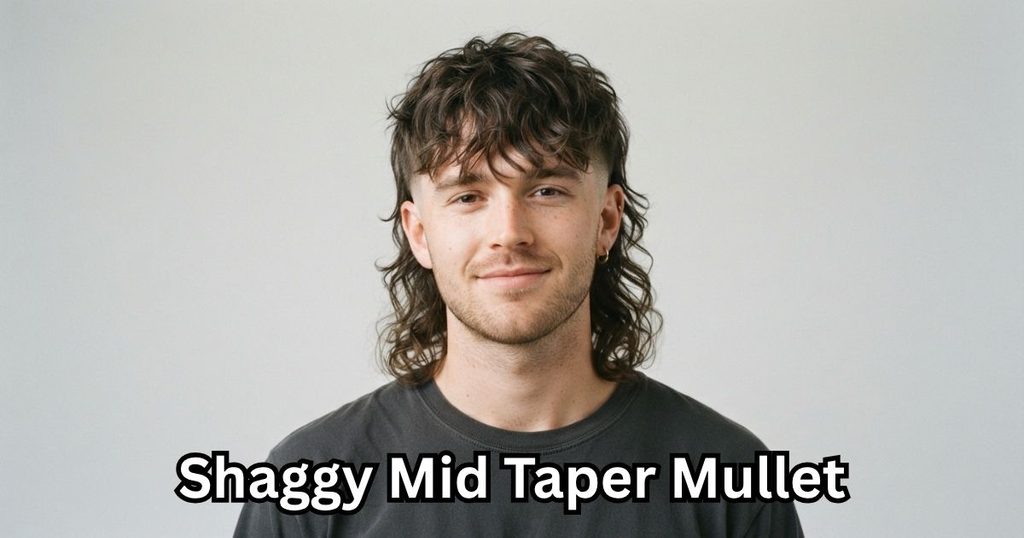
This is the loosest, most relaxed take on the cut, with heavy layering and minimal structure in back. Round and oval faces wear it comfortably, since the shape adds gentle asymmetry.
Thick and wavy hair textures suit this style naturally. A texturizing spray adds grip without weighing hair down. Maintenance stays low, since the shaggy finish forgives longer stretches between barber visits easily.
Detail Work: Built for Barbers Who Cut
6. Mid Taper Mullet with Scissorwork
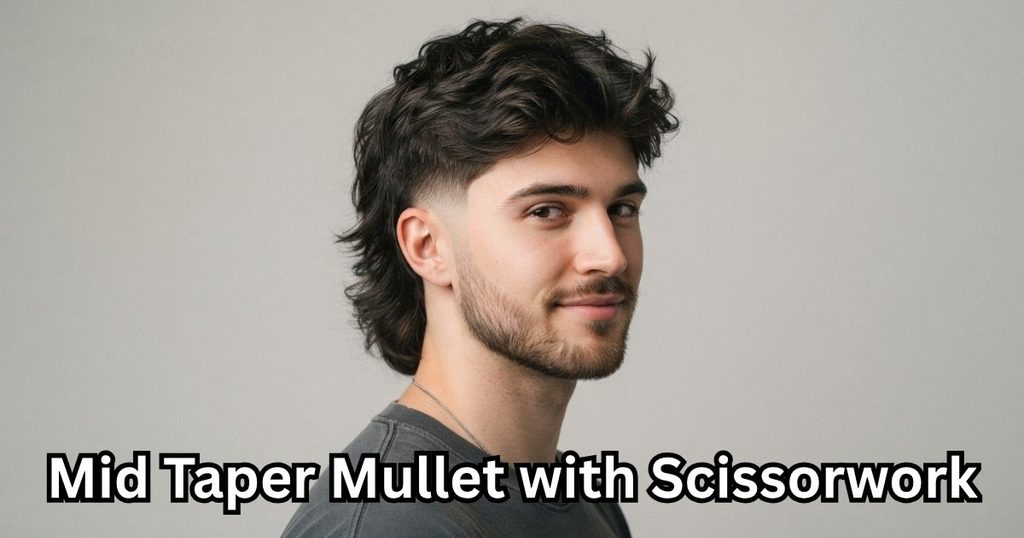
Scissor-over-comb technique replaces clippers for the back blend, creating a softer transition between lengths. This detailed approach suits nearly every face shape, since the blend adjusts to individual head shape.
Straight and thick hair show off scissorwork especially well. A light-hold cream keeps the finish natural. Maintenance sits in the moderate range, though the softer blend grows out more gracefully than clippers alone.
7. Mid Taper Mullet with Fringe
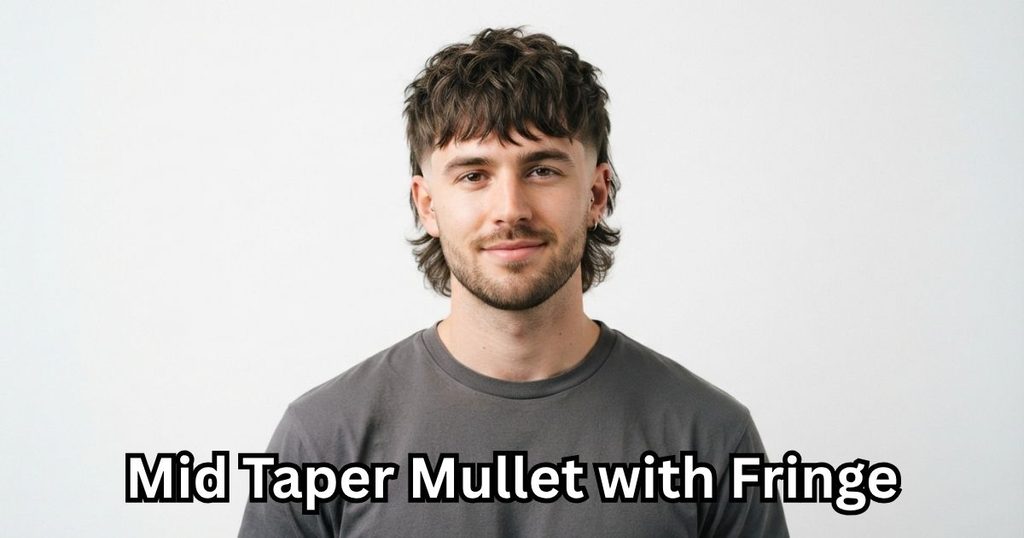
Adding fringe pulls focus toward the face and softens the forehead, working particularly well for square or long face shapes needing extra balance up front.
Straight and wavy hair hold fringe shape most reliably throughout the day. A flexible-hold wax keeps strands in place. Maintenance increases slightly, since fringe length needs trimming more often than the rest.
Business-Friendly Versions
8. Business Mid Taper Mullet
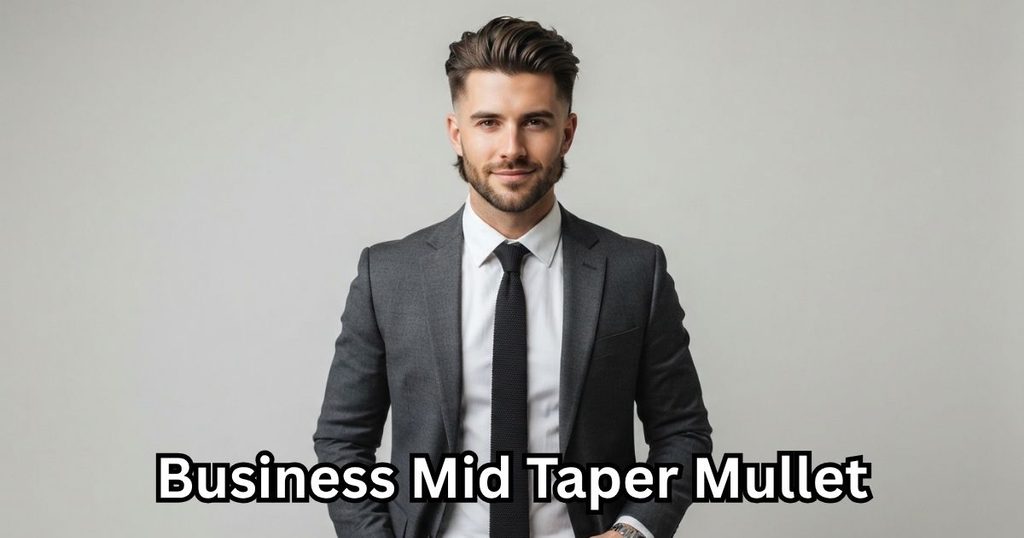
This toned-down variation keeps the back length modest and skips heavy texturizing entirely, making it appropriate for conservative offices while still technically qualifying as a mullet underneath the surface.
Oval and rectangular faces suit this restrained version well. A matte clay keeps the finish polished, not slick. Maintenance stays consistent, with touch-ups every two to three weeks preserving the professional appearance.
Choosing by Hair Type: What Actually Holds the Shape
Straight Hair
Straight strands show off the taper line with total clarity, since there’s no natural texture disrupting the fade. The back section falls smooth and flat unless you add layers deliberately.
Product needs stay minimal here, though a light pomade adds shine and control. Straight hair also grows out more visibly, so expect slightly more frequent trims to maintain that crisp taper edge.
Wavy Hair
Waves bring natural texture to the back section without requiring much styling effort on your end. This texture flatters nearly every version of the cut, from classic to heavily layered.
A sea salt or texturizing spray enhances the wave pattern nicely. Wavy hair also disguises regrowth better than straight strands. Maintenance stays moderate, since the natural movement forgives slight unevenness between appointments.
Curly Hair
Curls shrink significantly as they dry, so length that looks generous while wet often reads shorter once fully dry. Barbers typically cut curly hair dry to avoid this common miscalculation.
A curl cream or gel keeps definition without crunch. Curly textures suit shaggier, more textured versions especially well. Maintenance runs moderate, since curls naturally camouflage regrowth longer than smoother hair types do.
Thick Hair
Thick strands hold volume beautifully but can look bulky in back without proper thinning. Ask your barber to remove weight strategically, especially through the crown and nape area.
A matte paste tames thickness without adding shine. Thick hair suits textured and shaggy versions particularly well. Maintenance leans moderate to high, since thick hair grows fast and needs regular taper upkeep.
Face Shape Matchups
Oval Face
Oval faces suit nearly every mid taper mullet variation without much adjustment needed. Balanced proportions mean you have real freedom in choosing length, texture, and fringe placement throughout the entire style.
Classic and wavy versions both look particularly sharp here. There’s little risk of the cut clashing with your natural features. This is genuinely the easiest face shape to style confidently.
Round Face
Round faces benefit from added height at the crown, which elongates the face visually and prevents the cut from widening your features further than necessary throughout the style.
A tighter, higher taper also helps create that same slimming effect. Avoid excessive width through the sides. Textured or shaggy versions with volume up top tend to flatter round faces best.
Square Face
Square faces already carry strong, angular features, so this cut’s natural sharpness complements the jawline nicely. Softer fringe styles help balance that angularity without erasing the face’s defined structure.
Avoid overly blunt back sections, which can emphasize squareness further than intended. A slightly textured, layered finish softens hard lines. The scissorwork variation works especially well for square-shaped faces.
Heart-Shaped Face
Heart-shaped faces narrow toward the chin, so styles with volume lower down help balance a wider forehead. Longer back sections with movement add welcome visual weight near the jawline area.
Fringe works well here too, softening forehead width. Avoid overly high crown volume, which can exaggerate the narrower chin. Wavy and textured versions typically suit heart-shaped faces better than sharper cuts.
Long Face
Long faces benefit from added width rather than additional height, so keep the taper moderate and avoid excessive crown volume that stretches the face further vertically than it already appears.
Fringe helps shorten visual length by covering forehead space. Textured, layered versions with side volume balance proportions nicely. Avoid slicked-back styling, which tends to emphasize length rather than disguising it.
Diamond Face
Diamond faces feature narrower foreheads and chins with wider cheekbones, so styles that add width near the jawline and forehead help balance that structure throughout the overall silhouette.
Fringe softens the forehead area effectively. Textured back sections with volume balance the cheekbone width nicely. Avoid overly tight, close tapers, which can emphasize narrowness at the top and bottom.
Rectangular Face
Rectangular faces share qualities with long faces but carry a stronger jawline underneath. Added width through the sides helps soften that angularity without eliminating the face’s naturally strong bone structure.
Avoid excessive height at the crown, which stretches proportions further. Fringe and textured layers work well together here. The business and classic variations both suit rectangular faces comfortably throughout most settings.
Age Group Breakdown
Teenagers
Younger guys tend to favor bolder, shaggier versions with more visible contrast between the taper and the back length, often paired with brighter styling products or deliberately messy finishes.
Curly and wavy textures work particularly well at this age, since natural texture requires less daily effort. Maintenance expectations stay flexible too, since growing hair out slightly rarely causes real problems.
Young Men
Guys in their twenties often gravitate toward textured or scissorwork versions, balancing personality with enough polish for work, school, or social settings without looking overly casual or undone.
This age group also experiments most with fringe and length variations. Styling products become more intentional here, with matte pastes and creams replacing simpler routines. Maintenance stays fairly consistent and regular.
Professional Men
Older or career-focused men typically lean toward the business version, prioritizing a polished taper over dramatic back length. Conservative workplaces often shape this decision more than personal preference alone.
Straight and wavy textures suit this demographic’s styling routines well, since they require minimal daily maintenance. Touch-ups stay consistent and scheduled, keeping the taper sharp for client-facing or formal work environments.
Talking to Your Barber: The Exact Guard Numbers
Walking in with specific numbers saves everyone time and prevents miscommunication. A guard 2 creates a shorter, sharper taper, while a guard 3 leaves slightly more length for a softer transition.
Mention your desired back length in inches if possible, and bring reference photos whenever you can. Clear communication about guard numbers and back length prevents the most common mullet-related disappointments entirely.
Video Guide: Watch the Blend in Action
Written descriptions only go so far when explaining a blend this detailed. Watching a barber work through the taper and back section live shows exactly how the transition should look.
Search for tutorials specifically covering mid taper technique alongside mullet back sections. Seeing the scissor-over-comb method in motion also helps you describe your preferences more precisely during your actual appointment.
Common Mistakes That Ruin a Mid Taper Mullet
Going too high with the taper is the most frequent error, pushing the fade closer to a standard high fade instead of the intended mid-height placement this cut actually requires.
Skipping regular touch-ups causes the second major issue, letting the taper grow out unevenly while the back stays untouched. Neglecting texture-appropriate products also flattens curls or leaves straight hair looking greasy.
Also Read: Mid Taper Fade Fringe: The Complete Cut & Styling Guide
Maintenance Reality Check
Taper Touch-Up Frequency
Plan on visiting your barber every two to three weeks if you want the taper staying crisp and defined. Stretching past four weeks starts blurring that clean line noticeably.
Guys with faster-growing or coarser hair may need slightly more frequent visits. Thinner or slower-growing hair can stretch touch-ups a bit further without the taper looking noticeably overgrown or uneven.
Back Section Care
The back grows slower relative to how quickly it needs trimming, so most guys only need shape maintenance every six to eight weeks depending on how fast they want length building.
Regular trims prevent split ends from creeping up the length over time. If you’re growing the back out intentionally, occasional dusting trims keep things healthy without sacrificing your overall length goals.
Daily Styling
Most versions of this cut need under five minutes of daily effort. Apply product to damp hair, work it through with your fingers, and let natural texture do the rest.
Curly and wavy types need the least daily intervention, since their natural pattern provides built-in texture. Straight hair benefits from a quick blow-dry against the grain to add crown volume.
Washing Routine
Washing every two to three days works well for most hair types, preventing the scalp from overproducing oil while still keeping hair clean enough for consistent, reliable daily styling results.
Dry shampoo bridges the gap between washes nicely, especially for thicker or textured hair. Overwashing strips natural oils that actually help curly and wavy textures hold their shape more effectively.
Mullet vs Standard Mid Taper
A standard mid taper keeps length uniform throughout, without the dramatic back-length contrast that defines a true mullet. It’s a safer, more traditional choice for stricter dress codes.
The mullet version pushes further, deliberately exaggerating that length difference for personality and visual interest. Choose the standard taper for maximum versatility, or the mullet for a bolder, more distinct statement.
Mullet vs Wolf Cut
A wolf cut combines mullet-style length contrast with heavy shag layering throughout, creating a wilder, more textured silhouette overall. It typically skips the clean taper this style relies on.
The mid taper mullet stays more structured by comparison, balancing longer back length against genuinely sharp sides. Choose a wolf cut for maximum texture, or the taper mullet for cleaner definition.
Mullet vs Flow Cut
A flow cut emphasizes longer, swept-back length throughout with minimal tapering on the sides, favoring a softer, more uniform silhouette than the mullet’s deliberate short-long contrast.
The mid taper mullet leans into contrast instead, keeping sides notably shorter than the back. Choose a flow cut for effortless length, or the taper mullet for sharper structural definition.
Final Thoughts
That covers everything you need for “Mid Taper Mullet: The Complete Guide.” The mid taper mullet isn’t just a trend. It’s a real haircut with real staying power. It works for straight hair, curly hair, and everything between. You get clean sides and bold length in back.
Try the mid taper mullet if you want something different. Bring photos to your barber. Ask for the right guard number. Stay consistent with touch-ups. A mid taper mullet rewards a little patience. Once it grows in, you’ll see why so many guys keep choosing it.
FAQs
Is a mid taper mullet still in style?
Yes, the mid taper mullet is very popular right now. Guys love the mix of a clean taper and longer back length. It works for casual and professional looks alike.
What guard number is best for a mid taper mullet?
Most barbers use a guard 2 or 3 for the sides. It depends on how sharp you want the taper. Always ask for your exact preference.
Does a mid taper mullet work with curly hair?
Absolutely, curly hair actually looks great with a mid taper mullet. The curls add natural volume to the back. Just ask your barber to cut it dry first.
How often should you get a mid taper mullet trimmed?
Plan on visiting your barber every two to three weeks. The taper grows out faster than the back. Regular trims keep everything looking sharp and intentional.
Can you wear a mid taper mullet to work?
Yes, a business version of the mid taper mullet works great. Keep the back length modest and skip heavy texture. It reads as polished, not overly dramatic.

Serena Luna, the voice behind JournalHair. I share the latest hairstyle ideas, haircut trends, and easy hair inspiration to help you find your perfect look every day.
