

The mid taper fade fringe is one of the easiest ways to look sharp without much effort. It blends short, clean sides into a longer fringe up top. The fade sits in the middle, not too high and not too low. That balance is what makes the mid taper fade fringe so popular right now. It works on straight hair, wavy hair, and thick hair alike. You get structure on the sides and personality up front.
This cut fits almost any guy, at any age. A mid taper fade fringe looks just as good in the office as it does on the weekend. It’s low maintenance if you keep it short. It’s bold if you grow the fringe out longer. Either way, you’ll get a clean look that barely needs styling. That’s the real appeal of the mid taper fade fringe.
What Is a Mid Taper Fade Fringe Haircut?
At its core, this style pairs a gradual taper on the sides with a fringe left longer on top. The blend is soft, never harsh, so the transition looks natural instead of stepped.
Guys with straight or wavy hair take to it easily, and barbers can adjust the fringe length to suit round, oval, or square faces. A matte clay keeps things textured, and touch-ups every few weeks maintain the shape.
What’s the Difference Between a Mid Fade and a Mid Taper?
A mid fade skims closer to the skin, creating sharp contrast between scalp and hair. A mid taper keeps a bit more length throughout, so the blend feels softer and less dramatic overall.
Men who prefer bold, high-contrast looks tend to pick the fade, while those wanting something subtler lean toward the taper. Both suit thick or fine hair and work well for casual or professional settings alike.
Why Mid Taper Fade Fringe Is So Popular in 2026
Versatility explains most of the appeal here. This cut adapts to curly, straight, or wavy textures without losing its shape, which keeps it relevant across barbershops and social feeds alike.
It also suits nearly every face shape with small fringe adjustments. Styling stays simple with just a pea-sized amount of clay or paste. Low upkeep, high payoff , that combination keeps demand climbing year after year.
6 Mid Taper Fade Fringe Styles to Try
Not every fringe looks the same once it meets a mid taper. Length, texture, and direction all change the final result, giving you plenty of room to experiment.
Below are six variations worth trying, each suited to different hair types and face shapes. Some need daily styling, others practically style themselves, so pick based on how much time you actually want to spend each morning.
1. Short Fringe with Mid Taper Fade
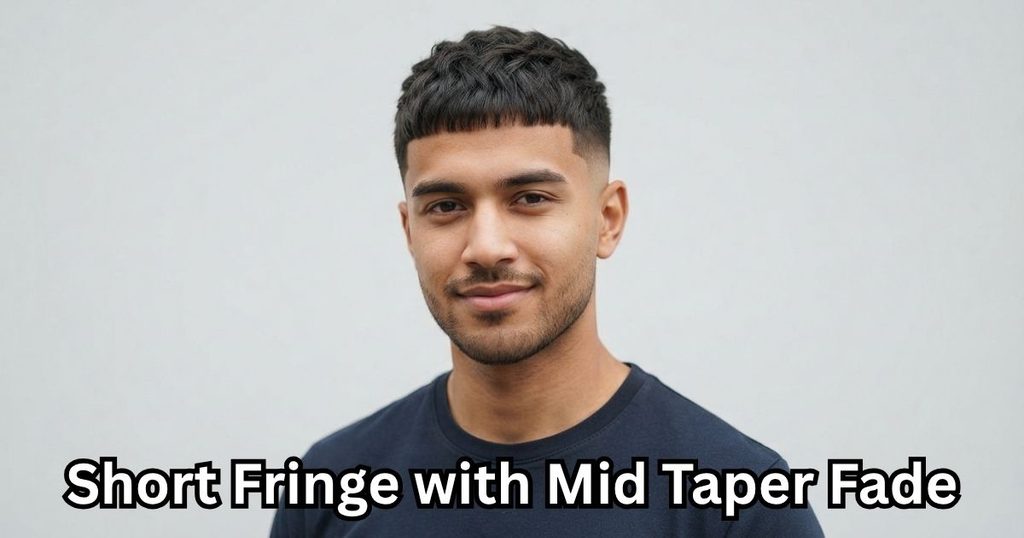
Sitting just above the brow, this version keeps things neat and out of your eyes. Straight or slightly wavy hair holds the shape best without much fuss.
It suits round and oval faces particularly well, and busy men appreciate how little styling it demands. A light pomade and quick finger-comb work fine for both office days and weekend errands.
2. Curtain Fringe with Mid Taper Fade
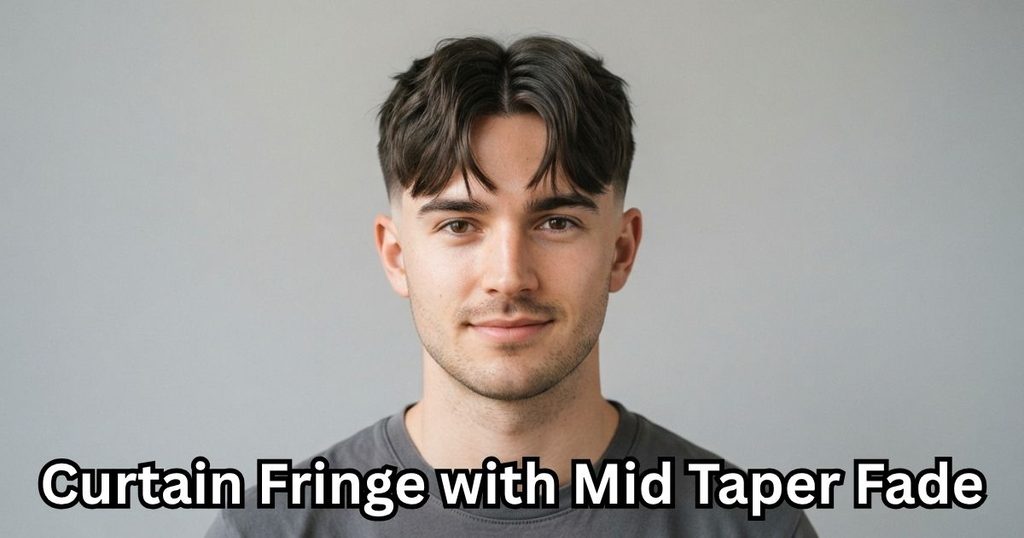
Parted down the middle, curtain fringe frames the face from both sides. Guys with natural wave get the most movement, though straight hair can be trained with a round brush.
Oval and heart-shaped faces benefit most from this framing effect. Maintenance sits at medium, needing trims every few weeks. It reads casual yet polished enough for dinner dates or weekend outings.
3. Side-Swept Fringe with Mid Taper Fade

Pushed to one side, this fringe brings a tidy, put-together feel without looking stiff. Straight hair sits flattest, while wavy hair adds subtle texture along the sweep.
Square and long faces soften nicely under this angle. A light-hold pomade keeps everything in place through the day. It’s a safe, professional choice for interviews, meetings, or client-facing work.
4. Choppy Fringe with Mid Taper Fade
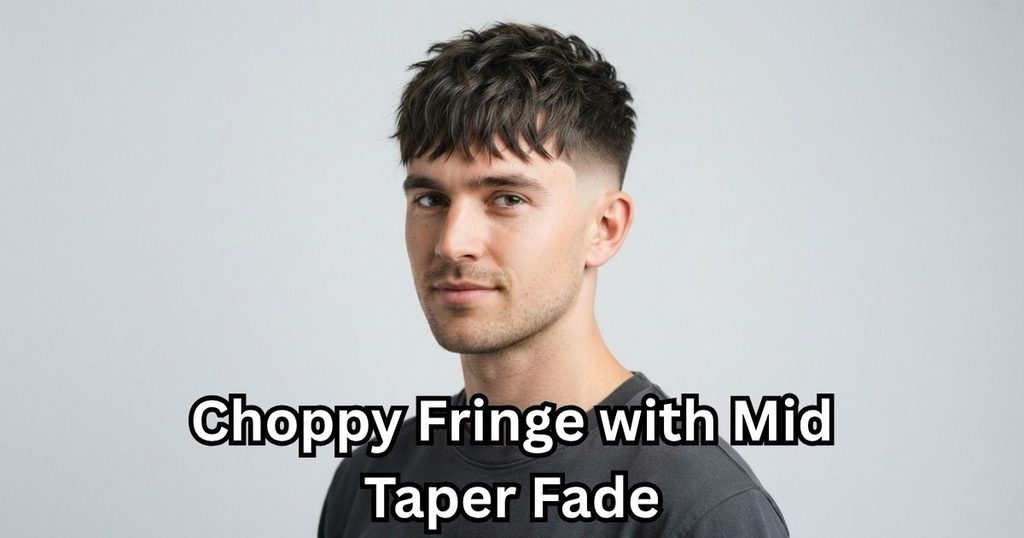
Point-cut ends give this fringe a jagged, textured finish that adds visible movement. Thick or coarse hair shows off the choppy layers especially well compared to finer strands.
Round and square faces gain welcome angles from the broken-up edges. Matte clay enhances the piece-y look without adding shine. Casual settings and creative workplaces suit this style best overall.
5. Fringe with Mid Taper Fade Blowout

Height and volume define this look, achieved by lifting the roots with a round brush and dryer. Fine or medium hair responds well, gaining lift that lasts through the day.
Long and oval faces carry the added height nicely without looking top-heavy. Maintenance runs higher since daily blow-drying is required. Save this one for nights out or occasions where more presence.
6. Wavy Fringe with Mid Taper Fade

Rather than fighting natural texture, this style works with existing waves for an easy, undone finish. Wavy or curly hair types are the natural fit here, needing little correction.
Oval and heart-shaped faces pair especially well with the soft movement. Sea salt spray enhances texture without weighing hair down. Beach trips, casual outings, and relaxed weekends all suit this look.
Common Mid Taper Fade Fringe Mistakes to Avoid
Even a great haircut can go wrong with the wrong choices at the chair or the mirror. Small missteps often turn a sharp style into one that grows out awkwardly.
Knowing what to avoid saves you a frustrating few weeks of regrowth. The mistakes below come up often, and each one is easy to sidestep once you know what to ask for.
1. Cutting the Fringe Too Short
Going too short up front removes the styling options that make this cut worthwhile in the first place. Once it’s gone, you’re stuck waiting for length to return.
This mistake hits straight-haired guys hardest, since short strands sit stiffly rather than falling naturally. Always ask your barber to leave extra length until you see the result yourself.
2. Letting the Barber Guard-Cut the Fringe
Using clippers with a guard on the fringe creates a blunt, unnatural edge instead of soft, blended texture. Scissors give far better control over shape and movement here.
Textured or wavy fringe styles suffer most from this shortcut. Speak up before the cut starts and request scissor work specifically. It’s a quick fix that prevents a stiff, awkward result.
3. Skipping Heat Protection When Blow-Drying
Daily heat styling without protection dries out strands and leads to breakage over time, especially on fine or color-treated hair. That damage shows up as frizz and split ends.
A lightweight heat protectant spray solves this in seconds before drying. It’s a small step that keeps your fringe healthy through months of regular blow-drying and round-brush styling sessions.
4. Choosing a Full Mid Fade Instead of a Mid Taper
Asking for a fade when you actually want a taper leads to more contrast than intended. The skin-close sides can look sharper than what most guys expect going in.
This confusion trips up first-timers most often at unfamiliar shops. Bring a reference photo and clarify you want length retained, not a close shave, to avoid this common mix-up.
5. Waiting Too Long Between Fringe Trims
Letting the fringe grow unchecked causes it to flop into the eyes and lose its shape entirely. What started sharp can turn shaggy within just a few extra weeks.
Thicker hair types show this growth fastest and need earlier touch-ups. Book trims every three to four weeks to keep the line crisp and the overall style intact.
6. Using Heavy Wax on Textured Fringes
Thick wax weighs down textured strands, flattening the piece-y separation that makes choppy or textured fringes look good. The result often looks greasy rather than styled.
Fine or medium hair types are especially prone to this problem. Swap wax for a matte clay or light paste instead, which holds shape without dragging texture down.
How to Style a Mid Taper Fade Fringe
Getting the cut right is only half the job, since daily styling determines how it actually looks each morning. A few simple habits keep the shape consistent day after day.
The right products and routine make a noticeable difference here. None of it takes more than a few minutes, even for guys who aren’t naturally into hair care routines.
Daily Styling Routine
Start with damp, not dripping, hair before applying any product for even distribution. Direct the blow-dryer toward your intended fall, whether that’s forward, to the side, or centered.
Straight hair benefits from a round brush for shape, while wavy hair often needs just a scrunch and air-dry. Finish by raking fingers through for a natural, separated look.
Products That Work Best
Matte clay suits textured and choppy fringes, giving hold without shine or heaviness. Light pomade works better for side-swept or slicker looks that need smoother control throughout the day.
Sea salt spray adds grip and texture for wavy styles specifically. Fine hair types should stick to lighter formulas, while thicker hair can handle stronger, higher-hold products comfortably.
How Often Should You Trim the Fringe?
Most guys need a fringe trim every three to four weeks to maintain shape and keep length from becoming unmanageable. Faster-growing hair may need slightly more frequent visits.
Low-maintenance guys can stretch this by asking for a longer fringe upfront. Higher-maintenance styles like blowouts often need trims sooner to keep that lifted, structured shape looking sharp.
Which Face Shape Suits a Tapered Fringe?
Face shape plays a bigger role in fringe styling than most guys realize going into a haircut. The right length and angle can balance proportions in subtle, flattering ways.
Below is a quick breakdown by shape, covering which fringe styles and product choices tend to work best for each one, along with occasions where they shine.
Oval Face
Nearly every fringe style works well here, from curtain to choppy to side-swept, since oval faces have naturally balanced proportions already.
Straight, wavy, or textured hair all suit this face shape equally. Any product from matte clay to light pomade works fine. This flexibility makes oval faces ideal for both casual and formal occasions.
Round Face
Textured or side-swept fringes add helpful angles that break up roundness, while blunt, full fringes tend to widen the face further than intended.
Wavy or textured hair enhances this effect nicely. Matte clay keeps things piece-y rather than solid. These styles suit everyday wear and work well for relaxed social occasions too.
Square Face
Softer, textured fringes ease up a strong jawline without hiding it completely, while side-swept options add gentle asymmetry that flatters angular features.
Straight or wavy hair types both work here. Light pomade smooths without stiffening the look. These styles transition easily between office settings and evening plans without needing major adjustment.
Long Face
A fuller, straighter fringe shortens the appearance of the face by adding visual width across the forehead area, balancing out extra length nicely.
Thicker hair holds this fuller shape best. Matte paste provides enough hold for structure. This style suits professional settings especially well, adding a grounded, polished finish overall.
Heart-Shaped Face
Curtain fringe balances a wider forehead against a narrower chin, softening the taper down toward the jaw in a flattering way overall.
Wavy or textured hair enhances the framing effect further. Light pomade or sea salt spray both work well. This style suits casual outings and creative work environments particularly nicely.
Also Read: French Crop Low Fade: The Complete Style & Grooming Guide
Best Mid Taper Fade Fringe Styles by Age Group
Age often shapes how bold or subtle a guy wants his fringe to look. What works at eighteen doesn’t always translate the same way at forty, and that’s fine.
Here’s a rough guide by age group, covering which fringe lengths, textures, and maintenance levels tend to suit each stage of life best.
Teenagers
Bolder styles like choppy or blowout fringes suit teenagers well, since there’s less pressure around workplace dress codes or formal expectations to consider.
Straight or wavy hair both work fine here. Affordable products like matte clay keep things simple. These styles suit school, social events, and casual weekend activities easily.
Young Men
Curtain and side-swept fringes strike a nice balance between trendy and put-together for guys navigating early careers or dating life during their twenties.
Most hair types adapt well at this stage. Light pomade or matte clay both work depending on desired shine. These styles suit both social occasions and early professional settings comfortably.
Professional Men
Side-swept or short fringe styles tend to suit professional settings best, offering a clean, controlled look that reads polished without appearing overly styled.
Straight hair holds this shape most reliably. Light-hold pomade keeps things neat through long workdays. These styles suit office environments, client meetings, and formal occasions equally well.
Does a Tapered Fringe Make You Look Younger or Older?
Softer, shorter fringes tend to read younger, since they echo boyish, low-maintenance styles often seen on teenagers and guys in their twenties.
Longer, more structured fringes like curtain styles can add maturity instead, framing the face in a way that feels more deliberate. Choosing between them really comes down to personal preference and desired impression.
How to Ask Your Barber for a Mid Taper Fade Fringe
Clear communication at the chair prevents most disappointing haircuts before they happen. Vague requests like “just a trim” rarely produce the specific result you’re picturing.
Being specific about length, blend, and finish gives your barber exactly what they need to deliver the cut you actually want walking in.
Key Phrases to Use With Your Barber
Try phrases like “mid taper on the sides” or “soft blend, not a hard line” to communicate exactly what you want clearly.
Mentioning fringe length in inches helps too, since barbers work more precisely with numbers than vague descriptions. Bringing a reference photo backs up whatever specific phrasing you choose to use.
Choosing the Right Length and Guard Number
Guard numbers typically range from a 2 to a 4 for mid taper sides, with higher numbers leaving noticeably more length throughout the blend.
Fringe length depends on your chosen style, from eyebrow-skimming short fringes to longer curtain styles reaching several inches. Discuss both numbers upfront so nothing gets cut shorter than planned.
Common Barber Mistakes to Mention
Ask your barber specifically to avoid guard-cutting the fringe, since scissors give far better control over texture and shape than clippers alone.
Also mention avoiding a hard line between the fade and the top section. Requesting a “soft, blended taper” instead of a fade prevents unwanted skin-close contrast on the sides.
Mid Taper Fade Fringe , Video Guide
Sometimes a written guide only gets you so far, especially when it comes to blow-drying technique or judging exact fringe length in person.
A short video walkthrough fills that gap nicely, showing the cutting process and styling steps in real time. Check the video above for a visual breakdown of everything covered here.
Final Thoughts
That’s everything you need to know about the mid taper fade fringe. It’s simple. It’s sharp. It works for almost any face shape or hair type. Whether you go short, curtain, or wavy, the mid taper fade fringe adapts to you.
Talk to your barber. Bring a photo. Ask for a soft blend, not a hard line. Keep up with trims every few weeks. Do that, and your mid taper fade fringe will stay clean and sharp for months to come. It’s a small effort for a big payoff.
FAQs
What is a mid taper fade fringe?
A mid taper fade fringe blends short, tapered sides into a longer fringe on top. The fade sits in the middle, giving you a soft, natural transition.
How do I ask my barber for a mid taper fade fringe?
Just say you want a mid taper fade fringe. Ask for a soft blend on the sides and extra length up front for the fringe.
How often should I get a mid taper fade fringe trimmed?
You’ll want a mid taper fade fringe touched up every three to four weeks. That keeps the sides sharp and the fringe from getting shaggy.
Does a mid taper fade fringe suit curly hair?
Yes, a mid taper fade fringe works great with curly hair. The taper keeps sides neat while your natural curl pattern shows through up top.
What products work best for a mid taper fade fringe?
Matte clay and light pomade both work well for a mid taper fade fringe. Sea salt spray adds texture if your hair has natural wave.

Serena Luna, the voice behind JournalHair. I share the latest hairstyle ideas, haircut trends, and easy hair inspiration to help you find your perfect look every day.
