

A taper with curly hair gives you the best of both worlds: clean sides and natural texture on top. The gradual taper keeps your haircut sharp without taking away the curls that give your style personality. Whether you have loose waves, defined curls, or tight coils, this cut can work with your natural pattern. You can keep the top short for easy styling or leave extra length for more volume and movement.
The beauty of a taper with curly hair comes from its flexibility. Pair it with a line up for a sharper finish, or let the curls stay slightly messy for a more laid-back look. A curl defining cream or lightweight leave-in conditioner can control frizz without making your hair stiff. With regular trims and proper moisture, a taper with curly hair stays fresh and easy to manage.
What Is a Taper Fade for Curly Hair?
A taper fade for curly hair gradually shortens the sideburns and neckline while keeping natural curls fuller above. The result looks clean without flattening your texture.
This cut suits most curl patterns, from waves to tight coils. Ask for a curl-friendly finish, use lightweight cream, and trim regularly for work or weekends.
Taper vs. Fade for Curly Hair
A taper keeps the shortest area around the sideburns and neckline, while a fade usually removes more hair higher along the sides. Both sharpen curly styles.
Choose a taper for a softer finish and easier growing out. A fade suits bolder shapes, especially with defined curls, square faces, or sharper styling.
Why Curly Hair and Taper Fades Work So Well Together
Curly hair naturally creates volume and movement, while a taper removes bulk around the edges. Together, they create contrast that makes your curls stand out.
This combination works across curl patterns and face shapes. Use curl cream for definition, refresh moisture between washes, and keep regular trims for consistently neat edges.
Best Types of Taper Fade for Curly Hair
The best taper depends on how much contrast you want around your curls. Low, mid, and high options create noticeably different shapes and maintenance needs.
Consider your curl density, face shape, and daily routine before choosing. A lower taper feels subtle, while higher tapers create stronger definition around fuller textured tops.
Low Taper Fade For Curly Hair
A low taper fade for curly hair keeps most side volume intact while cleaning the lower edges. It creates a subtle contrast that feels natural and polished.
This option suits round, oval, and heart-shaped faces with waves, curls, or coils. Use leave-in conditioner and curl cream, then schedule modest touch-ups for everyday wear.
Mid Taper Fade For Curly Hair
A mid taper fade for curly hair removes more side weight than a low taper without creating an aggressively high finish. It balances volume with structure.
It works especially well for oval, square, and diamond faces with medium-density curls. Apply defining cream, shape curls naturally, and maintain the taper every few weeks.
High Taper Fade For Curly Hair
A high taper fade for curly hair creates strong contrast by starting the taper higher around the temples. Your curls appear fuller because the sides look noticeably cleaner.
This style favors oval and square faces with dense curls or coils. Use curl cream for separation, avoid heavy buildup, and expect frequent edge maintenance.
Other Fade Variations for Curly Hair
Curly hair works with more than traditional taper placements. Drop and burst fades can reshape the sides while giving your curls a distinctive silhouette.
These variations suit people who want stronger visual contrast. Match the fade to your face shape, curl density, and preferred styling effort before committing.
Drop Fade for Curly Hair
A drop fade for curly hair curves downward behind the ears, creating a rounded shape that follows your head. It gives dense curls a controlled outline.
This fade suits oval, square, and longer faces with medium or tight curls. Use lightweight gel for definition, then maintain the curved fade regularly for crispness.
Burst Fade with Curly Hair
A burst fade with curly hair creates a rounded fade around each ear while leaving more length behind. It gives curls an energetic shape without removing everything.
This look suits oval and heart-shaped faces with curls, coils, or waves. Apply curl cream, keep the neckline tidy, and refresh the fade regularly for sharper edges.
25 Best Taper Fade for Curly Hair Styles
These curly taper fade styles cover different curl patterns, lengths, face shapes, and personalities. Each option offers a practical way to balance texture with cleaner edges.
Before choosing, consider your natural density and styling routine. A good barber can adjust the taper, top length, and hairline to create a shape that suits you.
Curly Afro Taper Fade
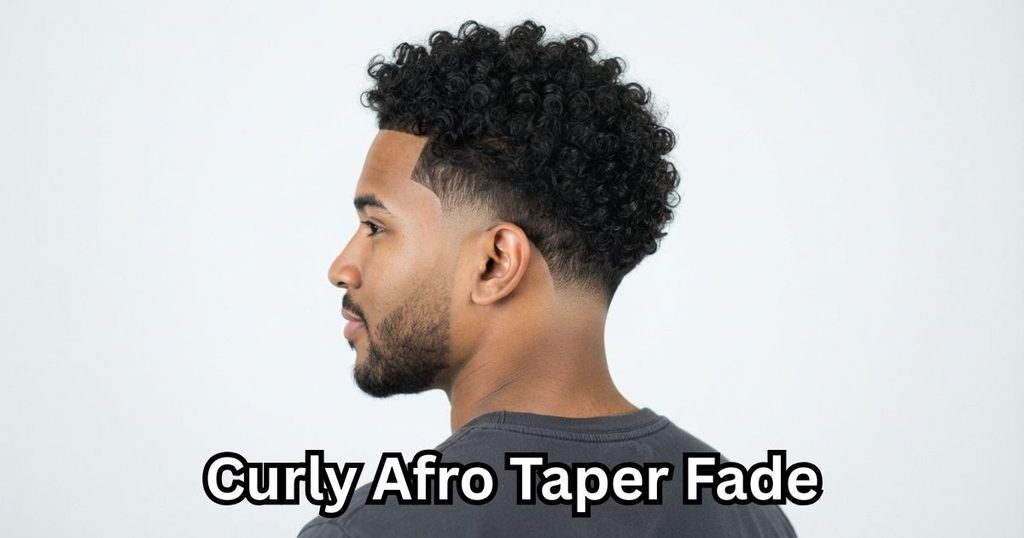
A curly afro taper fade keeps the top full and rounded while tapering the temples and neckline. The contrast gives dense curls a clean, confident silhouette.
It suits oval, round, and square faces with thick curls or coils. Use moisturizing cream, shape gently, and schedule regular edge trims for polished everyday or special-occasion styling.
Curly Fringe Taper Fade
A curly fringe taper fade leaves curls falling naturally toward the forehead while keeping the sides and neckline neat. The fringe adds movement without sacrificing structure.
This style suits oval, oblong, and heart-shaped faces with loose or medium curls. Apply curl cream, scrunch lightly, and trim regularly to maintain the fringe shape.
Defined Curls Taper Fade
Defined curls taper fade styles emphasize individual curl patterns while keeping the edges clean and controlled. The finished look feels polished without making your texture appear stiff.
It works for oval, square, and diamond faces with healthy curls. Use defining cream or gel, avoid excessive brushing, and refresh the taper every few weeks.
Messy Curls Taper Fade
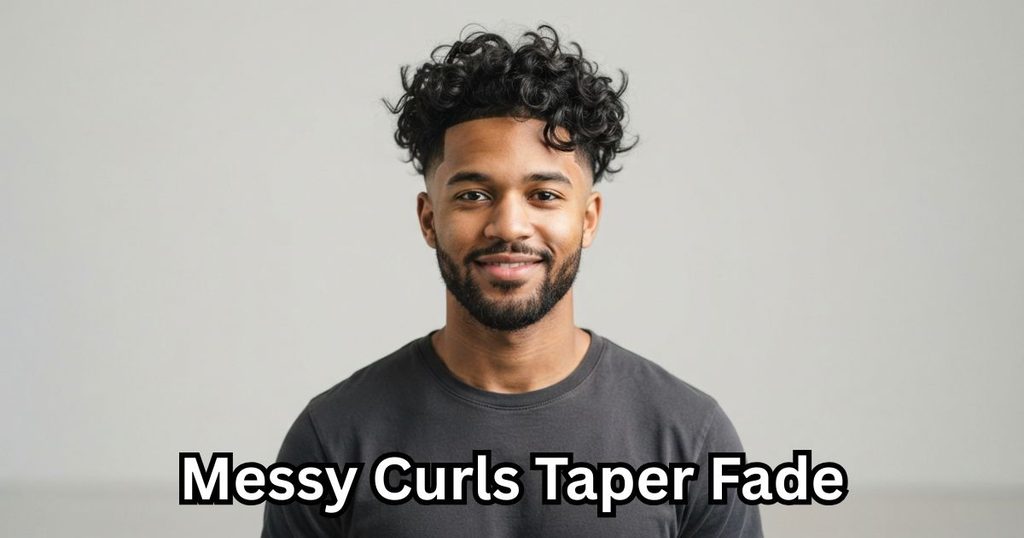
A messy curls taper fade embraces natural movement instead of forcing every curl into place. The tapered sides keep the intentionally tousled top from looking overly bulky.
It suits relaxed personalities and most face shapes, especially oval and square. Use lightweight cream, scrunch with your fingers, and trim periodically for an easy weekend-ready finish.
Curly Hair with Temp Fade
Curly hair with a temp fade cleans the temples while preserving plenty of natural volume above and behind the ears. It creates a sharp, focused outline.
This style suits oval, square, and round faces with dense curls. Use curl cream for separation, maintain the temple edges often, and wear it casually or professionally.
Short Curly Taper Fade
A short curly taper fade keeps your curls close to the head while gradually cleaning the sides and neckline. It offers a neat shape with minimal styling.
This cut suits busy schedules and most face shapes, especially oval and square. Use a small amount of curl cream, refresh with water, and trim frequently.
Curly Taper Fade with Line Up
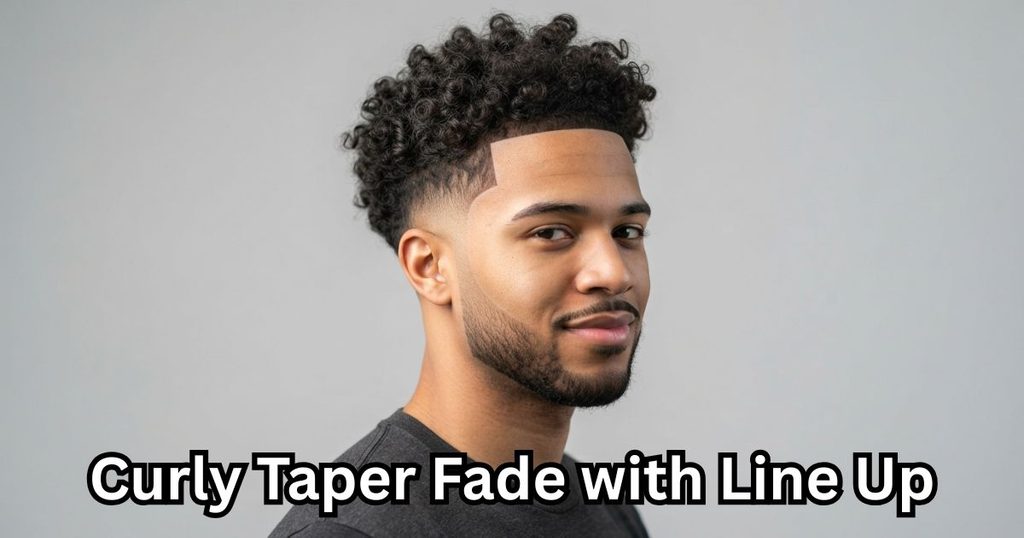
A curly taper fade with line up combines textured curls with sharply defined forehead and temple edges. The clean outline makes the natural texture look more intentional.
It suits oval, square, and diamond faces with medium or dense curls. Use edge control sparingly, define curls with cream, and maintain the line regularly.
Curly Taper Fade with Long Hair on Top
A curly taper fade with long hair on top creates dramatic volume while keeping the lower sides controlled. Extra length lets curls form larger, more expressive shapes.
This style suits oval and oblong faces with loose through tight curls. Use leave-in conditioner and defining cream, then shape gently for dates, events, or weekends.
Curly Taper Fade Mullet
A curly taper fade mullet keeps the sides cleaner while preserving extra length toward the back. Curly texture makes the contrast look softer and more naturally blended.
It works especially well for oval, heart, and diamond faces with medium or thick curls. Use curl cream, protect the back length, and trim strategically.
Curly Taper Fade with Beard
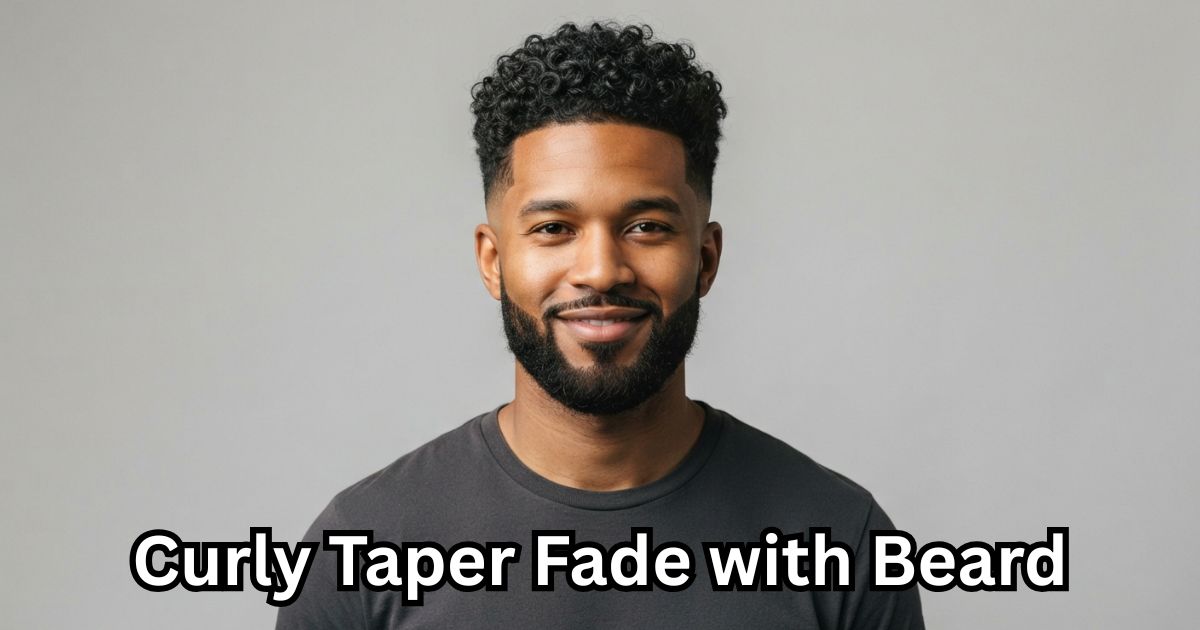
A curly taper fade with beard connects textured hair and facial hair through clean temple and neckline transitions. The result creates a balanced frame around your face.
It suits oval, square, and diamond faces with nearly any curl pattern. Use beard balm and curl cream, then maintain both edges regularly for sharper definition.
2C Wavy Taper Fade
A 2C wavy taper fade works with strong waves that sit between straight texture and true curls. The taper adds structure without stripping away natural movement.
This style flatters oval, round, and oblong faces with thick waves. Use lightweight mousse or cream, avoid heavy products, and trim regularly to prevent bulky sides.
3A Curly Taper Fade
A 3A curly taper fade highlights loose, springy curls while keeping the temples and neckline controlled. The result looks defined without creating excessive visual weight.
It suits oval, heart, and square faces with naturally bouncy curls. Use leave-in conditioner and curl cream, air-dry gently, and maintain the taper between longer top trims.
3B Curly Taper Fade
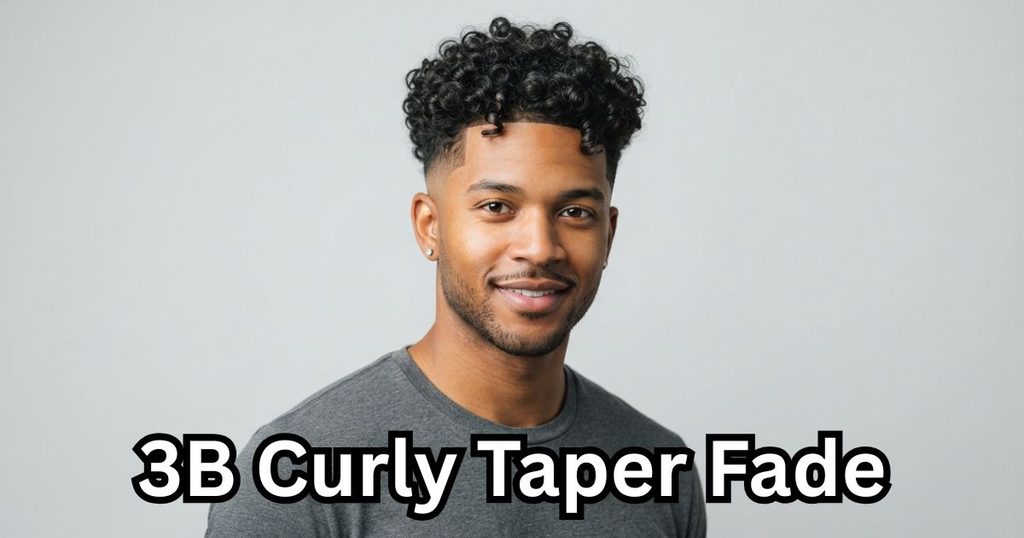
A 3B curly taper fade works beautifully with medium-sized curls that naturally create noticeable volume. The taper keeps that volume balanced by cleaning the lower perimeter.
This cut suits oval, square, and diamond faces with dense curls. Apply defining cream, avoid rough towel drying, and schedule regular taper touch-ups for consistent shape.
3C Curly Taper Fade
A 3C curly taper fade emphasizes tighter curls while creating cleaner edges around the temples and neckline. The contrast makes dense texture look organized without flattening it.
It suits oval, square, and heart-shaped faces with compact curls. Use moisturizing leave-in conditioner and curl cream, then refresh gently between washes to reduce frizz.
4A Coily Taper Fade
A 4A coily taper fade keeps tightly coiled texture full while reducing bulk around the edges. The tapered perimeter creates a strong shape without disturbing your natural pattern.
This style suits oval, square, and round faces with dense coils. Use moisturizing cream and light oil, detangle carefully, and schedule regular trims to preserve clean edges.
4B Coily Taper Fade
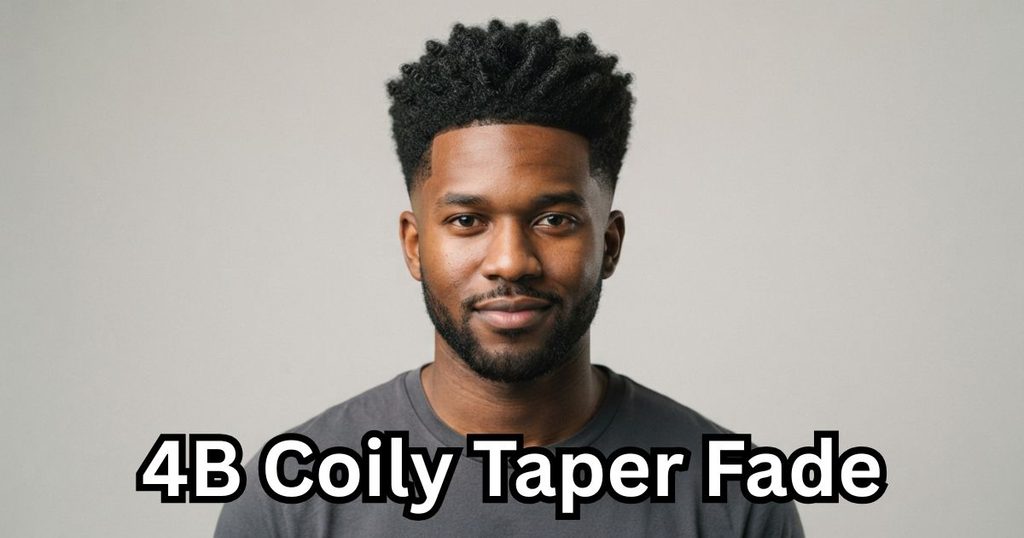
A 4B coily taper fade gives tightly textured hair a structured outline while leaving enough density for natural volume. The taper makes the overall shape easier to manage.
It suits oval, square, and heart-shaped faces with dense coils. Use leave-in conditioner, moisturizing cream, and gentle handling, especially when refreshing or reshaping the style.
4C Curly Taper Fade
A 4C curly taper fade creates a crisp perimeter around highly textured hair while preserving its natural density. The contrast can make your overall shape look especially defined.
This style works well with oval, round, and square faces. Moisturize consistently, use a light styling cream, and keep temple and neckline touch-ups regular.
Curly Taper Fade with Fringe
A curly taper fade with fringe combines controlled sides with curls that sweep or fall across the forehead. It gives the haircut movement while keeping the outline clean.
This style suits oval, oblong, and heart-shaped faces with loose or medium curls. Use curl cream for shape, avoid crunchy gel, and trim the fringe regularly.
Curly Taper Fade with Design
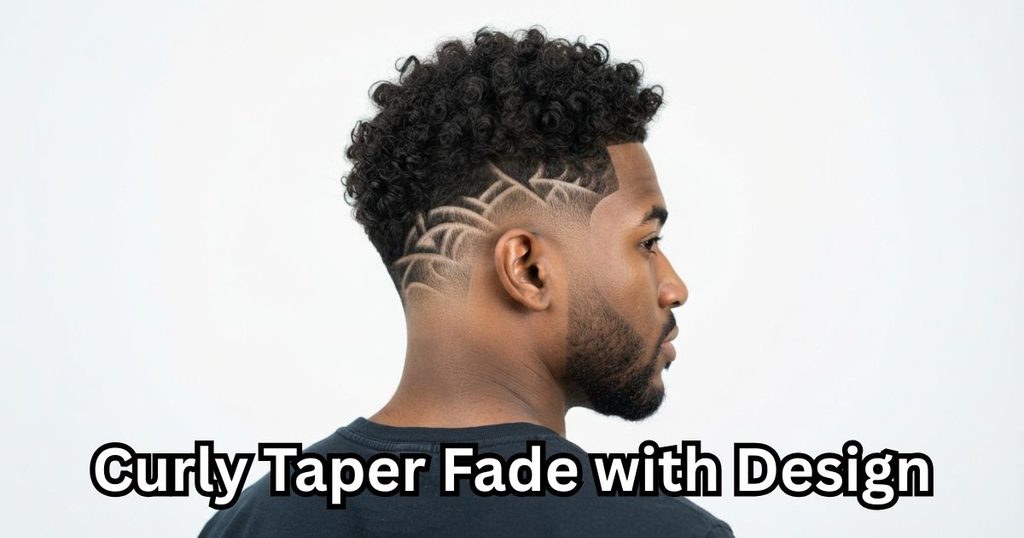
A curly taper fade with design adds a shaved line or geometric detail to an otherwise natural curly shape. The design gives the haircut a personalized finishing touch.
It suits confident wearers with oval, square, or diamond faces and dense curls. Use defining cream, ask your barber for precise design work, and schedule frequent touch-ups.
Natural Curly Taper Fade
A natural curly taper fade lets your curls keep their authentic shape while the taper quietly cleans the sides and neckline. Nothing looks overly sculpted or forced.
It suits nearly every curl pattern and works especially well for oval faces. Use lightweight leave-in conditioner, minimize manipulation, and refresh curls with water between washes.
Low Taper Fade with Curly Hair
A low taper fade with curly hair creates subtle definition around the lower edges while leaving most natural texture untouched. It feels polished without looking overly sharp.
This option suits round, oval, and heart-shaped faces with waves, curls, or coils. Use curl cream, maintain moisture, and choose it for school, work, or casual days.
Mid Taper Fade with Curly Hair
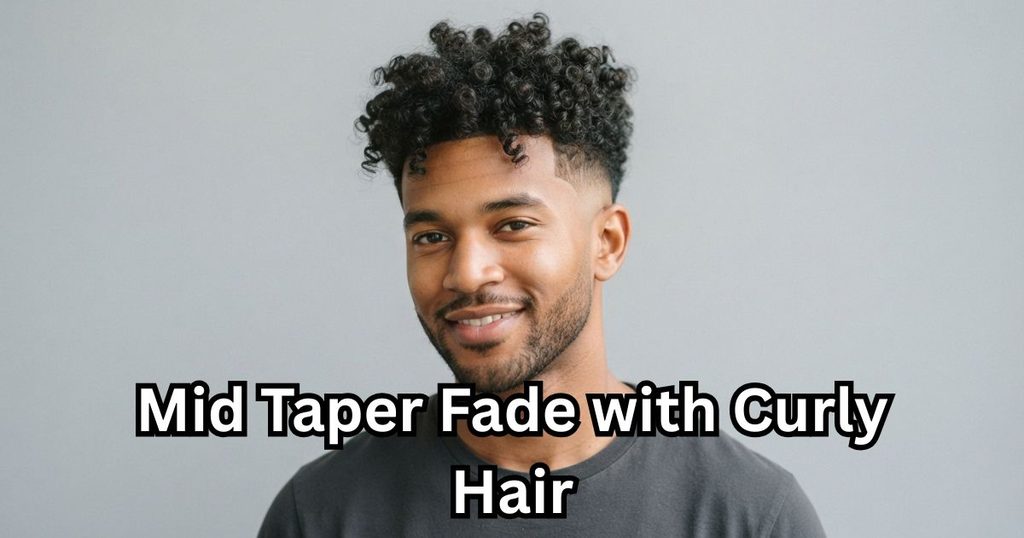
A mid taper fade with curly hair creates a balanced transition between fuller curls and cleaner sides. It offers more contrast than a low taper without going extreme.
This versatile cut suits oval, square, and diamond faces with medium-density curls. Use defining cream, control frizz lightly, and schedule regular trims for a consistently tidy shape.
High Taper Fade with Curly Hair
A high taper fade with curly hair creates noticeable contrast around the temples while leaving the top visibly fuller. Your curls become the main feature of the haircut.
It suits oval and square faces with thick curls or coils. Use lightweight defining products, avoid weighing down the roots, and maintain the higher taper frequently.
Curly Taper Fade with Long Fringe
A curly taper fade with long fringe keeps plenty of curl length across the forehead while tightening the sides. The longer front creates movement and personality.
It suits oval, oblong, and heart-shaped faces with loose or medium curls. Use leave-in conditioner and curl cream, then shape the fringe naturally for casual or creative occasions.
Curly Taper Fade with Textured Top
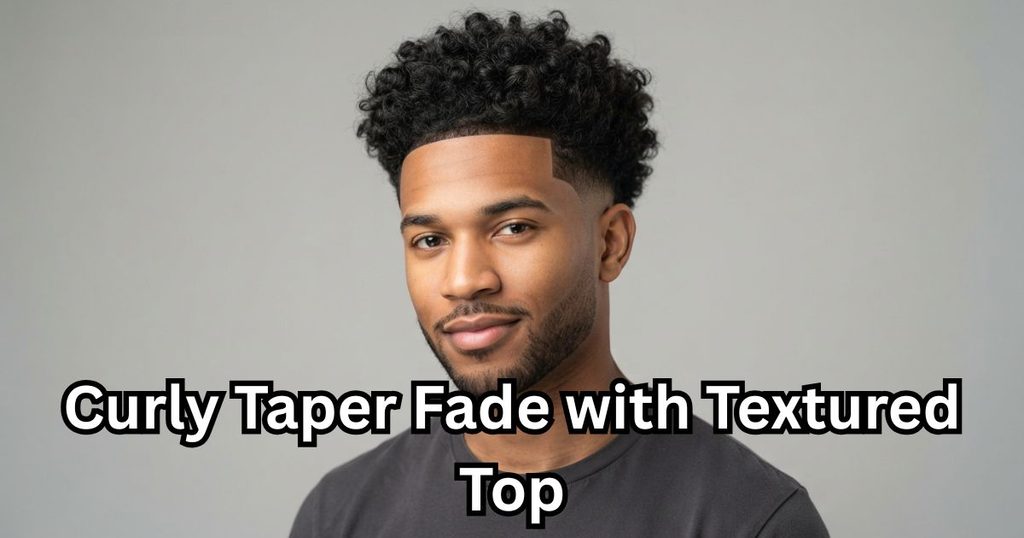
A curly taper fade with textured top keeps natural curls separated and lifted above cleaner sides. The contrast creates a fuller appearance without requiring complicated styling techniques.
It suits oval, square, and diamond faces with medium or dense curls. Use lightweight cream or mousse, scrunch gently, and maintain the taper regularly for sharp edges.
Taper Fade Curly Hair by Curl Pattern
Your curl pattern changes how a taper looks, styles, and grows out. Understanding your texture helps you choose the right taper height and top length.
Waves need lighter products, while tighter curls and coils often benefit from extra moisture. Your barber should also account for shrinkage before deciding the final length.
Wavy Hair (Type 2)
Wavy hair benefits from a taper that removes excess side weight without making the texture disappear. Keeping some length helps waves bend naturally instead of falling flat.
Type 2 hair suits oval, oblong, and round faces particularly well. Use lightweight mousse or cream, avoid heavy oils, and trim regularly to keep waves controlled.
Loose Curls (Type 3a and 3b)
Loose curls create natural volume and definition, making them ideal for low, mid, or high taper placements. Extra top length gives curls room to spring.
These patterns suit oval, square, and heart-shaped faces. Use leave-in conditioner and curl cream, avoid excessive brushing, and refresh with water when curls lose their shape.
Tight Curls (Type 3c and 4a)
Tight curls create strong texture and compact volume, so a taper can provide useful structure around the sides. Keeping the top fuller preserves your natural character.
These curls work well with oval, square, and diamond faces. Use moisturizing products, detangle gently, and schedule trims before the perimeter becomes noticeably uneven.
Coily and Kinky Hair (Type 4b and 4c)
Coily and kinky textures pair beautifully with tapered edges because the clean perimeter contrasts with natural density. The result looks structured while preserving authentic texture and volume.
These patterns suit most face shapes when the taper matches your proportions. Prioritize moisture, use gentle styling products, and protect curls during sleep and washing.
How to Choose a Taper Fade for Your Face Shape
Your face shape can guide the taper height, top volume, and overall silhouette. Small adjustments often make the haircut look more balanced and intentional.
Don’t follow face-shape rules too rigidly, though. Your curl pattern and personal style matter just as much when choosing the final taper.
Oval Face
An oval face works with almost any curly taper because its proportions already look balanced. Low, mid, and high tapers can all complement the natural structure.
You can experiment with fringe, volume, or longer curls without creating obvious imbalance. Use your preferred styling cream and choose maintenance based on your routine.
Round Face
A round face benefits from a taper that creates height and reduces unnecessary side bulk. Keeping curls fuller on top can make your proportions appear longer.
Try a mid or high taper with defined curls. Lightweight mousse or cream keeps volume controlled, while regular trims prevent the sides from becoming too wide.
Square Face
A square face already has strong angles, so a clean taper can emphasize that structure without needing dramatic styling. Natural curls soften the overall appearance beautifully.
Low and mid tapers work particularly well with dense curls. Use defining cream, keep the neckline tidy, and choose this shape for professional or casual settings.
Oblong or Long Face
Long faces often look better with some side fullness and controlled top height. A low taper can preserve width while keeping your curly hairstyle neat.
Avoid excessive height if your face already appears elongated. Use curl cream for definition, keep the sides moderately full, and refresh the shape between regular trims.
Heart-Shaped Face
A heart-shaped face often benefits from balanced side volume and a controlled top. A low or mid taper can create a smoother transition around narrower chin proportions.
Curly fringe styles can also add balance across the forehead. Use lightweight cream, avoid excessive root height, and maintain the taper for a polished finish.
Diamond Face
A diamond face benefits from strategic fullness around the sides while the taper keeps the edges controlled. Curly texture adds softness around naturally prominent cheekbones.
Low and mid tapers usually create balanced proportions. Use curl cream for definition, maintain moderate side volume, and choose a neat neckline for sharper overall structure.
Quick Tip
Your barber can usually balance your haircut by adjusting taper height, top length, and side volume. Bring a reference photo and explain how your curls behave.
Mention shrinkage, density, and your normal styling routine before the cut begins. Those details help your barber create a shape that works beyond the shop chair.
How to Ask Your Barber for a Taper Fade For Curly Hair
A good barber request should cover taper height, top length, curl shape, and the finish around your hairline. Clear details reduce the chance of unwanted surprises.
Don’t rely on the phrase “taper fade” alone. Explain how much texture you want preserved, especially if your curls shrink significantly after washing or drying.
1. Tell Your Barber the Taper Height
Start by choosing low, mid, or high based on how much contrast you want. Your barber can then place the shortest area correctly.
Mention your face shape and preferred side volume if you’re unsure. Bring a photo showing the taper height you like and discuss maintenance expectations.
2. Explain How Much Length You Want on Top
Tell your barber whether you want short curls, medium volume, or significant length. Top length strongly affects your final shape and styling options.
If your curls shrink heavily, mention that before cutting. Ask your barber to consider your dry curl length rather than judging everything from stretched hair.
3. Show a Reference Photo
A reference photo gives your barber a clear visual target for taper height, curl length, shape, and overall finish. One good photo can prevent confusion.
Choose an image showing hair similar to yours in texture and density. If possible, bring side and back views so your barber understands the complete shape.
4. Explain How You Want Your Curls Styled
Tell your barber whether you prefer defined curls, natural texture, messy volume, a fringe, or a more controlled finish. Styling preference changes how much top length you need.
Mention your usual products too. Curl cream creates a different result from gel, mousse, or leave-in conditioner, especially when your natural texture needs extra moisture.
5. Ask About the Hairline and Neckline
Your hairline and neckline affect how polished the taper looks as it grows out. Ask whether you prefer natural edges or sharper, more defined lines.
Natural edges usually grow out softer, while crisp lines need more frequent maintenance. Choose the finish that matches your schedule, workplace, and personal styling preference.
6. Ask How Your Hair Should Be Cut
Curly hair often needs a different cutting approach because shrinkage and curl direction can change the finished shape. Ask your barber how they’ll account for that.
Discuss whether your curls should stay uniform, layered, or slightly uneven for movement. A good consultation helps preserve texture instead of accidentally removing too much volume.
Simple Barber Request
Keep your request simple: ask for a specific taper height, desired top length, curl finish, and neckline. Then show a reference photo for visual clarity.
You could say you want a mid taper with defined curls and a natural neckline. Add that you want enough top length to preserve your curl pattern.
How a Taper Fade for Curly Hair Is Cut
A curly taper fade starts with understanding your natural texture before removing length. The barber then builds the taper gradually and shapes the curls around your desired silhouette.
The final steps focus on balance and clean edges. Because curls can shrink, the barber should check the finished shape carefully rather than rushing the final detailing.
1. Assess the Curl Pattern
Your barber first examines curl size, density, direction, and shrinkage. This assessment helps determine how much hair can be removed without disturbing your natural shape.
Loose curls may need different handling than tight coils. Your barber should also notice uneven growth patterns and areas where the hair naturally sits flatter.
2. Establish the Taper Area
The barber decides exactly where the taper begins around your temples, sideburns, and neckline. This placement determines how subtle or dramatic the finished cut appears.
A low taper preserves more side volume, while higher placement creates stronger contrast. Your preferred face shape and styling routine should guide this decision.
3. Gradually Blend the Sides
The sides are shortened progressively so the hair transitions smoothly instead of creating harsh steps. Curly texture can hide small inconsistencies, but careful blending still matters.
Your barber may use clippers, guards, or shears depending on your hair. The goal remains simple: clean edges with a natural transition into your curls.
4. Shape the Curly Top
After the taper, your barber shapes the top around your natural curl pattern. The goal isn’t simply shorter hair but a balanced silhouette that works with your texture.
The barber may remove excess bulk or preserve length for volume. Curly hair often needs less cutting than straight hair to create noticeable shape.
5. Clean the Edges
The barber refines the temples, hairline, sideburns, and neckline to finish the haircut. These small details make the taper look sharper and more intentional.
Ask for natural or defined edges based on your preference. Defined lines look crisp but require more frequent maintenance as your hair grows.
6. Check the Finished Shape
The barber checks the haircut from the front, sides, and back before finishing. This step helps catch uneven bulk, inconsistent tapering, or awkward curl distribution.
Your curls should look balanced when dry or styled naturally. If something feels too short, mention it before leaving the chair.
Can You Do a Curly Taper Fade at Home?
You can attempt basic edge cleanup at home, but creating a smooth taper requires practice, especially around curly hair and uneven growth patterns.
A professional barber offers better control over blending and shape. If you try maintenance yourself, use a guarded trimmer and avoid chasing perfectly sharp lines.
Also Read: Buzz Mid Fade Haircut: Best Styles, Tips & How to Get It Right
How to Maintain a Taper Fade with Curly Hair
A curly taper fade stays sharp when you maintain both the haircut and your natural texture. Neither side should be neglected if you want consistent results.
Moisture, gentle handling, and timely trims make the biggest difference. Your curls shouldn’t feel dry just because the sides look freshly cleaned.
Keep the Taper Fresh
A taper usually looks best when the temples, sideburns, and neckline stay clean. Small touch-ups can maintain the shape without requiring a full haircut.
Ask your barber how often your growth pattern needs attention. Faster-growing edges may need frequent visits, while softer tapers can stretch longer between appointments.
Wash and Condition Your Curls
Curly hair often benefits from a balanced washing routine that removes buildup without stripping away too much moisture. Conditioner helps keep curls softer and easier to shape.
Choose products suited to your texture and scalp needs. Avoid aggressive scrubbing, and focus shampoo mainly around the scalp rather than repeatedly roughing up your curls.
Moisturize After Washing
Moisture helps curls stay flexible, defined, and less prone to frizz. Apply leave-in conditioner or a lightweight curl cream while your hair remains slightly damp.
Don’t overload your hair with product. Start with a small amount, distribute it evenly, and add more only if your curls still feel dry or undefined.
Dry Your Hair Gently
Rough towel drying can disturb curls and increase frizz, especially with tighter textures. Instead, gently squeeze excess water from your hair using a soft towel.
Air-drying works well for many curl patterns. If you use a diffuser, keep the heat moderate and avoid constantly touching your curls while they dry.
Protect Your Curls While Sleeping
Your pillowcase can affect how your curls look the next morning. Reducing friction helps minimize frizz, tangling, and flattened areas while you sleep.
A satin or silk pillowcase can help, especially for tighter textures. You can also use a loose protective covering that doesn’t compress your curls excessively.
Avoid Over-Manipulating Curly Hair
Constant brushing, touching, or reshaping can break up curl definition and create unnecessary frizz. Let your curls settle naturally once you’ve applied your styling products.
Use your fingers when possible instead of repeatedly combing through dry curls. Less handling often produces better texture, particularly with tighter curl patterns.
Know When Your Hair Needs a Trim
Your taper needs a trim when the edges lose their shape or the sides begin blending into the top. Don’t wait until everything looks overgrown.
Curly tops can often keep growing longer between major cuts. The taper perimeter usually needs attention first, especially around the temples, sideburns, and neckline.
Best Products for Curly Hair Taper Fades
The right products should support your curl pattern without making the hair greasy, crunchy, or weighed down. Start with moisture, then add definition based on your needs.
Product choice depends heavily on texture and density. Fine waves need lighter formulas, while thick curls and coils can handle richer moisturizing products.
Curl Defining Cream
Curl defining cream helps shape individual curls while controlling frizz and adding softness. It’s especially useful when you want definition without the stiff finish of strong gel.
Apply a small amount to damp hair and scrunch gently. Choose lighter formulas for waves and richer creams for dense curls or coils.
Leave-In Conditioner
Leave-in conditioner adds moisture and makes curls easier to manage between washes. It can also help reduce dryness before you apply your main styling product.
Use a lightweight formula for fine curls and a richer option for thick coils. Apply mostly through the textured top rather than heavily coating the tapered sides.
Lightweight Styling Gel
Lightweight styling gel provides stronger hold when your curls lose shape easily. It can help maintain definition through humidity without making the hairstyle feel overly rigid.
Apply a small amount over curl cream if needed. Avoid excessive product because buildup can make curls dull, sticky, or harder to refresh later.
Lightweight Hair Oil
Lightweight hair oil can help seal moisture and add shine when curls feel dry. A few drops often work better than coating the entire head.
Focus the oil on the longer curly sections rather than the tapered edges. Choose a lightweight formula that won’t leave your roots greasy or flattened.
Clarifying Shampoo
Clarifying shampoo removes product buildup, excess oil, and residue that regular cleansing may leave behind. Use it occasionally rather than replacing your everyday shampoo.
Your curls should feel clean afterward without becoming excessively dry. Follow with conditioner or a moisturizing treatment, especially if your hair has a tighter texture.
How to Choose Products for Your Curl Type
Fine waves usually need lightweight products, while thick curls and coils often benefit from richer moisture. Your hair’s density matters just as much as curl pattern.
Start with one product at a time so you can judge the result. If your curls look greasy or flat, reduce the amount before changing everything.
Trending Taper Fade Curly Hair Styles Right Now
Current curly taper trends favor natural texture, cleaner edges, and styles that don’t require excessive daily manipulation. The strongest looks still work with your existing curl pattern.
Instead of copying every trend, choose one that fits your face, hair density, and schedule. A great haircut should survive ordinary mornings, not just photographs.
Natural Texture and Defined Curls
Natural texture with defined curls creates a polished look without making every strand appear perfectly arranged. The taper provides structure while the top retains authentic movement.
This style suits most curl patterns and face shapes. Use leave-in conditioner and curl cream, then let the curls settle naturally for workdays, dates, or weekends.
Curly Fringe
A curly fringe brings texture toward the forehead while the taper keeps the sides clean. It gives your haircut a youthful shape without requiring dramatic volume.
Oval, oblong, and heart-shaped faces often suit this style well. Use lightweight curl cream, avoid heavy buildup, and trim the fringe before it becomes difficult to control.
Curly Taper Fade with a Line Up
A curly taper fade with a line up creates strong contrast between natural texture and sharply defined edges. It looks especially striking when curls have good density.
This style suits oval, square, and diamond faces. Use edge control sparingly, define curls with cream, and expect more frequent maintenance around the hairline.
Curly Taper Fade Mullet
The curly taper fade mullet keeps the sides controlled while allowing more length to remain toward the back. Curly texture makes the transition look lively and distinctive.
It suits oval, diamond, and heart-shaped faces with medium or thick curls. Use curl cream for definition, protect the longer back section, and maintain the taper regularly.
Low-Maintenance Curly Tapers
Low-maintenance curly tapers keep the taper subtle and preserve plenty of natural texture. They’re ideal when you want a neat haircut without constant styling or frequent barber visits.
This option suits most face shapes and curl patterns. Use leave-in conditioner or lightweight cream, refresh with water, and schedule trims when the edges visibly lose definition.
How to Choose a Trend That Will Last
The most lasting curly taper trends work with your natural texture instead of fighting it. Choose a shape that still looks good when your curls aren’t perfectly styled.
Consider your face shape, curl density, workplace, and maintenance budget before committing. A classic taper with healthy curls usually outlives a complicated trend.
Final Thoughts
Taper Fade for Curly Hair: 25 Styles, Tips, and Ideas shows how flexible a taper with curly hair can be. You can keep your curls natural, defined, messy, or full. A taper with curly hair gives you clean edges without taking away your texture. You can also choose a low, mid, or high taper based on your style and face shape.
The right taper with curly hair should fit your curl pattern and daily routine. Use moisturizing products, avoid rough handling, and keep the edges trimmed. Whether you have waves, curls, or coils, a taper with curly hair can look sharp while still feeling natural.
FAQs
How does a taper with curly hair look?
A taper with curly hair keeps your natural texture on top while gradually shortening the sides and neckline for a clean, balanced finish.
Is a taper with curly hair good for thick curls?
Yes, it works especially well for thick curls. The taper removes extra bulk around the edges while letting your natural curls stay full and defined.
What is the best taper with curly hair for a round face?
A mid or high taper can suit a round face because it reduces side bulk and adds visual height through your curly top.
How do you style a taper with curly hair?
Apply leave-in conditioner to damp curls, followed by curl defining cream. Scrunch gently, then air-dry or use a diffuser on low heat.
How often should you trim a taper with curly hair?
Most people need a taper touch-up every two to four weeks. Curly tops can grow longer between cuts while edges usually need attention sooner.

Serena Luna, the voice behind JournalHair. I share the latest hairstyle ideas, haircut trends, and easy hair inspiration to help you find your perfect look every day.
