

Learning how to style a blowout taper can change your whole look without making your routine complicated. This haircut gives you tapered sides, clean edges, and a voluminous top that stands out. The trick is getting the shape right while keeping your hair natural. Once you understand how to style a blowout taper, your morning routine gets much easier.
Start with damp hair and the right styling products. A quick blow-dry can build volume while directing your hair upward and outward. Matte paste or texture powder adds grip without making your hair stiff. If you have curly or wavy hair, a diffuser and curl cream can help shape natural texture. Learning how to style a blowout taper takes practice, but the results can look sharp, full, and fresh without feeling overdone.
What Is a Blowout Taper? The Two-Part Haircut Explained
A blowout taper combines tapered sides with longer hair on top, creating outward volume around the temples and neckline. The top stays fuller for movement, texture, and height.
This haircut suits guys who enjoy styling but don’t want a complicated routine. Your hair type, face shape, and preferred taper height determine how dramatic or subtle the finished look feels.
What is a blowout taper haircut, and who should get it?
A blowout taper haircut keeps the sides gradually shorter while leaving length above the ears and across the top. Blow-drying creates the signature outward shape.
It’s especially useful for medium-to-thick hair with natural movement. Straight, wavy, curly, and afro textures can work beautifully when the taper height matches your face shape.
Blowout Taper vs. Other Cuts
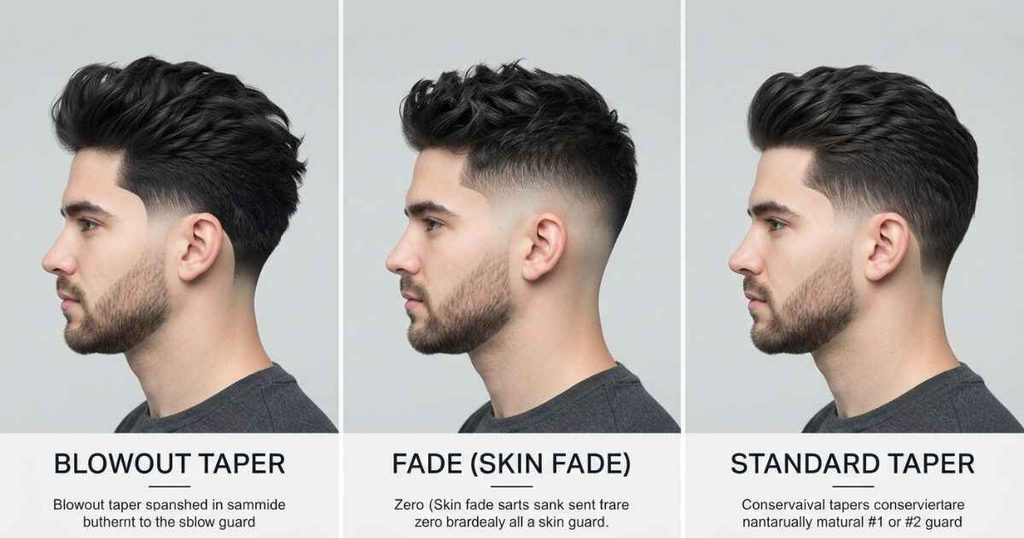
Unlike a traditional taper haircut, the blowout taper focuses heavily on volume around the sides and top. A taper fade usually creates a tighter, cleaner transition.
A classic blowout haircut can feel fuller overall, while this version keeps the edges controlled. You get the same airy shape with more deliberate tapered sides.
Historical Context
The blowout look grew from hairstyles that emphasized dramatic volume, movement, and outward styling. Modern barbers refined that idea by combining volume with cleaner tapering around the edges.
Today’s blowout taper blends older volume-focused styling with contemporary barber techniques. Social media has also pushed textured fringe, curly variants, and sharply defined versions into mainstream grooming.
The 5 Main Blowout Taper Styles: Low, Mid, High, Textured Fringe & Beyond

Each blowout taper variation changes where the taper begins and how much visual weight stays around your head. Small adjustments can completely change the finished silhouette.
Low, mid, and high versions offer different levels of contrast. Textured fringe and curly variants add personality through movement, natural curls, or deliberately messy styling.
Low Blowout Taper: The Easiest Entry Point
A low blowout taper keeps the taper close to the neckline and sideburns. More hair remains around the temples, creating softer volume without an aggressive contrast.
This version suits round, oval, and square faces especially well. Wavy or straight hair needs moderate styling, while curly hair can often rely on natural texture.
Mid Blowout Taper: The Balanced Sweet Spot
A mid blowout taper raises the gradual taper slightly higher around the sides. It creates noticeable structure while preserving enough weight for a substantial, voluminous top.
Choose this option for oval, square, or round faces when you want balance. Matte paste, texture powder, or sea salt spray can enhance the shape.
High Blowout Taper: The Bold Statement
High taper placement removes more weight from the sides and makes the top appear dramatically fuller. The result feels sharper, more defined, and visually taller than lower versions.
This style works particularly well with oval and round faces. Thick, wavy, curly, or coily hair can handle the contrast while creating impressive volume above.
Textured Fringe Blowout Taper: The Viral TikTok Version
A textured fringe brings the top forward while the tapered sides keep the silhouette clean. Choppy layers create movement, making the style look deliberately tousled rather than overly polished.
It suits younger, fashion-forward styling and works across straight, wavy, and curly hair. Matte paste or texture powder adds separation without making the fringe look greasy.
Blowout Taper Perm or Curly Variant: For Natural Curl
Curly versions let your natural curls create most of the volume. The taper cleans the perimeter while keeping enough length above for definition, bounce, and visible texture.
Curl cream and leave-in conditioner help control dryness and frizz. A diffuser blow-dry preserves the natural curl pattern while adding shape without turning your hair into a helmet.
Variant Comparison Table
| Variant | Visual Effect | Best Hair Types | Styling Effort | Best For |
| Low | Soft, fuller sides | Straight, wavy, curly | Low-medium | Everyday wear |
| Mid | Balanced contrast | Most textures | Medium | Versatile styling |
| High | Strong, bold contrast | Thick, curly, coily | Medium | Statement looks |
| Textured Fringe | Forward movement | Straight, wavy | Medium | Trend-focused looks |
| Curly | Natural volume | Curly, coily | Low-medium | Texture-led styling |
Does a Blowout Taper Work for My Hair? A Guide by Hair Type
Your hair texture determines how easily the blowout shape forms. Straight hair often needs more styling, while wavy and curly textures naturally provide movement and volume.
Afro/coily hair brings another advantage: impressive natural density. The right taper height and styling method can emphasize that texture while keeping your neckline and edges defined.
Straight Hair: This Requires the Most Styling Effort
Straight hair gives you a clean canvas but may struggle to hold outward volume. You’ll usually need blow-drying, a round brush, and lightweight styling products.
Start with sea salt spray for grip, then direct the hair upward and outward. Finish with matte paste or texture powder when you need stronger separation.
Wavy Hair: The Goldilocks Texture
Wavy hair naturally sits between straight and curly, making it excellent for a blowout taper. Your existing bends can create volume without excessive heat or product.
Use sea salt spray before drying when extra lift helps. On low-effort days, leave-in conditioner alone may keep your waves looking defined and touchable.
Curly Hair: Maximize Natural Volume
Curly hair can produce a dramatic blowout without forcing the texture into submission. Keep enough length on top so your natural curls have room to expand.
Apply curl cream while damp, then use a diffuser on low heat. Avoid aggressive brushing because it can disturb definition and invite frizz into your finished shape.
Afro/Coily Hair: The Confidence Cut
Afro/coily hair pairs beautifully with tapered sides because strong natural texture creates immediate volume. Your barber can preserve density on top while sharpening the neckline and edges.
Use leave-in conditioner or curl cream to maintain moisture. A pick can lift the roots gently, while controlled styling keeps the shape rounded rather than overly flat.
Hair-Type Styling Comparison Table
| Hair Type | Natural Volume | Main Product | Blow-Dry Method | Effort |
| Straight | Low | Texture powder | Round brush | High |
| Wavy | Medium-high | Sea salt spray | Hands or brush | Low-medium |
| Curly | High | Curl cream | Diffuser | Medium |
| Afro/Coily | Very high | Leave-in conditioner | Pick or gentle diffuser | Medium |
Which Taper Height Works Best for Your Face Shape? A Decision Framework
Face shape matters because taper height changes where the eye notices width and volume. The goal isn’t to follow rigid rules but to create proportions that suit your features.
Round faces often benefit from more vertical emphasis, while long faces need controlled height. Oval faces offer flexibility, and square faces can support several taper heights.
Round Faces: Go Mid or High to Add Vertical Length
Round faces usually benefit from hairstyles that build visual height rather than adding excessive width around the temples. A mid or high taper can create that stronger vertical impression.
Keep the top textured and slightly lifted for balance. Avoid overly wide side volume if your goal involves making your facial proportions appear longer and more defined.
Square Faces: Low or Mid Taper with Soft Texture
Square faces already have strong angles, so a low or mid taper can preserve that structure without making the haircut appear excessively severe. Softer texture adds movement.
Try matte paste through the top instead of heavy shine. Wavy hair works especially well here because natural bends soften the overall outline without hiding your strong jawline.
Oval Faces: Any Height Works; Pick by Maintenance
Oval faces offer plenty of flexibility because their proportions generally accommodate different taper heights. Your choice can focus more on personality, styling effort, and the amount of contrast desired.
A low taper needs less frequent reshaping visually, while higher versions create stronger definition. Straight, wavy, curly, and coily textures can all support this adaptable shape.
Long Faces: Stay Low or Mid; Keep Some Width
Long faces can look more balanced when the sides retain some width. A low or mid taper keeps the silhouette fuller around the temples while avoiding excessive vertical emphasis.
Keep the top moderately styled instead of towering upward. Wavy or curly hair can help naturally widen the shape, while straight hair benefits from controlled outward direction.
What to Tell Your Barber: 5 Blowout Taper Scripts by Height & Hair Type
Good barber communication starts with describing the shape rather than simply naming a haircut. Mention your preferred taper height, top length, texture, neckline, and styling direction.
A clear barber script reduces misunderstandings and makes reference photos more useful. Your barber can then adjust the cut for density, hairline, face shape, and natural growth.
Essential Communication Elements
Tell your barber exactly where you want the taper to begin and how much length should remain on top. Mention whether you want volume styled upward, outward, or forward.
Also describe your natural texture and maintenance tolerance. Say whether you normally use a blow-dryer, matte paste, texture powder, or almost nothing before leaving home.
Barber Scripts by Variant
For a low taper, say, “Keep the taper low and leave plenty of weight around my temples.” For a mid version, request balanced tapering with volume preserved.
For a high version, explain that you want stronger contrast. Curly clients can request clean edges while keeping natural curls untouched above the taper line.
Reference Photo Guidance
Bring two or three reference photos showing the front, side, and back whenever possible. Different angles reveal details that one dramatic photograph can easily hide.
Choose examples with similar hair texture and density. A straight-haired reference won’t always translate perfectly to curly hair, even when the haircut itself looks nearly identical.
Optional Clipper Guard Reference
Clipper guard numbers can help, but they shouldn’t replace a clear conversation about the finished shape. Different barbers use different techniques to create gradual transitions.
Ask your barber how short they’ll take the sides and neckline. Focus on the visible result first, then use guard numbers as supporting details.
What NOT to Say
Avoid saying, “Just give me a blowout taper,” then expecting your barber to read your mind. That phrase leaves taper height, top length, and styling direction unclear.
Don’t request a photo’s exact result without considering your own texture. Instead, explain what you like about the reference and let your barber adapt it properly.
How to Style a Blowout Taper at Home: Step-by-Step Blow-Dry Guide
The haircut creates the foundation, but your styling technique brings the blowout shape to life. Direction matters more than simply blasting hot air everywhere.
Work with damp hair, use sensible heat, and control the airflow. A few minutes of deliberate drying can create noticeably better volume than frantic brushing before work.
General Blow-Dry Principles (All Hair Types)
Start with towel-dried hair rather than soaking wet strands. Apply heat protectant spray when using regular blow-drying, especially if you style frequently.
Point airflow in the direction you want the hair to sit. Lift the roots gradually, then finish with cooler air to help the shape settle without excessive heat.
Straight Hair: 5-Step Blow-Dry for Maximum Lift
Straight hair benefits from a structured routine. Apply heat protectant, add lightweight texture product, then separate the top into manageable sections before reaching for your dryer.
Use a round brush to lift the roots while directing hair upward and outward. Finish with texture powder or matte paste once the hair cools and settles.
Wavy Hair: 2-Minute Blow-Dry (or Skip It)
Wavy hair rarely needs an elaborate blow-dry. Apply sea salt spray or leave-in conditioner, then use your hands to encourage the natural wave pattern while drying gently.
If your waves already create enough volume, skip the dryer entirely. Overworking the hair can create frizz and erase the texture that makes your blowout taper interesting.
Curly Hair: Diffuser Technique to Preserve Definition
Curly hair needs gentler airflow because aggressive drying can separate curls and create unnecessary frizz. Apply curl cream while damp, then use a diffuser on low heat.
Cup sections of hair from underneath rather than dragging curls around. Stop once the curls feel mostly dry, then let the remaining moisture disappear naturally.
Afro/Coily Hair: Pick & Mousse Method
Afro/coily textures can create substantial volume without aggressive blow-drying. Apply leave-in conditioner, followed by lightweight mousse if you need extra hold and definition.
Once the hair settles, use a pick gently at the roots to increase height. Avoid repeatedly combing through the lengths because that can disturb your natural curl structure.
Styling Troubleshooting Reference
| Problem | Likely Cause | Quick Fix |
| Flat top | Insufficient root lift | Blow-dry upward |
| Greasy finish | Too much product | Use less next time |
| Frizz | Excessive heat or friction | Lower heat and handle gently |
| Weak texture | Hair lacks grip | Try texture powder |
| Dry curls | Not enough moisture | Add leave-in conditioner |
| Heavy fringe | Too much product | Use lightweight matte paste |
How Long Does a Blowout Taper Stay Fresh? The 4-Week Timeline
A blowout taper changes gradually as the tapered sides grow and the neckline loses definition. Your natural growth rate, hair density, and preferred sharpness affect the timeline.
Most people notice different changes throughout the month rather than one sudden moment when the haircut looks “grown out.” Regular touch-ups can preserve clean edges between full cuts.
Day 1–3: Fresh & Sharp
The first few days usually show the strongest taper definition. Your neckline looks crisp, the edges feel clean, and the top holds its intended shape with minimal effort.
Take advantage of the fresh structure by learning your preferred styling routine. A small amount of product should be enough because the haircut itself provides strong support.
Week 1: Still Sharp
During the first week, the taper remains highly defined while the top begins settling into your natural styling pattern. Most people need little maintenance beyond normal grooming.
Use your usual blow-dry technique and avoid piling on extra product. More paste won’t recreate freshness if the real issue involves hair direction or moisture.
Week 2: Edges Start Softening
Around the second week, the clean edges begin losing some sharpness as new growth appears. The overall silhouette can still look polished, especially with moderate taper heights.
If the neckline bothers you, a simple touch-up may help. Otherwise, keep styling normally and let the hair grow naturally rather than constantly trimming small areas yourself.
Week 3: Visible Softening
By week three, the gradual taper becomes noticeably softer, particularly around the sideburns and neckline. The top usually remains wearable because it carries most of the haircut’s visual character.
This stage suits people who prefer a natural grow-out. If you need consistently defined edges for work or events, schedule your next barber appointment before this point.
Week 4: Blend-Out / Time for Full Refresh
At four weeks, many blowout tapers show obvious growth around the edges. The contrast between tapered areas and the top becomes less precise, although the haircut can remain recognizable.
A full refresh usually restores the original shape more effectively than repeatedly cleaning isolated areas. Your barber can rebalance the taper while preserving your preferred top length.
Touch-Up vs Full Cut: Quick Reference
| Situation | Best Choice |
| Slightly soft neckline | Touch-up |
| Fuzzy sideburns | Touch-up |
| Taper shape disappeared | Full cut |
| Top still looks great | Touch-up may work |
| Major event approaching | Fresh full cut |
| More than four weeks growth | Full refresh |
Regional & Personal Factors
Humidity can change how your hair behaves, especially if you have wavy or curly texture. Sweat, washing frequency, and daily styling also affect how long the shape looks polished.
Your personal growth rate matters too. Some people notice neckline growth quickly, while others can stretch appointments longer. Your preferred level of sharpness ultimately determines your schedule.
Common Maintenance Mistakes
One common mistake involves trimming the neckline too aggressively at home. Another involves using excessive product to disguise growth, which can make the hair look heavy instead.
Skipping conditioning can also make textured hair harder to style. Keep your routine simple: cleanse appropriately, moisturize your texture, and schedule barber visits before the taper completely loses structure.
Also Read: Blowout Taper Textured Fringe (Low, Mid & High): What to Ask For and How to Style It
Putting It All Together: Choose Your Blowout Taper by Hair Type AND Face Shape
The best blowout taper isn’t determined by one feature. Hair texture, face shape, taper height, styling effort, and personal taste all influence how the finished haircut behaves.
Think of the decision as a combination rather than a rigid formula. Your barber can adjust length, volume, and taper placement to create better proportions for your specific features.
Master Decision Matrix
| Hair Type | Face Shape | Suggested Height | Styling Focus |
| Straight | Round | Mid-high | Root volume |
| Straight | Long | Low-mid | Outward width |
| Wavy | Oval | Any | Natural texture |
| Wavy | Square | Low-mid | Soft movement |
| Curly | Round | Mid-high | Defined volume |
| Curly | Long | Low-mid | Controlled width |
| Afro/Coily | Oval | Any | Natural density |
| Afro/Coily | Round | Mid-high | Height and shape |
Example Personas: Decision Stories
Someone with straight hair and a round face may choose a mid taper with upward styling. Texture powder adds grip while the lifted top creates stronger vertical dimension.
A person with thick curls and a long face may prefer a low taper. Keeping side width and natural curls helps balance the overall silhouette without creating excessive height.
Your 5-Step Decision Process
First, identify your natural hair texture. Next, consider your face shape and where you want visual width or height. Then choose low, mid, or high taper placement.
After that, decide how much daily styling effort you can handle. Finally, show your barber suitable references and explain your desired neckline, edges, top length, and natural grow-out preference.
Is a Blowout Taper OK for Work? A Quick Guide by Variant & Industry
A blowout taper can work in professional settings when the finish matches your workplace expectations. Clean edges and controlled styling usually matter more than choosing one specific variation.
Consider your industry’s dress standards before choosing dramatic volume or a high taper. You can keep the haircut modern while adjusting the styling effort and overall contrast.
Acceptability by Variant & Setting
| Variant | Conservative Workplace | Creative Workplace | Everyday Setting |
| Low | Strong fit | Strong fit | Strong fit |
| Mid | Usually suitable | Strong fit | Strong fit |
| High | Depends on policy | Strong fit | Strong fit |
| Textured Fringe | Depends on finish | Strong fit | Strong fit |
| Curly | Usually suitable | Strong fit | Strong fit |
Variant Assessments
A low blowout taper generally creates the most understated silhouette because it preserves more side weight. A mid version adds definition while remaining adaptable for many settings.
High and textured versions create stronger visual impact. They can still look polished when the edges stay clean and the top avoids excessive product, shine, or uncontrolled height.
Industry-Specific Guidance
Corporate offices may favor controlled volume and cleaner edges, while creative environments often allow stronger texture and contrast. Customer-facing roles can also depend on company-specific grooming standards.
When uncertain, choose a moderate taper height and restrained styling. Matte products usually create a more natural finish than high-shine pomades that can make volume look overly deliberate.
5 Blowout Taper Mistakes (And How to Avoid Them)
A good haircut can still disappoint when the top lacks enough length, the taper sits too high, or the styling products fight your natural texture.
Most problems are preventable before you sit in the barber chair. Understanding your hair’s behavior helps you choose realistic length, taper placement, products, and maintenance habits.
Mistake 1: Not Enough Length on Top to Begin With
A blowout taper needs enough top length to create visible volume and movement. Cutting the top too short leaves little hair for upward or outward styling.
Tell your barber how you plan to style the haircut. If you want dramatic volume, keep sufficient length for a round brush, natural curls, or textured fringe.
Mistake 2: Taper Taken Too High Without Intent
A high taper can look sharp, but raising it too far changes the balance of the entire haircut. You may lose side width you actually needed.
Discuss taper height before the clippers start. Your face shape and hair density should guide that decision, especially when moving from low to mid or high tapering.
Mistake 3: Wrong Product for Your Hair Type
Heavy pomade can flatten fine straight hair, while lightweight texture powder may provide too little moisture for dry curls. Product choice should follow your texture.
Straight hair often benefits from matte paste or texture powder. Wavy hair can use sea salt spray, while curly and coily textures usually need curl cream or leave-in conditioner.
Mistake 4: Skipping Daily Blow-Dry and Expecting the Cut to Carry Itself
The haircut creates the foundation, but styling creates the signature blowout shape. Without directing the hair, your top may settle differently from the barber’s finished version.
That doesn’t mean you need a twenty-minute routine. Straight hair may need more work, while wavy, curly, and coily textures can often achieve the shape with minimal heat.
Mistake 5: Not Scheduling Maintenance Ahead
Waiting until the taper completely grows out can make the haircut harder to rebalance. A simple maintenance schedule keeps the neckline, sideburns, and defined edges looking intentional.
Plan your next appointment before the current shape disappears. If you prefer a natural grow-out, stretch the schedule and let the haircut soften without constantly chasing every stray hair.
Final Thoughts
Learning how to style a blowout taper gets easier once you understand your hair. This guide on How to Style a Blowout Taper covers the cut, taper height, face shape, products, and blow-dry techniques. You don’t need a complicated routine. Start with damp hair, build volume, and shape the top with patience.
The key to how to style a blowout taper is working with your natural texture. Straight hair may need more effort, while curls can provide natural volume. Use the right products and keep your taper maintained. Once you master how to style a blowout taper, you’ll get a sharp shape that feels natural and easy to wear.
FAQs
How do you style a blowout taper at home?
Start with damp hair, apply heat protectant, then blow-dry the top upward and outward. Finish with matte paste or texture powder for hold.
What products help style a blowout taper?
Use sea salt spray for texture, matte paste for control, and texture powder for lift. Curly hair benefits from curl cream and leave-in conditioner.
How long does a blowout taper take to style?
Most styles take about five to ten minutes. Straight hair may need longer, while wavy, curly, and coily textures often require less daily styling.
Can you style a blowout taper without a blow dryer?
Yes, especially with wavy, curly, or coily hair. Use your hands, curl cream, or texture powder to shape the top and create volume.
How often should you maintain a blowout taper?
Plan a barber visit every three to four weeks for clean edges and shape. You can stretch it longer if you prefer a softer natural grow-out.

Serena Luna, the voice behind JournalHair. I share the latest hairstyle ideas, haircut trends, and easy hair inspiration to help you find your perfect look every day.
