

Growing your hair out doesn’t mean giving up on style. The blowout taper textured fringe proves that. It’s sharp on the sides, soft on top, and full of movement where it counts. This cut blends a clean taper with a fringe that’s been point-cut for texture, then blown out for volume. The result feels modern without trying too hard.
You’ll see this style everywhere right now, and for good reason. A blowout taper textured fringe works with straight hair, wavy hair, even curls that need a little taming. It flatters most face shapes too, since the taper height and fringe length can shift to suit you. Barbers love it because it’s easy to customize. You’ll love it because it grows out gracefully instead of turning into a shapeless mess. Bring a photo to your next appointment and ask for it by name.
What Is a Blowout Taper Textured Fringe?
This cut pairs short, tapered sides with a longer, textured fringe on top. The taper tightens gradually toward the neck, while the fringe gets point-cut and blown out for lift and movement.
It suits guys who want polish without stiffness. Straight, wavy, and curly hair all take to it well, and most face shapes benefit. Expect moderate upkeep, light styling products, and a look that fits both the office and weekend plans.
Taper vs. Fade: What’s the Difference?
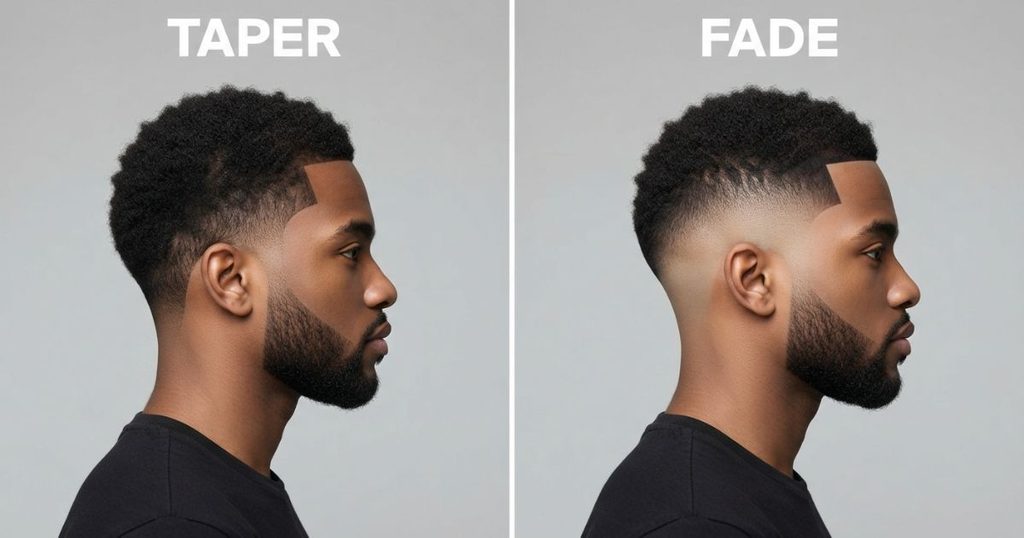
A taper tightens hair gradually and never touches bare skin, keeping some length throughout. A fade drops down to skin at some point, creating a sharper, more dramatic contrast near the hairline.
Taper vs. fade often comes down to how bold you want the sides to look. Taper works better for classic, low-maintenance styles. Fades suit those chasing a sharper, trendier edge and don’t mind more frequent barber visits.
Textured Fringe vs. Textured Crop

A textured fringe keeps length in front, styled forward or swept to one side for movement. A textured crop, on the other hand, keeps the fringe shorter and closer to the forehead overall.
The fringe version suits guys with straighter or wavy hair who want more styling flexibility. The crop works well for curly or coarse textures. Both use point-cutting and rely on light texture products for that piecey finish.
Which Taper Height Should You Choose?
Taper height changes how dramatic your sides look. Low tapers barely fade in, mid tapers sit around ear level, and high tapers climb close to the crown for bolder contrast.
Your choice depends on face shape, hair thickness, and personal style. Low suits conservative settings. Mid works almost everywhere. High taper demands more upkeep but delivers sharper definition for guys who want a statement look.
Low-Blowout Taper-Textured Fringe
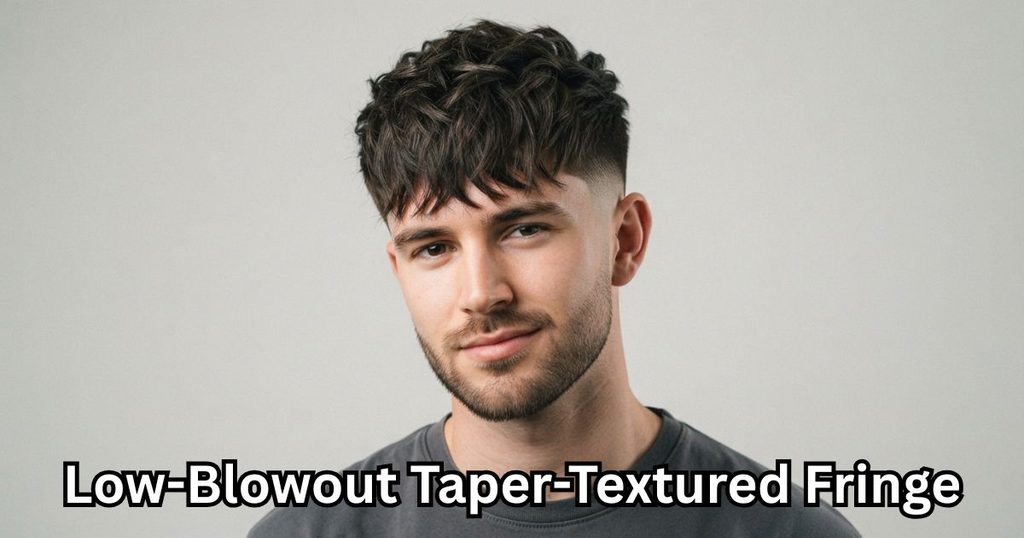
This version keeps the sides subtle, with minimal contrast between the taper and the fringe. It’s soft, understated, and easy to grow out without losing its shape entirely.
It suits round or square faces needing gentle definition without added bulk. Fine to medium hair handles it best. Styling stays simple: light mousse, a round brush, and a few minutes each morning.
Mid-Blowout Taper Textured Fringe
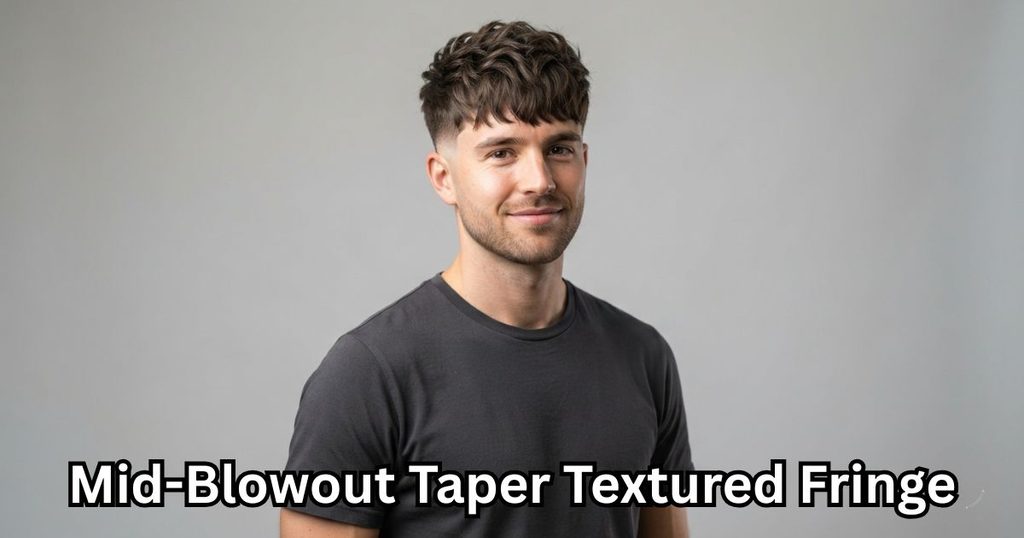
The mid taper sits at a comfortable middle ground, offering noticeable contrast without looking severe. It’s the safest choice if you’re unsure which height suits you.
Nearly every face shape works with this version, especially oval and diamond shapes. Straight and wavy hair styles beautifully here. Maintenance sits at a moderate level, needing trims roughly every four weeks.
High-Blowout Taper Textured Fringe
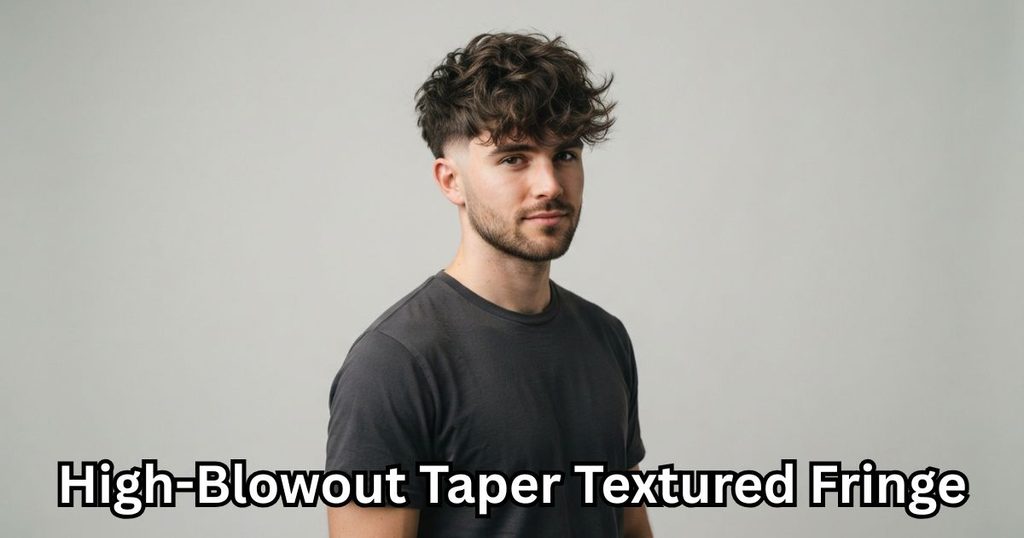
High tapers climb higher on the sides, creating sharp contrast against the longer, voluminous fringe up top. It’s bold, modern, and impossible to ignore.
This style flatters long or oval faces best, adding width where needed. Thicker hair holds the fringe’s volume longer. Expect more frequent trims and a bit more daily styling effort to keep edges crisp.
Best Taper Height for Your Face Shape
Round faces benefit from higher tapers that add length visually. Square faces often look sharper with low to mid tapers that soften strong jawlines instead of emphasizing them.
Long faces do well with low tapers, avoiding extra height. Oval and diamond shapes have the most flexibility. Ask your barber to assess your shape before settling on a final taper height.
What Do You Tell Your Barber?
Bring a clear photo and specific words: taper height, fringe length, and how much texture you want on top. Vague requests like “something modern” often lead to disappointing results.
Mention your face shape and hair type too, since these affect the final look. Ask for point-cutting on the fringe specifically. A five-minute conversation before the clippers start saves you from a haircut you’ll regret.
Is Your Point Cutting Done Right?
Good point-cutting leaves fringe edges soft and irregular, not blunt or straight across. Run your fingers through it. You should feel varied lengths instead of one uniform line.
If your fringe looks flat or heavy, the cutting likely wasn’t fine enough. Ask your barber to thin it further with point-cutting shears. Properly done, it should fall naturally without needing much product to look textured.
Does It Work for Your Hair Type?
This cut adapts surprisingly well across hair types, though results vary. Straight hair shows off the taper cleanly, while curlier textures add natural volume the blowout technique tries to recreate anyway.
That said, thickness matters more than most people realize. Fine hair needs extra lift from styling products. Thick or coarse hair might need more frequent thinning to keep the fringe from looking bulky.
Straight Hair
Straight hair takes the blowout beautifully, since it holds the round-brush shape longer than other textures. You’ll get clean lines and consistent volume with minimal daily effort.
Use a lightweight mousse before blow-drying to avoid flatness by midday. Straight hair suits every taper height. Touch-ups are quick, though frizz-free days depend heavily on humidity where you live.
Wavy Hair
Wavy hair brings natural texture to the fringe, reducing how much styling work you need. The blowout smooths the roots while letting the ends keep some movement.
A sea salt spray enhances the wave without weighing hair down. Mid to high tapers pair well here, balancing the fringe’s natural bounce. Expect slightly less predictable results day to day compared to straight hair.
Curly Hair
Curly hair changes this cut’s character entirely, since curls resist the sleek blowout look and add volume on their own. Some guys prefer this natural texture over a forced style.
Curl cream, not texture powder, works best for definition here. Diffusing instead of blow-drying straight helps preserve curl pattern. Low tapers usually suit curly hair better, keeping proportions balanced against the fuller top.
Fine Hair
Fine hair needs a strategic approach, since it lacks natural volume and can look sparse if cut too short on top. The fringe should stay slightly longer to compensate.
Texture powder at the roots creates the illusion of thickness. Avoid heavy pomades, which weigh fine strands down fast. Low to mid tapers work best, keeping enough length up top for a fuller look.
Asian and Hispanic Hair Textures
Asian hair tends to be thicker and straighter, holding the fringe’s shape well with minimal product. Hispanic hair varies widely, often falling somewhere between wavy and curly territory.
Both textures often need extra thinning to prevent bulk on top. A skilled barber will adjust point-cutting depth accordingly. Matte clay works well for controlling shine while keeping texture looking natural, not greasy.
How Do You Style It at Home?
Styling this cut takes ten minutes, tops, once you know the routine. Start with damp hair, apply your product of choice, then blow-dry the fringe forward or to one side.
A round brush adds lift at the roots for extra volume. On lazy days, air-drying with a little curl cream or texture powder still looks intentional. Consistency matters more than perfection here.
Morning Routine for Straight Hair
Towel-dry until hair is damp, not soaking. Apply a dime-sized amount of mousse, then use a round brush while blow-drying the fringe upward and forward.
Finish with texture powder at the roots for lasting lift. The whole process takes about five minutes once you get the hang of it. Straight hair holds this shape well through most of the day.
Morning Routine for Curly Hair
Apply curl cream to damp hair, scrunching gently to encourage natural curl pattern. Diffuse on low heat instead of blow-drying straight, which disrupts the texture you’re trying to keep.
Avoid touching curls once they’ve dried, since this creates frizz. A light-hold gel can lock in shape without stiffness. Mornings take slightly longer here, but the payoff is low daily maintenance overall.
Which Products Ruin This Haircut?
Heavy pomades and waxes flatten the fringe’s texture, killing the volume this cut depends on. They’re built for slicked-back styles, not the piecey look you’re going for here.
Thick gels can look crunchy and unnatural once dry. Skip anything labeled “extreme hold” unless you’re after a stiff, helmet-like finish. Lightweight mousse, texture powder, and curl cream stay the safest bets.
Also Read: Low Taper Fade with Design: 35 Best Long Hair Styles for Every Face Shape
How Often Should You Get It Trimmed?
Plan on a trim every three to five weeks to keep the taper crisp. The sides grow out faster than the top, so that contrast fades first if you wait too long.
Your barber can often just clean up the taper without touching the fringe, stretching time between full cuts. Skipping trims entirely turns this style into a shapeless, overgrown mess pretty quickly.
Does Fringe Length Affect Trim Frequency?
Longer fringes hide regrowth better, letting you stretch time between trims. Shorter fringes show unevenness faster, since there’s less length to disguise the change in shape.
If you’re growing your fringe out intentionally, focus trims on the sides only. This keeps the taper sharp while letting the top develop length and texture for a more dramatic future style.
What Mistakes Ruin This Haircut?
Skipping regular trims tops the list, letting the taper blur into an awkward, undefined mess. Using the wrong products comes next. Heavy wax flattens texture that’s supposed to look light and piecey.
Blow-drying without any direction leaves the fringe flat and lifeless. Not communicating clearly with your barber causes plenty of regret too. Vague requests rarely translate into the sharp, balanced cut you pictured.
Is It Appropriate for Work?
Yes, this cut reads as polished and professional in most workplaces. The tapered sides look clean-cut, while the fringe adds just enough personality without crossing into flashy territory.
Conservative offices might prefer lower tapers and shorter fringe lengths for a subtler effect. Creative industries give you more room to experiment with height and volume. Either way, you’ll look put-together, not high-maintenance.
Final Thoughts
A blowout taper textured fringe isn’t just another trend. It’s a cut that grows with you, adapts to your hair type, and still looks sharp weeks after your last trim. Whether you go low, mid, or high on the taper, the fringe stays the star of the show.
Talk to your barber. Bring a photo. Ask for point-cutting on the fringe specifically. Once you get the blowout taper textured fringe right, styling becomes second nature. It’s low-effort on good days and still polished on bad ones. Give it a try. Your reflection will thank you.
FAQs
What is a blowout taper textured fringe?
It’s a haircut with tapered sides and a longer, point-cut fringe on top. Barbers blow-dry the fringe forward for volume, creating a textured, modern look that suits most face shapes.
How long does a blowout taper textured fringe last?
It stays sharp for three to five weeks. The sides grow out faster than the top, so you’ll want regular trims to keep that clean taper looking fresh.
Can I get a blowout taper textured fringe with curly hair?
Yes, curly hair works great with this cut. Use curl cream instead of texture powder, diffuse instead of blow-drying straight, and go with a lower taper height.
How do I style a blowout taper textured fringe at home?
Blow-dry damp hair forward using a round brush for lift. Add texture powder or mousse for hold. It only takes about five to ten minutes total.
Does a blowout taper textured fringe suit round faces?
Yes, round faces do well with higher tapers. They add visual length and balance out fuller cheeks, making the blowout taper textured fringe a flattering choice overall.

Serena Luna, the voice behind JournalHair. I share the latest hairstyle ideas, haircut trends, and easy hair inspiration to help you find your perfect look every day.
