

A low taper fade with design turns a classic cut into something that’s actually yours. It’s not just a haircut. It’s a statement. The taper keeps things sharp and gradual near your hairline, while the design adds a personal touch that makes people look twice. Barbers can carve lines, shapes, or patterns into the fade, and the result feels custom every time.
You don’t need a bold theme to make it work. A low taper fade with design can be subtle, like a single clean line, or detailed, like geometric shapes along the temple. Either way, it’s versatile. It works with curls, waves, or straight hair on top. It suits casual days and sharp, dressed-up looks too. That’s the beauty of a low taper fade with design: it adapts to you, not the other way around.
35 Best Low Taper Fade Long Hair Styles for Men
Classic Long Hair Styles
1. Long Hair with Low Taper Fade (The Classic)

This is the style that started it all. Long layers on top meet a subtle taper near the ear, creating balance without shouting for attention. It’s timeless, adaptable, and never really goes out of style.
Guys with oval or square faces pull this off effortlessly. It works on straight or wavy hair and needs only a light pomade for hold. Touch-ups every four weeks keep the fade sharp, and it suits both office days and weekend plans.
2. Low Taper Fade with Long Slicked Back Hair
Slicked back hair paired with a low taper feels polished the moment you walk in the room. The top gets combed straight back for a sleek, controlled finish while the sides stay tapered and tidy.
Oval and diamond face shapes benefit most from this cut. Straight or slightly wavy hair holds the slick-back look best with a strong-hold gel. Maintenance sits at moderate, and it’s a natural fit for interviews, weddings, or date night.
3. Low Taper Fade with Long Wavy Hair
Wavy hair on top adds texture that the low taper fade quietly frames. There’s movement here, not chaos, and that contrast between structured sides and loose waves gives the whole look personality.
Round and heart-shaped faces get lift and definition from this combo. Sea salt spray brings out natural waves without weighing them down. It’s low-to-moderate upkeep, ideal for beach trips, brunch, or any laid-back weekend.
4. Low Taper Fade with Long Straight Hair

Straight hair keeps this cut clean and architectural. The low taper handles the sides while the top falls smooth and uninterrupted, giving off a sharp, put-together vibe without much fuss.
Square and oblong faces look great with the added softness on top. A lightweight styling cream tames flyaways without flattening shine. It’s easy to maintain, and it transitions well between the gym, the office, and going out.
5. Low Taper Fade with Long Curly Hair
Curls need room to breathe, and the low taper fade gives them exactly that. Volume stays up top, while the sides stay controlled, so the curls don’t turn into a frizzy mess.
Oval and round faces benefit from the height curls naturally add. Curl cream or a defining gel keeps ringlets bouncy and separated. Expect moderate maintenance, and this style shines at casual outings or creative workspaces.
Tied & Pinned Up Styles
6. Low Taper Fade with Man Bun
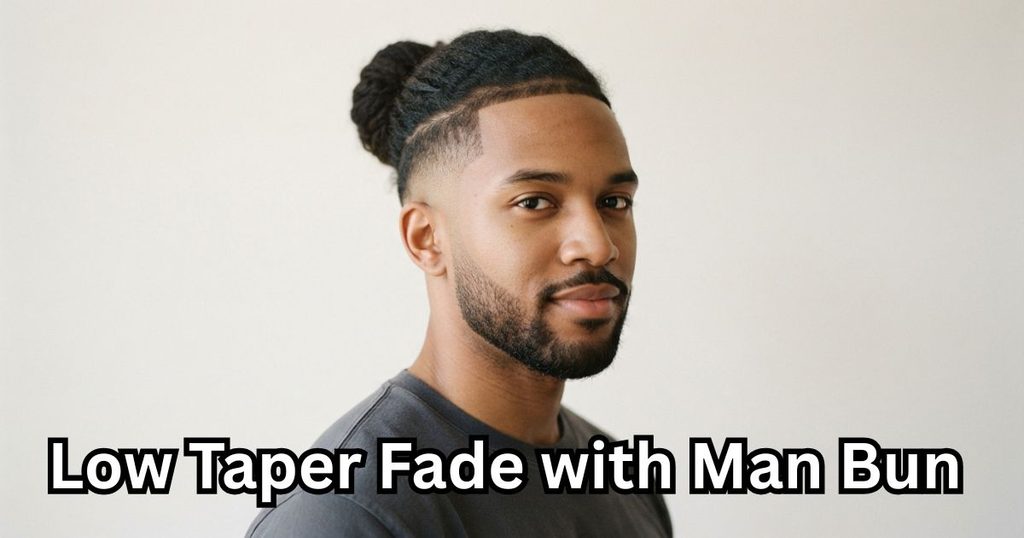
The man bun turns a low taper fade into something more deliberate. Long hair gets gathered and tied at the crown, while the tapered sides keep the whole thing from looking sloppy.
Oval and square face shapes handle the topknot well. This works best with straight to wavy hair that has enough length to hold. A matte pomade smooths fly a ways, and upkeep stays fairly minimal day to day.
7. Low Taper Fade with Half-Up Long Hair
Half-up styling splits the difference between structure and freedom. Front sections get pulled back, the rest falls loose, and the low taper underneath keeps everything grounded and neat.
Heart and oval faces look balanced with hair pulled off the forehead. It suits thick, straight, or wavy hair that won’t slip out of the tie. A texturizing paste adds grip, and it’s great for festivals or casual weekends.
8. Low Taper Fade with Slick Back Bun
This one combines two strong looks into one. Hair gets slicked straight back before being tied into a tight bun, and the taper fade gives the whole style a clean, finished edge.
Diamond and oval faces suit this sleek, pulled-back shape best. Straight or fine hair slicks back most easily with a strong gel. It’s low maintenance once tied, perfect for formal events or professional settings.
Parted & Framed Styles
9. Low Taper Fade with Curtain Hair
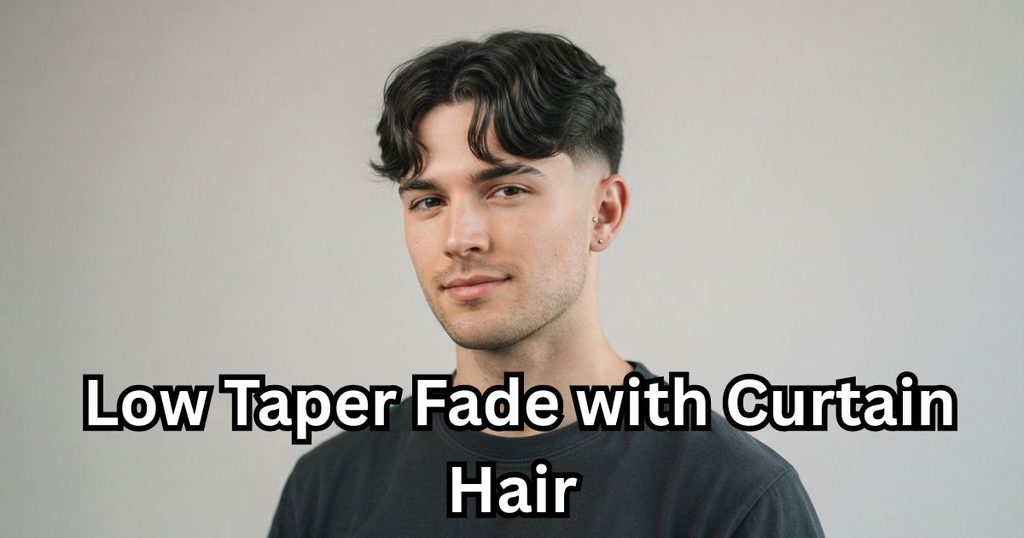
Curtains part naturally down the middle and frame the face on both sides. Paired with a low taper, the look feels effortlessly stylish, blending 90s nostalgia with a modern edge.
Oval and heart-shaped faces get flattering symmetry from this part. It works best on straight to slightly wavy hair with natural movement. A light hold cream keeps strands in place without stiffness, and upkeep stays easy.
10. Low Taper Fade with Center-Parted Long Hair
A center part draws a clean line straight down the middle, giving this cut a bold, symmetrical structure. The low taper on the sides keeps the focus on that strong dividing line.
Square and oblong faces benefit from the visual width this part creates. Straight hair holds the part most cleanly, though wavy hair works too. Maintenance is moderate, and it suits both casual days and dressed-up occasions.
11. Low Taper Fade with Side Part
The side part is a barbershop staple for good reason. Hair sweeps to one side, creating asymmetry that pairs beautifully with the clean lines of a low taper fade underneath.
Round and oval faces gain definition from the angled part. Straight or fine hair holds this style best with a light pomade. It’s low maintenance, and works equally well for the office or a night out.
12. Low Taper Fade with Long Fringe
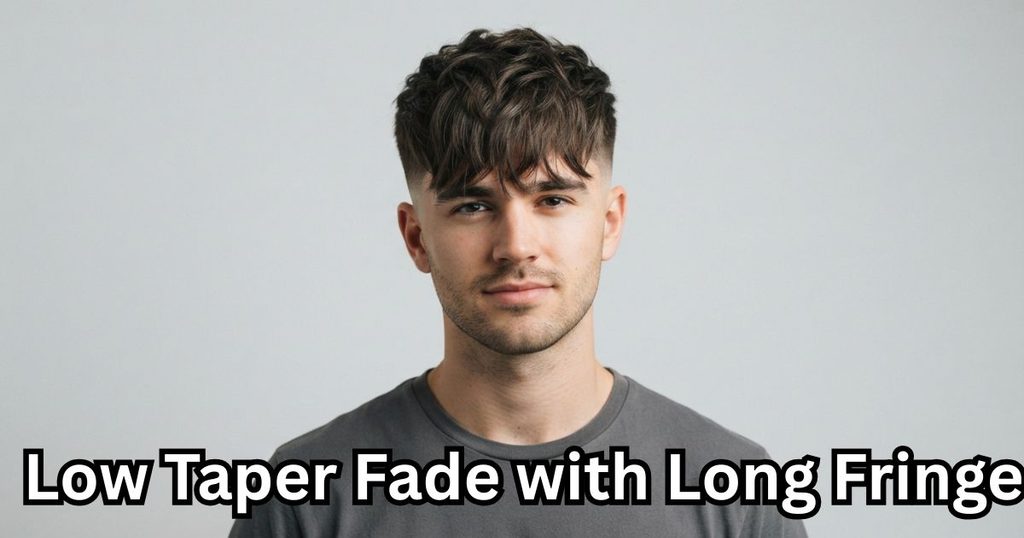
A long fringe brings movement and a bit of edge to the forehead area. The low taper fade keeps the sides quiet, letting the fringe do all the visual work up front.
Oblong and heart faces benefit from the shortened forehead this fringe creates. Straight or wavy hair falls best over the brow. A matte paste keeps it textured, and it’s a solid choice for casual, everyday wear.
Volume & Statement Styles
13. Low Taper Fade with Long Pompadour

The pompadour brings serious height and drama. Hair gets swept up and back off the forehead, and the low taper fade grounds all that volume with clean, controlled sides.
Round and square faces gain length and lift from the height. Thick, straight hair holds a pompadour shape most reliably. Strong-hold pomade is a must, and it’s a go-to for formal events or nights out.
14. Low Taper Fade with Quiff
A quiff is the pompadour’s more relaxed cousin. Hair still lifts at the front, but it’s softer and less structured, giving a stylish, slightly tousled finish above the tapered sides.
Oval and diamond faces suit the quiff’s forward-swept shape. Wavy or straight hair with medium thickness works best here. A texturizing spray keeps it lifted without stiffness, and it’s great for both work and weekends.
15. Low Taper Fade with Messy Long Hair
Messy doesn’t mean unkempt. This look uses deliberate texture and tousled strands on top, letting the precision of the low taper fade underneath keep everything looking intentional, not lazy.
Square and oval faces handle the relaxed volume well. Wavy or curly hair naturally suits this undone texture. A light sea salt spray adds grip, and it’s ideal for casual outings or laid-back weekends.
16. Low Taper Fade with Blowout Long Hair
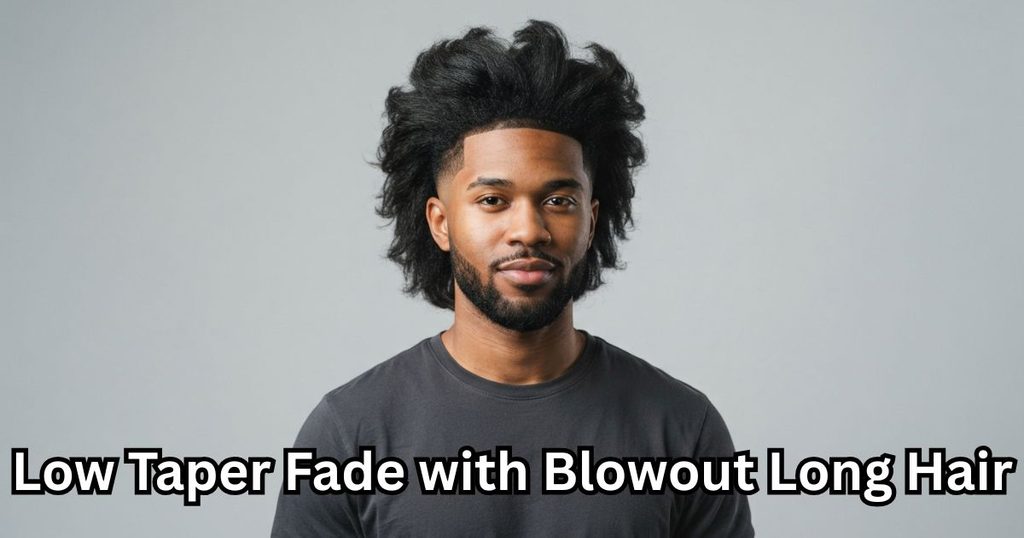
A blowout adds serious volume with a round brush and some heat. Hair lifts dramatically off the scalp, and the low taper fade keeps the base of the style sharp and defined.
Round and oblong faces benefit from the extra height and lift. Thick, straight, or wavy hair blows out most effectively. It requires more daily styling time, and suits nights out or special occasions well.
Retro & Bold Styles
17. Low Taper Fade with Mullet
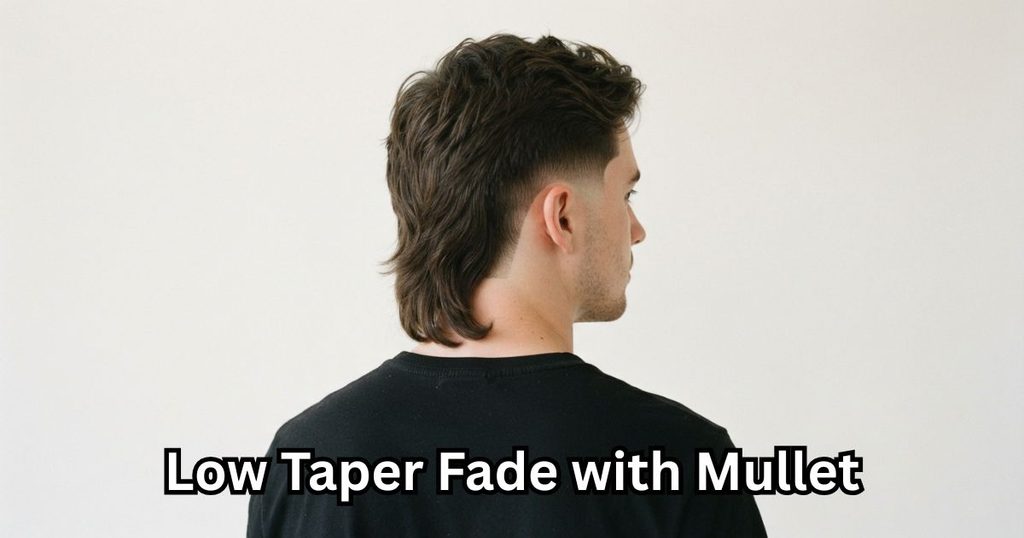
The mullet is back, and pairing it with a low taper makes it wearable, not dated. Short on the sides, long in the back, this cut leans into contrast with confidence.
Oval and square faces carry the mullet’s bold shape well. It suits straight, wavy, or curly hair with enough length in back. Maintenance is moderate, and it’s a favorite for concerts, festivals, and creative environments.
18. Low Taper Fade with Curtain Mullet
Combining curtains up front with mullet length in back gives you two throwback trends in one cut. The low taper ties it together, keeping the sides from competing with all that going on.
Heart and oval faces suit the framing from the front curtains. Wavy or straight hair handles this combo best. A light styling cream keeps both sections defined, and it works well for casual, everyday settings.
19. Low Taper Fade with Comb Over
The comb over is a barbershop classic that never really left. Hair sweeps to one side in a clean, deliberate line, and the low taper fade gives it a sharp, modern finish.
Round and square faces benefit from the added angles. Straight or fine hair holds a comb over most precisely. A firm-hold pomade keeps the part crisp, and it’s a natural fit for professional settings.
20. Low Taper Fade with Long Wolf Cut
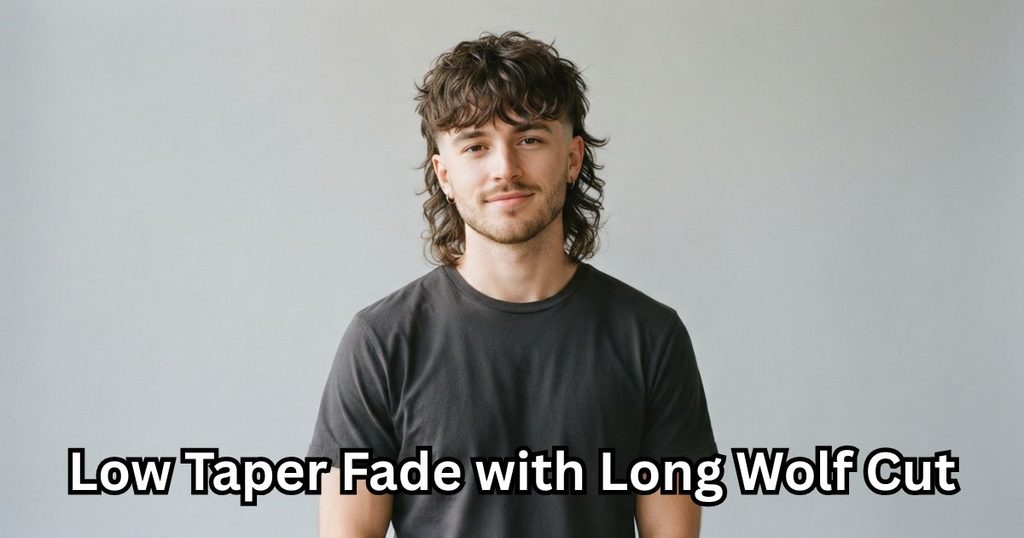
The wolf cut mixes shag-style layers with mullet energy for something wild and textured. Paired with a low taper, it stays edgy without tipping into messy or unstructured territory.
Oval and diamond faces suit the wolf cut’s heavy layering. Wavy or curly hair enhances the shaggy texture naturally. A texturizing paste is key here, and it suits creative, casual, or alternative style settings.
Textured & Cultural Styles
21. Low Taper Fade with Braided Top

Braids on top bring pattern and precision to this cut. Whether it’s box braids or cornrows, the low taper fade underneath keeps the style sharp, clean, and easy to maintain.
Oval and square faces work well with structured braided patterns. This style suits coily, curly, or afro-textured hair especially well. Braid gel or edge control keeps things neat, and upkeep depends on braid style and thickness.
22. Low Taper Fade with Twist Out Top
A twist out creates defined, springy curls with real texture and volume. The low taper fade contrasts nicely underneath, giving the twisted top room to be the main event.
Round and oval faces gain height and shape from this volume. Coily and curly hair types are best suited to twist outs. A curl-defining cream locks in the pattern, and maintenance runs moderate to high.
23. Low Taper Fade with Long Afro-Textured Hair
Natural afro texture paired with a low taper fade celebrates volume and shape without flattening it. The sides stay tight and controlled while the top keeps its full, natural form.
Oval and heart faces suit the fullness this style adds. Coily and afro-textured hair are the natural fit here. Leave-in conditioner and curl cream keep moisture locked in, with maintenance sitting at moderate to high.
2026 Trending Styles
24. Low Taper Fade with Two-Block Cut
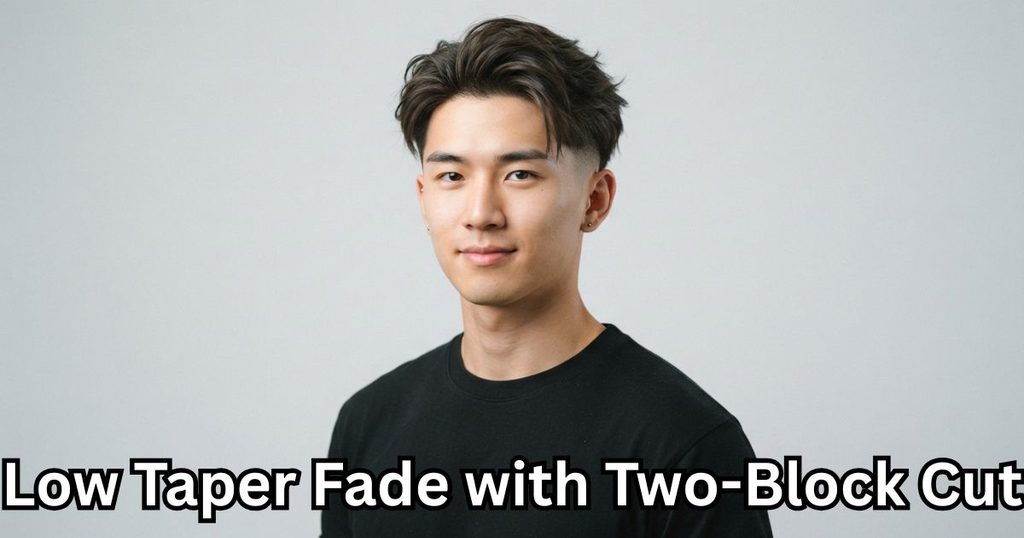
Borrowed from Korean street style, the two-block cut layers longer top hair over a sharply faded undercut. The low taper fade gives this trendy shape a softer, more wearable finish.
Square and round faces benefit from the layered contrast on top. Straight or wavy hair styles this cut most cleanly. A matte wax adds texture, and it’s a strong pick for streetwear-inspired, casual looks.
25. Low Taper Fade with Fluffy Long Top
Fluffy hair on top brings soft, airy volume without much effort. The low taper fade underneath keeps things from feeling shapeless, adding structure beneath all that natural-looking lift.
Oval and diamond faces suit this soft, rounded volume well. Wavy or slightly curly hair fluffs up most naturally. A lightweight mousse builds volume without weight, and it’s ideal for everyday, low-key styling.
26. Low Taper Fade with Textured Long Top
Texture is the whole point here. Choppy layers and a deliberately tousled finish on top pair with the low taper fade to create depth and dimension across the whole cut.
Round and square faces gain definition from the textured layers. Wavy or thick straight hair takes texture especially well. A texturizing paste or clay is essential, and it suits casual, everyday wear best.
27. Low Taper Fade with Ponytail

Long hair gets pulled back into a ponytail, keeping the face clear while the low taper fade adds clean structure underneath. It’s practical, tidy, and surprisingly versatile for a range of settings.
Oval and square faces handle the pulled-back look well. Straight or wavy hair ties most securely into place. A smoothing gel prevents flyaways, and it’s a great option for workouts, work, or travel days.
28. Low Taper Fade with Beach Waves
Think beach day, not boardroom. Loose, tousled waves on top give this cut an easygoing, sun-kissed feel, while the low taper fade keeps things from looking too undone.
Round and oval faces benefit from the soft wave pattern. Wavy or straight hair responds best to a texturizing sea salt spray. Maintenance stays low, and this style is perfect for summer, vacations, or casual weekends.
29. Low Taper Fade with Long Side Swept Hair
Side-swept hair adds a soft diagonal line across the forehead, giving a slightly dressed-up feel. The low taper fade keeps the rest of the cut clean and unfussy underneath.
Heart and oblong faces gain flattering angles from the sweep. Straight or wavy hair sweeps most naturally to one side. A light-hold cream keeps it in place, and it works for both casual and semi-formal occasions.
30. Low Taper Fade with Long Shag Cut
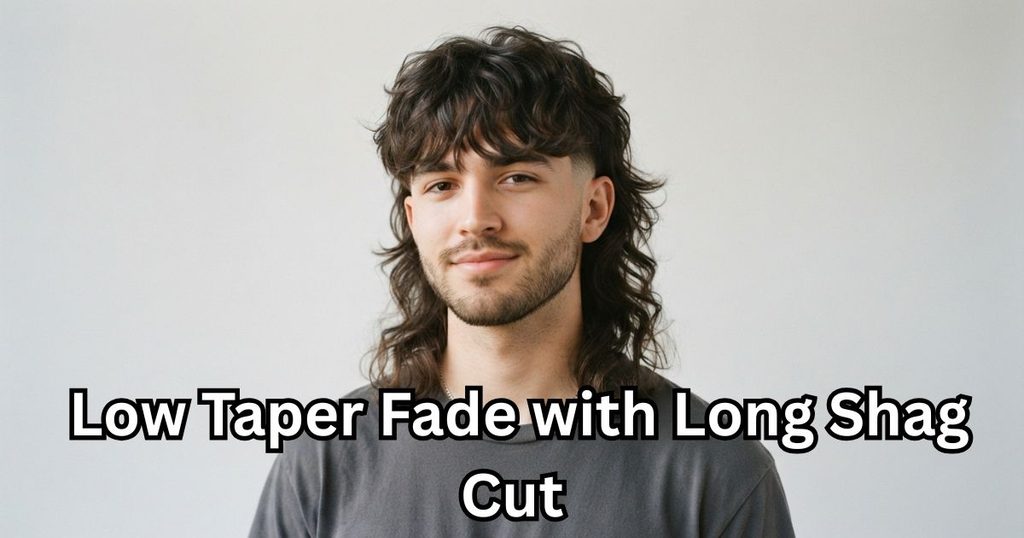
The shag brings heavy layering and a lived-in, rock-and-roll energy. Paired with a low taper, it stays edgy but controlled, never tipping into looking unkempt or overgrown.
Oval and square faces suit the shag’s choppy layers well. Wavy or curly hair enhances the layered texture naturally. A texturizing spray is key, and it fits creative, casual, or music-scene-inspired settings.
31. Low Taper Fade for Coily Long Hair
Coily hair brings natural density and spring, and the low taper fade complements it by keeping the sides neat while the top stays full, bouncy, and completely natural.
Round and oval faces gain height from the coil pattern. This style is built specifically for coily and afro-textured hair types. A curl cream or butter locks in moisture, with maintenance running moderate to high.
32. Low Taper Fade with Flow Hairstyle
The “flow” is a soccer-inspired look with loose, swept-back layers and effortless movement. The low taper fade adds sharpness underneath, balancing out the relaxed energy on top.
Oval and diamond faces suit the flow’s swept-back shape. Wavy hair with natural movement works best for this style. A light sea salt spray enhances texture, and it’s popular for sports, casual days, and social outings.
33. Low Taper Fade with Long Faux Hawk

The faux hawk raises hair along the center for a bold, directional look, without committing to a full mohawk. The low taper fade keeps the sides sharp and supportive underneath.
Round and square faces benefit from the added vertical height. Straight or thick wavy hair holds this shape most reliably. A strong-hold gel is necessary, and it suits nights out or statement-making occasions.
34. Low Taper Fade with Sleek Long Top
Sleek and smooth, this style keeps every strand in place for a refined, glassy finish. The low taper fade underneath adds contrast, making the sleekness on top feel even more deliberate.
Oval and diamond faces suit this polished, streamlined shape. Straight hair achieves the sleekest, shiniest finish here. A shine-enhancing gel or serum is essential, and it’s a strong pick for formal or professional settings.
35. Low Taper Fade with Long Natural Texture
This one skips heavy styling and lets your hair’s natural pattern lead. The low taper fade provides just enough structure, so whatever texture you’ve got looks purposeful, not accidental.
All face shapes can adapt this low-effort, high-reward style. It works with straight, wavy, curly, or coily hair alike. A leave-in cream enhances natural texture, and daily maintenance stays refreshingly minimal.
Which Low Taper Fade Long Hair Style Suits Your Face Shape?
Your face shape changes everything about how a fade looks. Some cuts add width, others add length, and picking the right one makes your features pop instead of clash.
That said, this isn’t about rigid rules. Think of face shape as a starting point. You’ll still want to factor in hair texture, thickness, and how much styling time you actually want to spend.
What Hairstyle Works Best for Oval Face Shape?
Lucky you. Oval faces are the most balanced shape out there, so nearly every low taper fade long hair style works. Curtains, pompadours, and slicked-back looks all land well here.
You’ve got room to experiment without much risk. Try a quiff for height or a curtain fringe for softness. Either way, this face shape rarely clashes with bold styling choices.
What Hairstyle Works Best for a Square Face Shape?
Square faces have strong, angular jawlines, and softer styles on top balance that out nicely. Textured waves, messy layers, or a curtain fringe soften those sharp edges without hiding them.
Avoid anything too geometric up top, since it can double down on the angles. A wolf cut or shag adds movement, breaking up the boxy structure in a flattering way.
What Hairstyle Works Best for a Round Face Shape?
Round faces benefit from added height and length, which create the illusion of a longer face. A pompadour or long faux hawk lifts things up right where you need it.
Skip anything too full or wide on the sides. Center parts can shorten a round face visually, so a side-swept or vertical style usually works better for this shape.
What Hairstyle Works Best for a Heart Face Shape?
Heart-shaped faces are wider at the forehead and narrower at the chin. A long fringe or curtain style softens that forehead width and draws the eye downward instead.
Half-up styles work surprisingly well too. They add visual weight lower on the face, balancing out that narrower jawline without overwhelming your overall proportions.
What Hairstyle Works Best for Diamond Face Shape?
Diamond faces have narrow foreheads and jawlines with wider cheekbones. A quiff or flow hairstyle draws attention upward, softening that cheekbone width in a subtle, natural way.
Sleek, smooth styles also work well here. They highlight your cheekbones as a strong feature instead of fighting against them, giving your whole look a polished edge.
What Hairstyle Works Best for a Long or Oblong Face Shape?
Oblong faces benefit from added width, not length. Skip tall styles like pompadours, and instead go for fuller, textured looks that add volume on the sides.
A shag cut or fluffy top works wonders here. Side parts also help, since they break up vertical length and create a more balanced, proportional appearance overall.
How Does the Low Taper Fade Work for Different Hair Types?
Hair type changes how any style actually behaves day to day. What looks effortless on straight hair might need extra product or technique to pull off with curls or coils.
Understanding your texture first saves you time and frustration. It also helps you pick products that actually work with your hair, not against it, when styling a low taper fade.
Low Taper Fade Long Hair for Straight Hair
Straight hair shows off clean lines beautifully. Slicked-back styles, sharp side parts, and sleek center parts all look crisp and intentional when paired with this texture.
You won’t need heavy products either. A lightweight pomade or cream gives enough hold without weighing hair down, keeping that natural shine straight hair is known for.
Low Taper Fade Long Hair for Curly Hair
Curly hair adds natural volume that the taper fade frames beautifully. The contrast between tight sides and bouncy curls on top creates real visual interest without much effort.
Moisture is everything here. A curl-defining cream or leave-in conditioner keeps curls springy and separated, preventing the frizz that humidity and dryness both tend to cause.
Low Taper Fade Long Hair for Coily or Afro-Textured Hair
Coily hair brings serious density and shape, and the low taper fade complements that fullness by keeping things controlled at the sides while celebrating natural volume on top.
Hydration matters more than anything else. Leave-in conditioners, curl butters, and regular trims keep coily hair healthy, defined, and looking its absolute best between barber visits.
Low Taper Fade Long Hair for Fine or Thin Hair
Fine hair needs a little strategy. Volumizing products and shorter layers on top create the illusion of thickness, so the style doesn’t fall flat by midday.
Skip heavy pomades, since they’ll weigh thin hair down fast. A lightweight mousse or texturizing spray adds body without that greasy, flat look nobody wants.
What Should You Tell Your Barber for a Long-Hair Low-Taper Fade?
Communication makes or breaks this haircut. Barbers aren’t mind readers, and vague requests like “just make it look good” often lead to results you didn’t actually want.
Specific numbers and clear photos go a long way. That said, a little back-and-forth conversation before the clippers come out saves everyone time and prevents any awkward surprises.
What Is the Exact Script to Ask for This Cut?
Try this: “I’d like a low taper fade, starting just above my ears, blending into longer hair on top. Keep the length at the crown, please.”
You’ll want to mention your desired guard numbers too, if you know them. Specifics beat vague descriptions every time, so don’t be afraid to get detailed.
Which Clipper Guard Sizes Are Used for a Low Taper Fade?
Most low tapers use a size 1 or 2 at the bottom, blending up to a 3 or 4 near the temple. It’s gradual, not abrupt.
Every barber’s numbering system varies slightly, though. Don’t stress over exact guards. Focus on communicating the low starting point and gradual blend you’re after instead.
What Reference Photos Should You Bring to the Barber?
Bring photos from multiple angles: front, side, and back. One photo rarely tells the whole story, and barbers need to see exactly where that fade starts and ends.
Close-up shots of the blend zone help too. If you can, save a few options showing similar face shapes to yours for the most accurate results.
When Is the Best Time to Book a Barber Appointment?
Early mornings or weekday afternoons tend to be less rushed. Your barber has more time and patience, which matters a lot for detailed, gradual fade work.
Avoid Friday evenings and Saturdays if you can help it. Those slots get busy fast, and rushed fades rarely turn out as clean as they should.
How to Pair a Low Taper Fade Long Hair and a Beard
A great fade deserves a beard that matches its energy. The wrong pairing can throw off your whole look, while the right one ties everything together seamlessly.
Facial hair thickness and shape both matter here. Think about how your beard’s density compares to your fade’s sharpness, since balance is really the whole goal.
Which Beard Style Complements a Low Taper Fade with Long Hair?
A well-groomed full beard pairs beautifully with longer hair on top, creating a bold, masculine silhouette. Keep the beard’s edges as clean as your fade for cohesion.
Shorter stubble works great with sleeker styles like slicked-back or side-parted looks. On the other hand, textured beards pair naturally with curly or wavy long hair.
How to Style Low Taper Fade Long Hair: Step-by-Step
Styling doesn’t have to eat up your whole morning. With the right products and a simple routine, you can get salon-quality results in just a few minutes.
The key is working with your natural texture, not against it. Once you find your rhythm, styling becomes second nature instead of a daily struggle.
How to Style Long Straight Hair with a Low Taper Fade
Start with damp hair and a dime-sized amount of cream. Comb it through evenly, then use a blow dryer on low heat while brushing for direction.
Finish with a small amount of pomade for shine and hold. It’s quick, it’s simple, and it locks in that sleek, straight finish all day.
How to Style Long Wavy Hair with a Low Taper Fade
Apply sea salt spray to damp hair, scrunching gently to enhance natural waves. Let it air dry, or diffuse on low heat for faster, frizz-free results.
Once dry, rake a little texturizing paste through with your fingers. This defines the waves further without flattening them, keeping that easy, beach-day texture intact.
How to Style Long Curly Hair with a Low Taper Fade
Apply curl cream to soaking wet hair, using a scrunching motion from the ends up. Avoid touching curls again until they’re fully dry to prevent frizz.
Diffusing on low heat speeds things up nicely. Once dry, separate curls gently with your fingers for extra volume and that soft, defined curl pattern.
Also Read: Short Hair Low Taper Fade: 20+ Best Styles for Men
Best Products for Low Taper Fade Long Hair
The right products depend entirely on your hair type and the look you’re after. That said, a few staples work across nearly every texture and style combination.
Sea salt spray, texturizing paste, medium-hold pomade, and a lightweight leave-in conditioner cover most bases. Building a small, versatile collection beats buying every product on the shelf.
How to Maintain a Low Taper Fade with Long Hair
Maintenance keeps this cut looking sharp between visits. Skip it, and even the best fade grows out fast, losing that crisp, intentional edge barbers work hard to create.
A little routine goes a long way. Between trims and simple at-home care, you’ll keep this style looking fresh without constant trips back to the chair.
How Often Should You Get a Low Taper Fade with Long Hair?
Most guys need a touch-up every two to three weeks to keep the fade crisp. The top can grow longer between visits since length isn’t the concern.
If your fade starts looking uneven or grown out, that’s your cue. Don’t wait for it to look messy. Regular touch-ups keep the whole style intact.
At-Home Maintenance Tips Between Barber Visits
Trim your own neckline with a small trimmer if it starts looking scruffy. Keep the top moisturized, especially for curly or coily textures prone to dryness.
A light dusting of dry shampoo can refresh second-day hair too. Small habits like these stretch out the time between barber appointments significantly.
Common Mistakes to Avoid with a Low Taper Fade Long Hair
Even a great haircut can go sideways with the wrong habits. Small mistakes add up fast, turning a sharp fade into something that looks neglected or uneven.
Awareness is half the battle here. Once you know what to watch for, avoiding these pitfalls becomes second nature instead of an afterthought.
What Are the Most Common Mistakes Men Make with This Haircut?
Waiting too long between touch-ups is the biggest one. The fade grows out unevenly, losing that clean blend barbers work hard to create in the first place.
Overusing product is another common slip-up. Too much pomade or gel looks greasy fast. Less is more, and you can always add more if needed.
Is the low-taper fade with long hair suitable for professional settings?
Absolutely, it works great in professional environments. Slicked-back styles, side parts, and sleek center parts all read as polished, put-together, and totally office-appropriate.
Messier, more textured versions suit casual settings better. The versatility here is real: the same base cut adapts to boardrooms and weekends alike with minor styling tweaks.
How to Style Low Taper Fade Long Hair for Different Occasions
For work, keep things sleek and controlled with a strong-hold product. For weekends, let natural texture shine through with lighter, more relaxed styling instead.
Special occasions call for extra polish. Think slicked-back or pompadour styles with added shine, elevating your everyday fade into something a bit more formal.
The Low Taper Fade Long Hair in 2026: History, Culture & Modern Influence
Fades have deep roots in Black barbershop culture, evolving over decades into the mainstream staple they are today. The low taper specifically gained traction for its subtle, versatile approach.
In 2026, social media continues pushing this style forward, blending it with global trends like Korean two-block cuts and textured, natural looks that celebrate individual hair type.
Low Taper Fade vs. Mid Taper Fade with Long Hair: Which Is Better?
Low tapers start closer to the ear, offering a subtler, more gradual transition. Mid tapers start higher, creating more noticeable contrast between the sides and the length on top.
Neither option beats the other outright. Low tapers suit conservative, professional settings better, while mid tapers add a bolder edge for guys wanting more visual contrast.
Expert Barber Tips for the Perfect Low Taper Fade Long Hair
Getting this cut right takes more than just picking a photo. Small details, from communication to timing, make the difference between an average fade and a genuinely great one.
Trust your barber’s expertise, but don’t be afraid to speak up either. The best results come from real collaboration, not just silently hoping they read your mind.
What Do Professional Barbers Recommend for This Style?
Barbers consistently recommend regular touch-ups and clear communication above everything else. Bring photos, ask questions, and don’t be afraid to request adjustments mid-cut if something feels off.
They also suggest investing in quality products over cheap ones. A good pomade or cream genuinely extends the life and look of your fade between visits.
Final Thoughts
This guide to low taper fade long hair covers everything you need to find your perfect look. A low taper fade with design takes things even further. It adds a personal touch that a plain fade just can’t match.
You don’t need bold lines to make a statement. A low taper fade with design can be simple or detailed. It works with curls, waves, or straight hair. It suits work days and weekend plans too. Talk to your barber. Bring a photo. Ask for a low taper fade with design that fits your style. You’ll love the results.
FAQs
What is a low taper fade with design?
A low taper fade with design blends a gradual taper near your hairline with custom line work or patterns shaved into the sides for a personalized, eye-catching finish.
How much does a low taper fade with design cost?
Prices usually range from $30 to $70, depending on design complexity and your barber’s skill level. Detailed patterns or multiple lines typically cost more than simple designs.
How long does a low taper fade with design last?
The fade itself lasts two to three weeks before it grows out. Design lines need touch-ups sooner, usually within one to two weeks, to stay crisp.
Can I get a low taper fade with design on curly hair?
Yes, curly hair works great with a low taper fade with design. The contrast between defined curls and clean line work actually makes the design pop more.
What should I ask my barber for a low taper fade with design?
Ask for a low taper fade with your desired design placement. Bring a reference photo, since exact line work and patterns are easier to show than describe.

Serena Luna, the voice behind JournalHair. I share the latest hairstyle ideas, haircut trends, and easy hair inspiration to help you find your perfect look every day.
