

A blow out taper gives you volume up top with clean, tapered sides that keep the shape sharp. It blends the airy look of a blowout haircut with the neat finish of a taper fade. You get height without making the sides look bulky. That balance makes the style easy to wear for casual days, nights out, or a polished work setting. A blow out taper also works across different hair textures. Curly, wavy, straight, and afro-textured hair can all create a strong finish with the right cut.
The best part is how much control you have over the final shape. Your barber can adjust the taper height, top length, and hair lift to suit your face and hair density. A blow out taper can look soft and natural or bold and defined. With a blow dryer, lightweight mousse, and a little texture powder, you can keep the top lifted without weighing it down. Think fresh volume, not helmet hair.
What Is a Blowout Taper Fade?
Think volume on top, clean edges around the temples, and a gradual taper toward the neckline. A blowout taper fade keeps your natural texture while creating noticeable lift.
It’s especially useful when you want a hairstyle that feels modern without looking too rigid. Use mousse, styling cream, or texture powder depending on your hair’s thickness and texture.
Blowout Taper Fade Variations
Thirty-five variations give you plenty of ways to change the silhouette without losing the signature lifted shape. Taper height, texture, fringe, parts, and finishing details create distinct results.
Choose your version based on your hair type, face shape, and daily routine. Some styles need frequent blow-drying while others rely mostly on natural texture and lightweight styling products.
Low Taper Blowout Variations
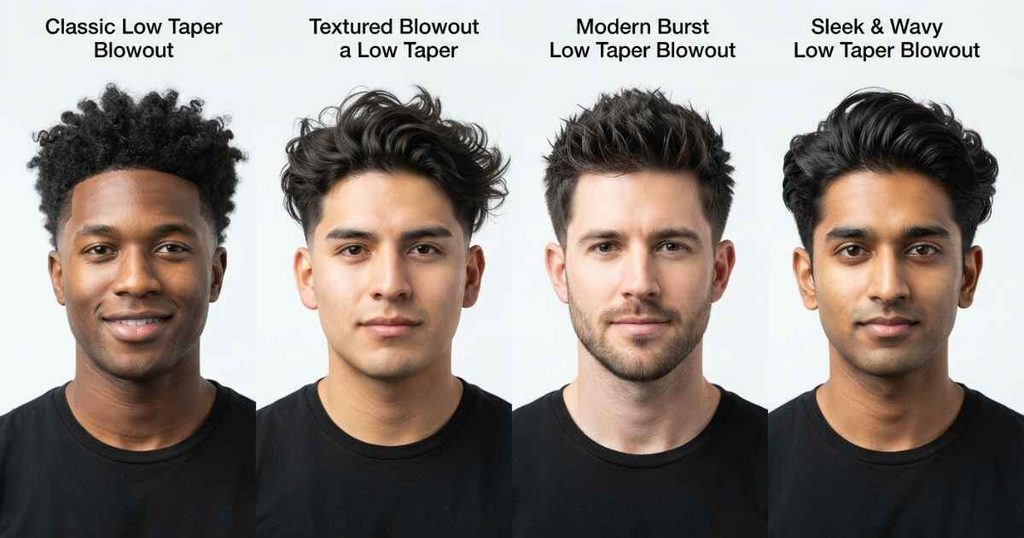
Low taper blowouts keep most of the side hair intact while cleaning the area around your ears and neckline. The extra side weight creates a softer, fuller appearance.
This version suits oval, round, and oblong faces particularly well. Curly, wavy, and thick hair can carry the shape naturally, while mousse helps straight hair maintain lift.
Mid Taper Blowout Variations
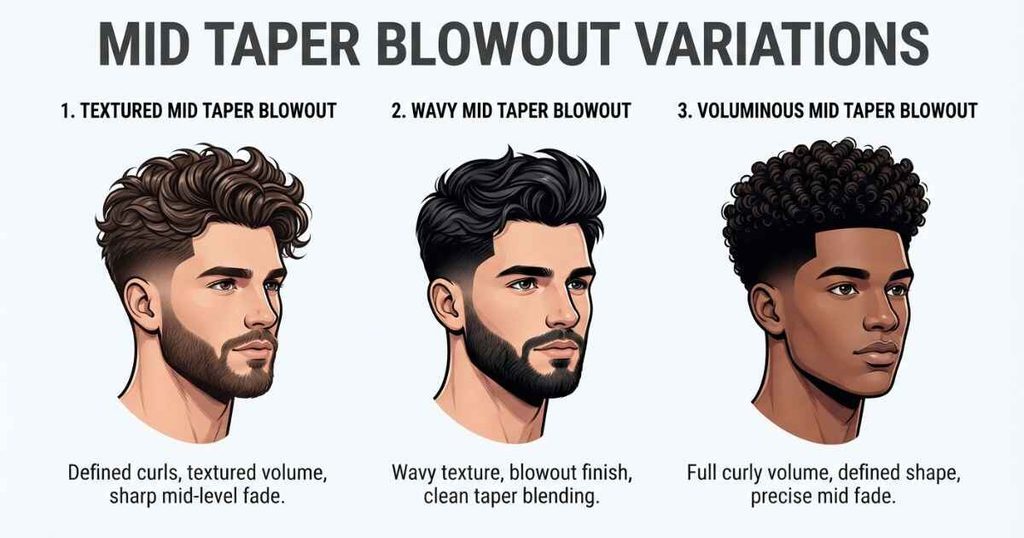
A mid taper blowout removes more bulk around the sides while preserving plenty of height through the crown. It creates a balanced shape that’s neither subtle nor dramatic.
This option works well for oval, square, and round faces. Wavy and curly textures add natural movement, while volumizing mousse or blow-dry cream keeps straighter hair lifted.
High Taper Blowout Variations
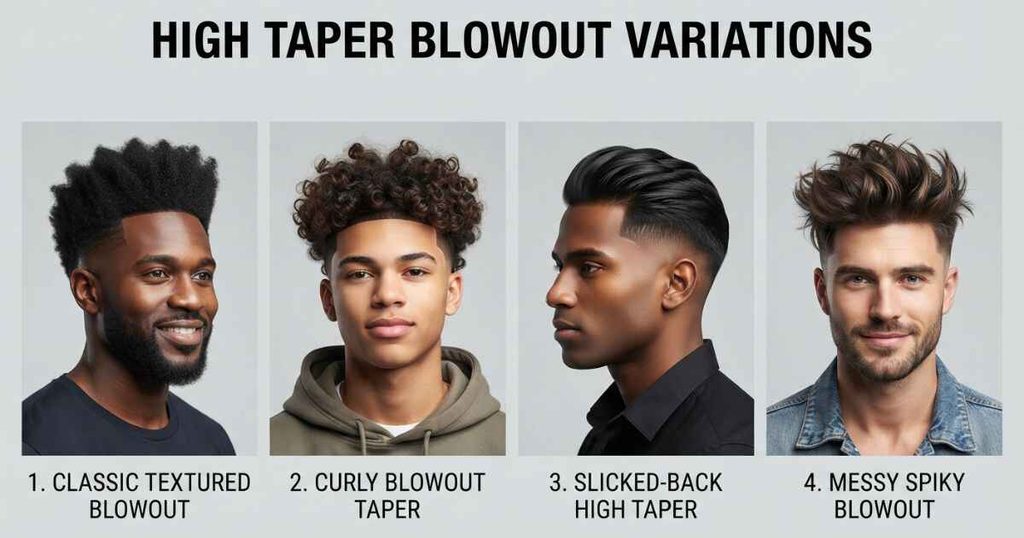
High taper blowouts create stronger contrast by starting the taper higher around the temples and sides. The result looks sharper while making the top appear noticeably fuller.
Square and oval faces handle this bold shape especially well. Thick, curly, and wavy hair benefits from the contrast, while strong-hold mousse helps maintain volume.
Specialty Blowout Taper Variations
Specialty versions add details such as fringes, side parts, waves, hard parts, beards, or designs. These changes personalize the haircut without removing its signature blowout shape.
Your choice should match both your texture and lifestyle. Most specialty versions need moderate maintenance, especially around shaved details, while styling cream keeps the finished shape controlled.
Which Blowout Taper Fade Suits Your Hair?
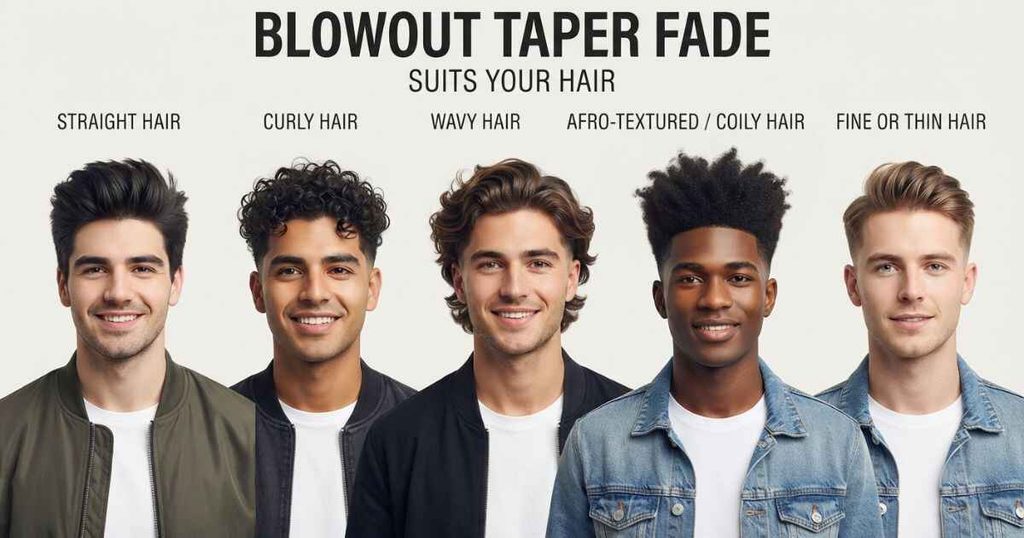
Your hair texture determines how much volume, control, and styling effort you’ll need. The right variation works with your natural movement instead of forcing your strands into an awkward shape.
Straight hair often needs added lift, while curly and coily textures already provide volume. Fine hair benefits from lightweight products, whereas dense hair usually needs stronger control and careful shaping.
Straight Hair
Straight hair gives you a clean canvas for a blowout taper fade, especially when the top has enough length for visible lift. A blow dryer creates movement quickly.
Oval and oblong faces can handle extra height comfortably, while round faces benefit from controlled volume. Use lightweight mousse, then finish with texture powder for airy definition.
Curly Hair
Curly hair brings natural volume and movement to a blowout taper fade, making the finished style look textured without excessive product. Keep curls defined rather than overly stretched.
Round, oval, and square faces can suit this variation with different taper heights. Apply curl cream or lightweight gel, then diffuse gently to preserve shape.
Wavy Hair
Wavy hair naturally creates the loose movement that makes a blowout taper fade look relaxed and full. Keep enough length on top so your waves don’t collapse.
This texture suits oval, square, and oblong faces particularly well. Try sea-salt spray for lift, followed by lightweight cream to reduce frizz without flattening your waves.
Afro-Textured or Coily Hair
Afro-textured and coily hair can create impressive height and definition within a blowout taper fade. Your barber should shape the taper around your natural density rather than fighting it.
Square, oval, and round faces can all work with this approach. Use leave-in conditioner, curl cream, or light styling butter to maintain moisture and controlled definition.
Fine or Thin Hair
Fine or thin hair needs strategic shaping because excessive product can quickly flatten the top. Keep the taper clean while leaving enough length above for visual fullness.
Oval and oblong faces often suit moderate height without exaggerated volume. Use volumizing mousse, root-lifting spray, or texture powder sparingly to create lift without greasy buildup.
Choosing by Hair Density
Hair density affects how wide, tall, and heavy your finished blowout taper fade appears. Dense hair can support dramatic volume, while lower density needs lighter shaping and careful layering.
Ask your barber to balance the top with your natural thickness. Lightweight cream suits finer strands, while thicker hair may need mousse, paste, or controlled blow-drying.
What Face Shape Suits This Cut?
The blowout taper fade works across several face shapes because your barber can change the taper height and top volume. Those small adjustments can dramatically alter the overall balance.
Round faces often benefit from controlled height, while oblong faces need moderation. Square faces can handle strong structure, and oval faces offer flexibility with different taper placements.
How Long Does Your Hair Need to Be?
Your top hair needs enough length to lift, shape, and hold the signature blowout silhouette. Very short hair won’t create the same height or movement through the crown.
Around three to five inches on top gives you useful styling flexibility. Curly hair may need less visible length, while straight hair often benefits from additional growth.
How Do You Ask Your Barber?
Clear barber instructions prevent the classic haircut surprise where your reference photo looks nothing like the finished result. Explain the taper height, top length, volume, and preferred texture.
Show one or two reference photos from useful angles whenever possible. Tell your barber how you normally style your hair, especially if you rarely use heat.
The 4-Part Barber Script
Keep your request simple: describe the taper height, top length, desired volume, and finishing shape. This four-part approach gives your barber enough information without drowning them in terminology.
Mention your hair texture and styling habits afterward. For example, explain whether you want natural curls, brushed volume, messy texture, a fringe, or a cleaner finished appearance.
Scripts for Each Variation
Low, mid, and high versions need different instructions because the taper begins at different heights. Specialty styles also require details about parts, fringes, waves, beards, or designs.
Tell your barber exactly what should remain longer and where you want the taper to finish. That clarity helps preserve your preferred silhouette while reducing unwanted surprises.
Common Client Mistakes to Avoid
Many haircut mistakes start with vague instructions, unrealistic reference photos, or ignoring natural hair behavior. Don’t request extreme height if your hair naturally falls flat or lacks length.
Also avoid copying another person’s cut without considering texture and density. A skilled barber can adapt the shape so it works with your actual hair.
Also Read: High Taper Fade Designs: 28 Bold Razor-Cut Styles for a Sharp Look
How Do You Style It at Home?
A good blowout taper fade depends on how you dry the top. Start with damp hair, apply volumizing mousse, then direct airflow upward while shaping the roots.
Use a round brush for straighter hair or your fingers for textured strands. Finish with texture powder or light hairspray when you need extra hold without crunchy stiffness.
How Often Do You Need a Trim?
Most blowout taper fades look sharp with a trim every two to four weeks. Your preferred taper height, hair growth rate, and neckline shape can change that schedule.
If you want crisp edges, book touch-ups sooner. Those growing-out periods can quickly turn a clean taper into something resembling a forgotten hedge.
What Does Grow-Out Look Like?
During grow-out, the taper gradually loses contrast while the sides and neckline become fuller. The top usually remains wearable, especially when you maintain volume through regular styling.
Low tapers tend to grow out softly, while high versions show more obvious changes. Use a small amount of styling cream to control uneven areas between appointments.
How Is It Different From a Taper Fade?
A traditional taper fade mainly focuses on gradually shortening the sides and neckline. A blowout taper fade adds intentional height and fullness through the top for extra visual movement.
The distinction comes from the overall shape rather than the taper alone. You can combine different taper heights with curly, wavy, straight, or textured blowout finishes.
Is It Still Trending in 2026?
The blowout taper fade remains a flexible choice in 2026 because it combines noticeable volume with clean, adaptable sides. It also works across many textures and personal styles.
Modern versions lean toward customized proportions rather than one fixed formula. You can keep the finish natural, add a fringe or part, or emphasize curls without losing the haircut’s identity.
Final Thoughts
Blow out Taper Fade: Fresh Styles for Volume and Clean Edges shows how flexible this haircut can be. A blow out taper gives you volume on top while keeping the sides neat. You can choose a low, mid, or high taper based on your style. The right version can also work beautifully with straight, wavy, curly, or coily hair.
A blow out taper looks its best when the shape matches your hair type and face shape. Use lightweight products and don’t overload the top. Regular trims keep the taper sharp. With the right length and simple styling routine, a blow out taper can stay fresh, full, and easy to manage every day.
FAQs
What Is a Blowout Taper?
A blowout taper keeps the sides neat while leaving volume on top. Your barber shapes the taper gradually, then styles the hair upward.
How Do You Style a Blowout Taper?
Start with damp hair and apply volumizing mousse. Blow-dry upward while shaping the top, then finish with texture powder or light hairspray.
Is a Blowout Taper Good for Curly Hair?
Yes, curly hair works especially well with a blowout taper. Your natural curls add volume, while the taper keeps the sides clean and balanced.
How Often Should You Trim a Blowout Taper?
Most people need a trim every two to four weeks. If you prefer sharper edges, schedule touch-ups sooner to keep the taper looking fresh.
What Hair Length Do You Need for a Blowout Taper?
Aim for around three to five inches on top. That length gives you enough room to create lift, movement, texture, and a fuller blowout shape.

Serena Luna, the voice behind JournalHair. I share the latest hairstyle ideas, haircut trends, and easy hair inspiration to help you find your perfect look every day.
