

Your kid’s hair is growing out fast, and you’re not sure what to do with it. A kids mullet haircut might be exactly what you need. It’s short up front, longer in the back, and it works for almost any hair type. Parents love it because it grows out well and still looks sharp between trims.
This style isn’t just a throwback anymore. Barbers everywhere are putting fresh spins on the kids mullet haircut, from clean fades to shaggy layers. It’s playful, low-maintenance, and gives your child a bit of personality without much fuss. Whether your kid has straight hair, curls, or waves, there’s a version that fits. Think of it as one haircut with endless options. That’s the beauty of a good kids mullet haircut: it grows with your child instead of against them.
What Is a Kids’ Mullet Cut?
A kids mullet haircut keeps things short up front and longer in back. It’s playful, a little rebellious, and works with nearly any hair texture your child has.
This cut suits kids who want personality without much upkeep. Barbers can adjust the taper, length, and fade to match your son’s face shape, hair type, and whatever look he’s after.
The Evolution of the Kids’ Mullet Cut
The mullet started bold and boxy back in the 70s and 80s. Today’s version trades that heavy shape for softer layers, cleaner fades, and a much more polished finish.
Modern mullets borrow from skate style and K-pop trends. You’ll spot burst fades and shaggy tops replacing the old flat-back look, making this cut feel fresh instead of dated.
Is a Mullet a Good Haircut for Kids?
Absolutely, and it earns its popularity. A kids mullet haircut hides awkward growing-out phases, stretches time between trims, and gives your child a fun way to stand out.
It suits active boys since the shorter front stays out of their eyes during play. Just double-check your school’s dress code first, since some still restrict length in back.
Best Kids Mullet Haircuts by Style
From clean fades to shaggy layers, there’s a mullet variation for every kid’s personality. Some styles lean sharp and structured, others go loose and textured.
Below, you’ll find fifteen standout options. Each one suits different hair types and face shapes, so you can match the cut to what actually works for your child.
Kids Mullet Fade
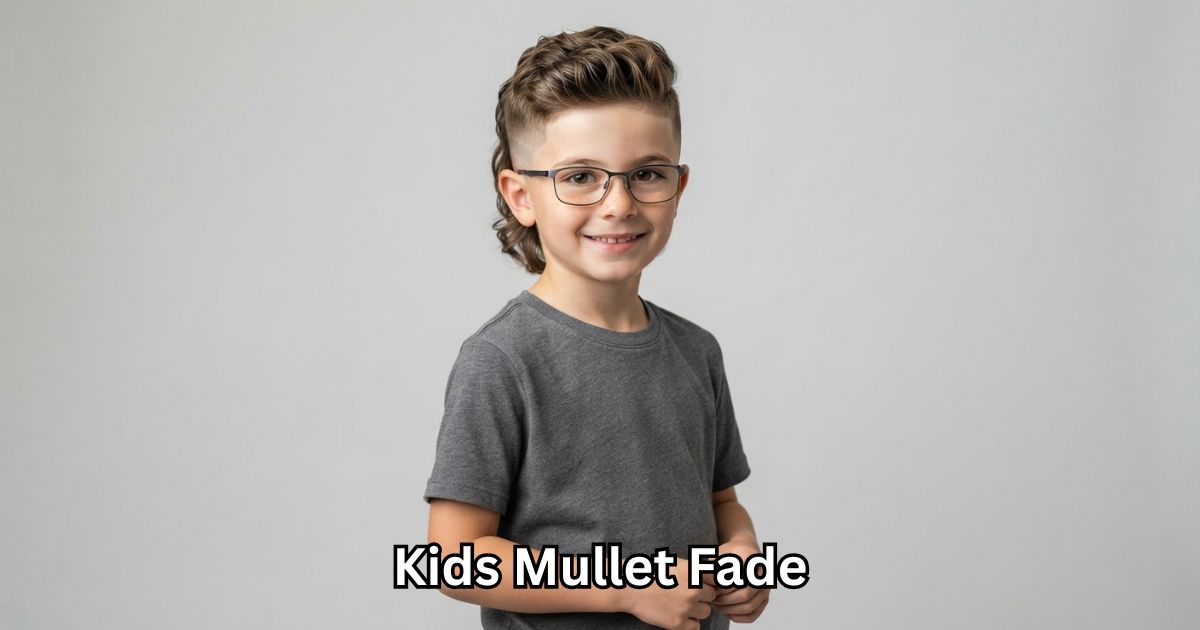
This style pairs a tight fade on the sides with longer length left on top and back. It’s sharp, structured, and reads more polished than a traditional mullet.
Round and square faces both wear it well. It works best on straight or wavy hair, needs a trim every four weeks, and suits school days just fine.
Classic Boys Mullet Haircut
The original shape: short sides, longer back, minimal fuss. It’s the mullet your dad probably wore, just cleaned up for a modern audience.
Best for oval and heart-shaped faces, this cut handles thick or medium hair well. Styling takes seconds with a bit of pomade, and trims can wait six weeks or so.
Burst Fade Mullet Kids

The fade curves around the ear instead of cutting straight across, blending seamlessly into the longer back. It’s a favorite for kids who want detail without going overboard.
Square and oval faces suit it best. It works on straight to slightly wavy hair, needs regular upkeep every three to four weeks, and looks sharp for everyday wear or photos.
Modern Kid Mullet
This take softens the classic silhouette with rounded edges and blended layers instead of a hard line between sections. It feels current, not retro.
Round faces benefit most from the added structure. It suits fine to medium straight hair, needs light texturizing spray to hold shape, and works for both school and weekends.
Modern Kid Mullet (Curly Hair)

Curls naturally add volume up top, so this version leans into that texture instead of fighting it. The result looks full, bouncy, and full of character.
Any face shape can wear it, since curls soften strong angles. It’s made for coily or curly hair specifically, needs a curl cream for definition, and holds shape for weeks between cuts.
Shag Mullet Kids
Choppy layers throughout give this cut serious texture and movement. It’s messier by design, which makes it forgiving between trims and easy to style fast.
Oval and long faces wear it especially well. Wavy or curly hair shows off the layers best, needs just a light texturizing paste, and suits casual, everyday looks effortlessly.
Wolf Cut Mullet (Cool Mullet for Boys)

Part mullet, part shag, this style piles on volume and layers for a wild, textured finish. It’s one of the boldest options on this list.
Round faces gain definition from the added height. Thick or curly hair works best here, needs a strong texturizing spray, and suits kids who want a statement look, not a subtle one.
Textured Crop Mullet
Short, choppy layers up top meet a longer back for a cut that reads more “crop” than classic mullet. It’s a sneaky-good hybrid style.
Square and heart-shaped faces suit it nicely. Fine to medium hair holds the texture well, needs a matte paste for definition, and works great for school portraits or casual outings alike.
Disconnected Mullet

A hard line separates the short sides from the longer top and back, creating sharp contrast instead of a smooth blend. It’s bold, graphic, and hard to miss.
Oval faces balance the strong lines best. Straight or wavy hair holds the shape cleanest, needs trims every three weeks to stay crisp, and suits kids who like an edgier vibe.
Mini Mullet (Fun Mullet for Younger Kids)
Scaled down for toddlers and young kids, this version keeps the mullet spirit without going too dramatic. Just a little length in back does the trick.
Any face shape works fine at this age. Fine baby hair suits it best, needs zero product most days, and works for daycare, playdates, or just about anywhere else.
Line Design Mullet

A shaved line or pattern cuts through the fade, adding a custom touch to an already distinctive cut. It’s a favorite for kids who like personal flair.
Square and round faces frame the design well. Straight to wavy hair shows the line clearest, needs upkeep every two to three weeks, and works best for special occasions or photo days.
Tapered Mullet Kids
Instead of a hard fade, the sides gradually shorten into the skin for a subtler transition. It’s a softer, more understated way to wear the style.
Heart and oval faces suit the gentle taper. Straight or wavy hair holds it cleanest, needs a trim roughly every five weeks, and fits both classroom settings and weekend plans.
Undercut Mullet Kids

The sides get buzzed short and disconnected from the longer top, creating major contrast when your child pushes their hair back or styles it up.
Round faces gain sharper definition from this cut. Thick, straight hair works best here, needs a strong-hold pomade to style, and suits kids who like switching their look throughout the week.
Modern Shaggy Mullet Kids
Soft, tousled layers replace any hard lines, giving this cut a lived-in, just-rolled-out-of-bed feel. It’s low-key by design, and that’s exactly the appeal.
Long and oval faces wear the volume well. Wavy or curly hair shows the shag best, needs only a light sea-salt spray, and suits laid-back weekends over structured events.
Two Block Mullet

Borrowed from K-pop styling, this cut uses two distinct lengths: short underneath, longer on top, with minimal blending between them. It’s precise and intentional.
Square and oval faces suit the sharp contrast. Straight, thick hair holds the shape best, needs trims every four weeks to stay crisp, and works well for both school and casual outings.
Kids Mullet Haircuts by Hair Length & Texture
Hair type changes how any mullet behaves, from how it lays to how long it holds its shape between cuts. Texture matters just as much as the style itself.
The four versions below break things down by length and texture, so you can find the right starting point based on exactly what your child’s hair is already doing.
Short Kids Mullet Haircut

Keeping the back shorter creates a subtler mullet, one that reads more “textured haircut” than dramatic statement. It’s a great entry point for first-timers.
This works for any face shape and most hair types. It needs almost no daily styling, holds up well through active play, and suits school environments with stricter dress codes.
Long Hair Kids Mullet Style
Letting the back grow out fully gives this cut serious drama and movement, especially once it starts to curl or wave naturally past the collar.
Oval and long faces balance the extra length best. Wavy or curly hair adds natural shape, needs occasional detangling spray, and works well for kids who don’t mind a bit more upkeep.
Kids Mullet Fade with Straight Hair

Straight hair keeps every line of the fade crisp and visible, making the contrast between short sides and longer back really pop.
Square and heart faces suit the sharp definition. This works specifically with fine to medium straight hair, needs a lightweight gel for hold, and looks polished for everyday wear.
Kids Mullet Fade with Curly/Coily Hair
Curls add natural volume that straight hair just can’t replicate, giving the fade a fuller, more dimensional look right out of the shower.
Round and oval faces gain nice balance here. Coily or curly hair holds the style naturally, needs a curl-defining cream, and suits kids who want texture without daily styling effort.
Best Kids Mullet Haircuts by Age Group
Toddlers, school-age kids, and tweens all wear the mullet a little differently, mostly based on hair thickness, patience for sitting still, and personal style preferences.
Younger kids do best with a mini or short version that needs minimal upkeep. Tweens often want bolder styles like the wolf cut, since they’re ready for something with more personality.
How to Talk to Your Barber About a Kids’ Mullet
Bring reference photos instead of just describing the cut. Mullets vary so much that “a little length in back” means something different to every barber.
Mention your child’s hair type, activity level, and how often you’ll realistically make it back for trims. That helps the barber pick a version that’ll actually hold up day to day.
Also Read: 11 Cool Haircuts for Boys With Straight Hair That Never Go Out of Style
Best Products for Kids’ Mullet Haircuts
A lightweight texturizing spray works wonders for shag and wolf cut styles, adding grip without weighing hair down. Kids-formula pomades handle sleeker looks like the classic mullet.
For curly versions, a curl cream keeps definition without stiffness. Skip heavy waxes on younger kids since they’re harder to wash out and can irritate sensitive scalps.
How to Maintain a Kids’ Mullet at Home
Between trims, a quick comb-through after showers keeps the back section from tangling or matting, especially with wavy or curly hair types.
Trim any split ends around the front and sides yourself if you’re comfortable with clippers. Otherwise, book touch-ups every three to five weeks depending on how fast your child’s hair grows.
How Often Should You Trim a Kids’ Mullet?
Most kids mullet haircuts need a trim every three to five weeks to keep the front and sides sharp, even while the back keeps growing out.
Faster-growing hair or structured fades need more frequent visits. Shaggier, more textured styles are forgiving and can stretch longer between appointments without looking messy.
Final Thoughts
That wraps up our guide to the best kids mullet haircuts for boys in 2026. From fades to shags, there’s a version to fit any hair type or personality. A kids mullet haircut isn’t just a trend. It’s practical, low-maintenance, and grows out well between trims.
Talk to your barber, bring a photo, and pick the kids mullet haircut that fits your child’s style. Whether you go bold or keep it subtle, this cut works. It’s fun, flexible, and easy to love. Give the kids mullet haircut a try. Your child might just find their new favorite look.
FAQs
Is a mullet a good haircut for kids?
Yes, it’s a great pick. A kids mullet haircut is low-maintenance, stretches out between trims, and gives your child a fun, distinctive look that’s easy to style.
How much does a kids mullet haircut cost?
Prices usually range from fifteen to forty dollars, depending on your barber and location. Fades or line designs might cost a bit more than a classic, simple version.
What age is best for a mullet haircut?
There’s no set age. Toddlers can rock a mini mullet, while school-age kids and tweens often prefer bolder versions like fades or shaggy, textured styles.
How do you ask for a kids mullet at the barber?
Bring reference photos and describe the length you want in back. Mention your child’s hair type too, so the barber can suggest what’ll actually work well.
Will a kids mullet grow out awkwardly?
Not really. That’s actually the mullet’s biggest perk. It handles the growing-out phase gracefully, staying stylish longer than most other kids’ haircuts typically do.

Serena Luna, the voice behind JournalHair. I share the latest hairstyle ideas, haircut trends, and easy hair inspiration to help you find your perfect look every day.
