

A low drop fade haircut keeps the sides neat while leaving more length around the lower sides and back. The fade line follows the natural curve of your head, then drops behind the ears for a smooth shape. Unlike a high fade, this style keeps the transition lower and gives you more hair to work with. That makes the low drop fade haircut easy to pair with crops, curls, waves, side parts, and longer tops.
You can also adjust the fade to match your hair texture, face shape, and personal style. Curly hair gets a clean outline without losing its natural movement, while straight hair can look sharp with a textured top. Add a beard for extra definition or keep the neckline simple for a cleaner finish. With regular touch-ups, a low drop fade haircut stays fresh without demanding complicated daily styling.
What Is a Low Drop Fade?
A low drop fade keeps the fade low around the sides while following your head’s natural curve. The transition drops behind each ear for a balanced silhouette.
How Does a Low Drop Fade Look?
A low drop fade keeps the sides low and gradually blends upward around the temples. The curved fade shape creates a clean finish without removing too much hair.
This cut works well for oval, round, square, and diamond faces. Curly, straight, wavy, and thick hair all pair nicely with it. Use pomade or cream for styling.
Why Is It Called a Drop Fade?
The fade gets its name from the way the blend drops behind your ears instead of staying level. That curved line follows the natural shape of your head.
It suits most face shapes because the lower fade preserves useful height above your ears. Any hair texture can work, while regular touch-ups keep the transition looking crisp.
Best Low Drop Fade Haircuts And Styles
These low drop fade styles give you plenty of ways to personalize the cut. Choose your top length, texture, and finish based on your everyday routine.
Low Drop Fade With Curly Hair
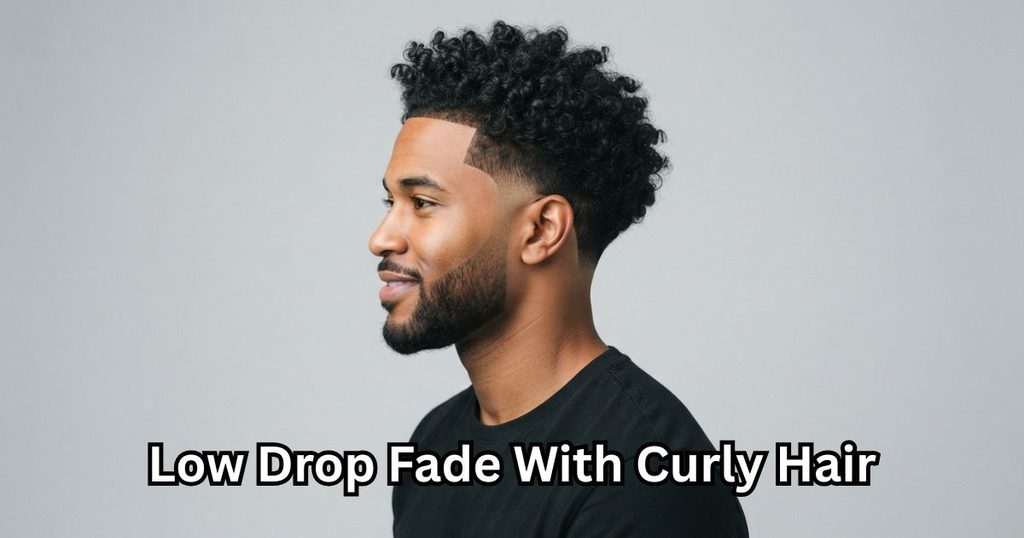
Curly hair gives a low drop fade plenty of natural character. The clean sides contrast with defined curls on top while preserving movement and shape throughout the haircut.
This version suits oval, round, and square faces especially well. Use curl cream or lightweight leave-in conditioner, then refresh curls between visits. Maintenance stays moderate with regular trims.
Low Drop Fade With Straight Hair
Straight hair makes the low drop fade look especially precise. Clean sides frame a smooth top, creating a sharp silhouette that works equally well with textured or polished styling.
Oval and square faces can carry this style easily. Try matte clay for texture or pomade for shine. Keep the fade fresh every two to three weeks for consistency.
Low Drop Fade With Wavy Hair
Wavy hair adds natural movement above the clean fade. The contrast creates an easygoing shape that feels styled without looking overly polished or rigid throughout the day.
It works nicely with oval, rectangular, and square faces. Sea salt spray can enhance texture while matte cream controls flyaways. Maintenance remains manageable with regular fade touch-ups.
Low Drop Fade With Textured Fringe
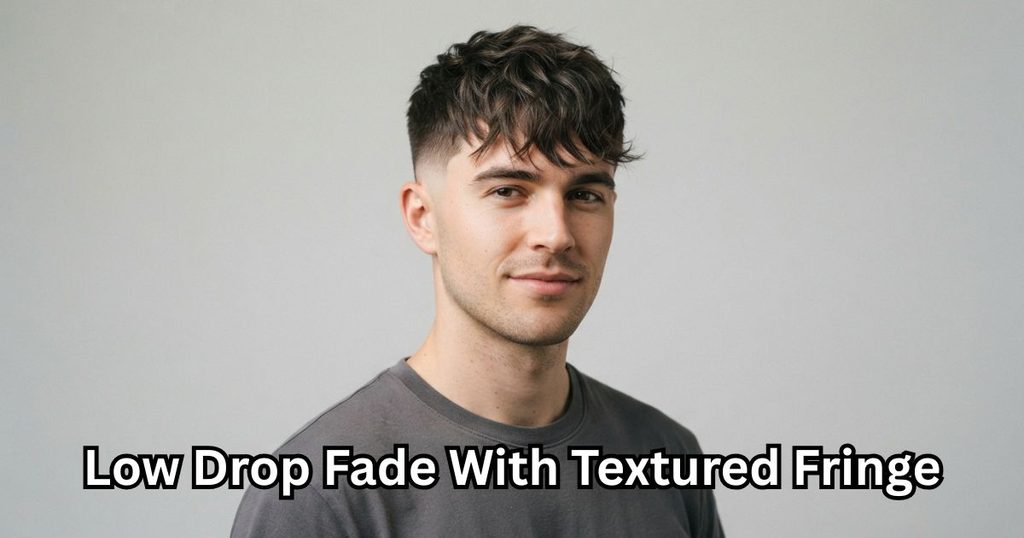
A textured fringe adds movement across the forehead while the low fade keeps the sides controlled. Choppy layers make the top look fuller and less structured overall.
This option flatters longer, oval, and heart-shaped faces particularly well. Use matte paste to separate the fringe without stiffness. Expect moderate upkeep as the fringe grows quickly.
Low Drop Fade With Bulk
Keeping extra bulk above the fade creates a fuller silhouette with stronger contrast. The result feels substantial without letting the sides become messy or overly heavy around your ears.
Thick and wavy hair benefit most from this approach. Oval and square faces handle the added volume well. Use styling cream and schedule trims before the sides spread.
Low Drop Fade V Shape
A V-shaped finish adds a pointed detail at the back of the head. It gives the haircut a distinctive outline while keeping the overall fade low and controlled.
This design suits oval and angular faces with medium or thick hair. Use light pomade for definition, and ask your barber to sharpen the V during each touch-up.
Low Drop Fade Buzz Cut
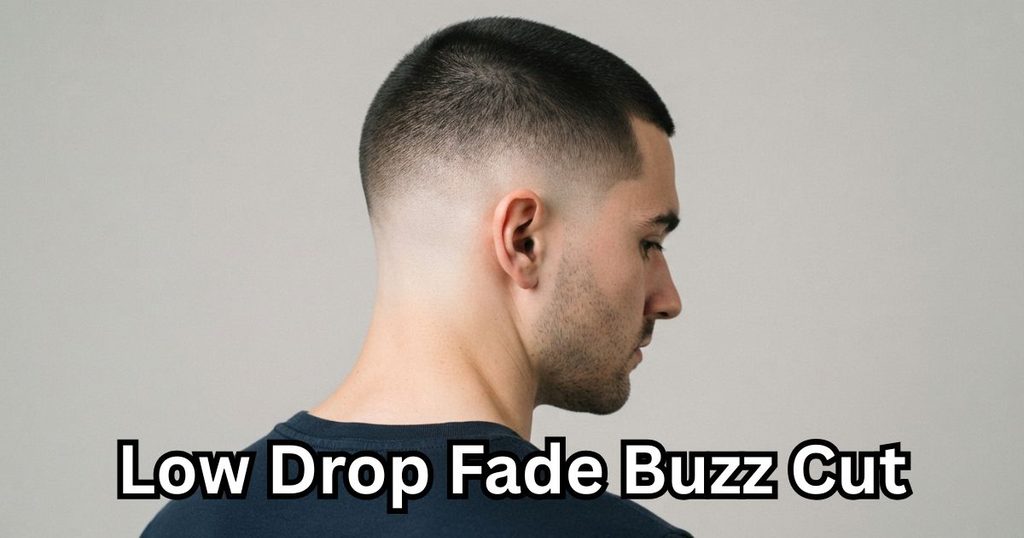
A buzz cut paired with a low drop fade keeps everything short while adding visible shape around the sides. It delivers a clean style with minimal daily effort.
This combination suits active lifestyles and nearly every face shape when the fade placement fits properly. You can skip styling products, but neckline touch-ups keep everything looking intentional.
Low Drop Fade For Black Men
A low drop fade works beautifully with textured, coily, and afro hair. The curved transition creates definition around the head while leaving room for natural texture above.
Oval, round, square, and diamond faces can all wear this cut. Use curl sponge, moisturizer, or styling cream as needed. Regular barber visits preserve sharp edges and transitions.
Low Drop Fade With Beard
Pairing a low drop fade with a beard creates a connected, balanced look. The clean sides transition naturally toward the facial hair without making either area appear disconnected.
This combination suits oval, square, and rectangular faces especially well. Beard balm adds control while light styling cream manages the top. Keep both edges trimmed regularly for consistency.
Low Drop Fade Blowout
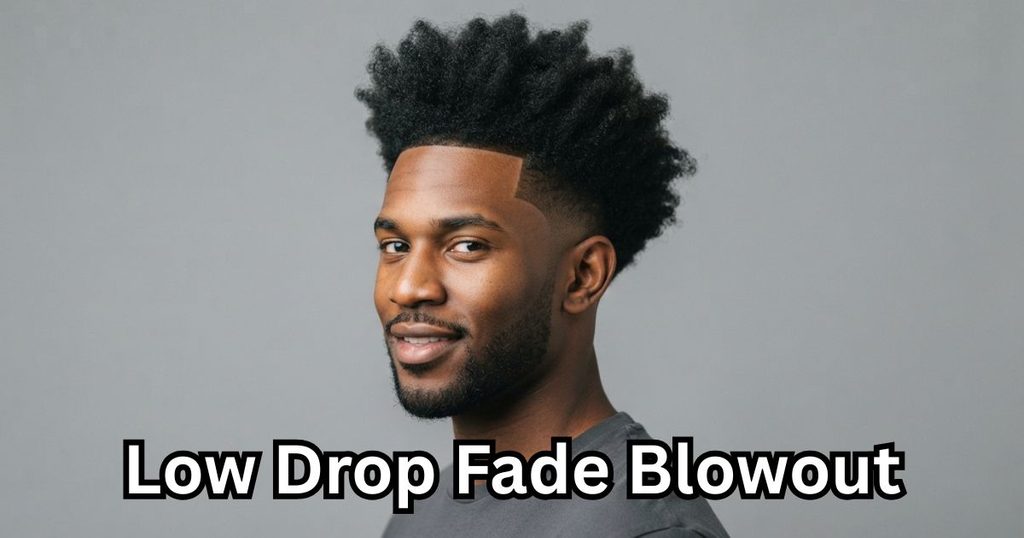
A blowout adds height and outward movement above the low drop fade. The contrast makes the haircut look fuller while keeping the lower sides neat and controlled.
This style works best for thick, wavy, or curly hair and suits oval faces. Use volumizing mousse before drying, then finish with lightweight hairspray. Expect moderate styling time.
Low Drop Fade For Different Hair Types
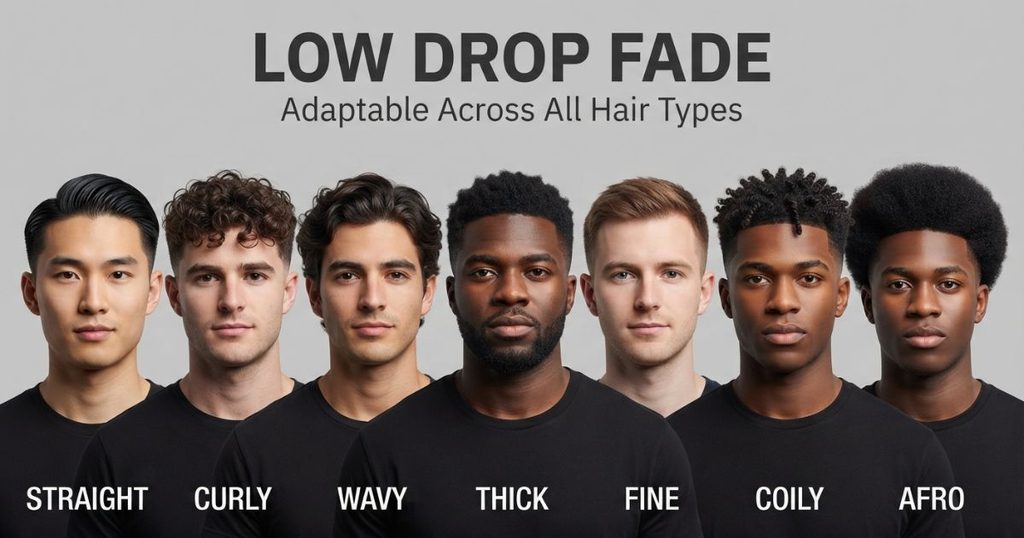
Your hair texture changes how the fade blends and how much styling the top needs. Choose the right balance between fade height, length, texture, and daily effort.
Straight Hair
Straight hair shows every fade transition clearly, making precise barber work especially important. Keeping moderate length on top adds texture and prevents the haircut from looking flat.
Oval and square faces pair naturally with this shape. Matte clay creates separation while pomade adds polish. Straight hair needs little daily effort but benefits from frequent edge maintenance.
Curly Hair
Curly hair gives the low drop fade natural volume and movement. Keeping the sides controlled lets your curls become the main feature without making the haircut feel bulky.
Round, oval, and square faces can benefit from the added height. Use curl cream or leave-in conditioner to define curls. Trim the fade regularly while preserving your preferred curl length.
Wavy Hair
Wavy hair creates a softer transition between the clean fade and textured top. Its natural bends add dimension without requiring elaborate styling or heavy products each morning.
Oval and rectangular faces suit this balance particularly well. Use sea salt spray for definition or matte cream for control. A regular fade appointment keeps the lower sides tidy.
Thick Hair
Thick hair gives you plenty of styling options above a low drop fade. Removing some side weight keeps the haircut balanced while preserving useful volume across the top.
Square, oval, and diamond faces handle this fullness well. Ask your barber to reduce excess bulk carefully. Matte clay or styling cream controls shape without flattening your natural volume.
Fine Hair
Fine hair can look fuller when the low drop fade creates strong contrast around the sides. Keeping moderate length on top gives thin areas more visual density and texture.
Oval and heart-shaped faces often suit this approach. Use volumizing mousse, sea salt spray, or lightweight clay. Avoid heavy pomades that can make fine strands appear greasy.
Coily And Afro Hair
Coily and afro hair pair naturally with a low drop fade because the clean sides highlight texture and shape. The low transition also preserves fullness around the upper head.
Most face shapes can wear this style with thoughtful fade placement. Moisturizer and curl-enhancing products maintain softness. Regular visits keep the fade, neckline, and edges looking sharp.
Low Drop Fade Haircuts By Top Style
Your top hairstyle changes the personality of a low drop fade. From short crops to longer dreads, the right pairing should match your texture and routine.
Low Drop Fade With A Crop
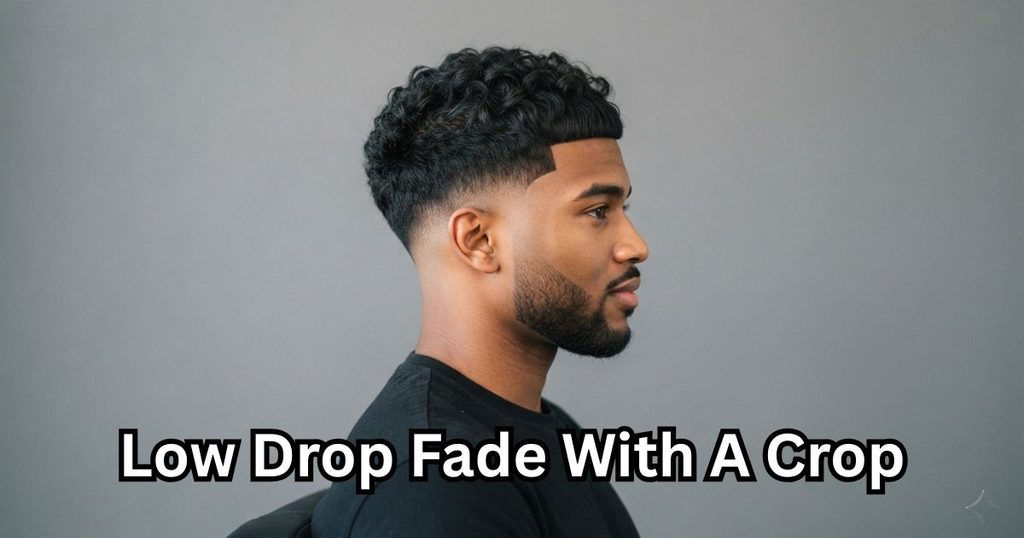
A crop keeps the top short and textured while the low drop fade cleans the lower sides. The result feels practical, sharp, and easy to manage daily.
This style suits oval, round, and heart-shaped faces. Matte paste gives the crop separation without shine. Maintenance stays low, although frequent fade touch-ups preserve the clean outline.
Low Drop Fade With A Side Part
A side part gives the low drop fade a polished finish. The defined part creates structure while the curved fade keeps the sides neat without appearing overly severe.
Oval, rectangular, and square faces work especially well with this shape. Use medium-hold pomade for control or matte clay for texture. Expect moderate maintenance around the part.
Low Drop Fade With Slick Back
A slick back adds length and direction above the clean fade. Brushing the top backward creates a classic silhouette with enough contrast to keep the haircut contemporary.
Oval and rectangular faces suit this style particularly well. Use water-based pomade for shine or matte paste for a modern finish. Longer tops require consistent styling and maintenance.
Low Drop Fade With A Man Bun
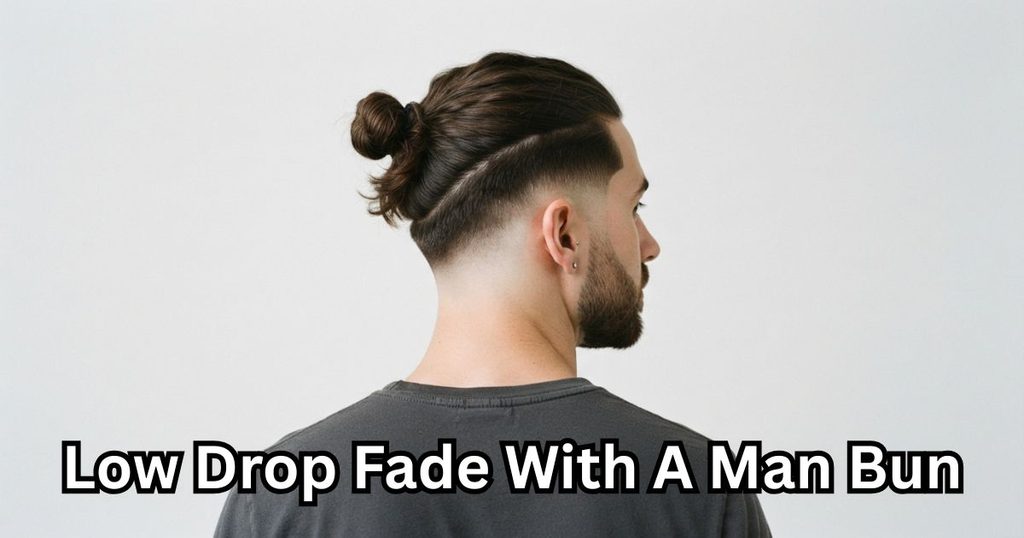
A man bun creates striking contrast against the low drop fade. Keeping the lower sides clean makes longer hair feel deliberate instead of untidy or difficult to manage.
This option works best with medium-to-long straight or wavy hair. Oval and rectangular faces suit it well. Use leave-in conditioner and hair ties designed to reduce breakage.
Low Drop Fade With Dreads
Dreads create a bold top while the low drop fade keeps the lower sides controlled. The contrast draws attention upward and gives the overall style strong definition.
This combination suits coily and textured hair, with fade placement adjusted to your head shape. Use lightweight scalp moisturizer and avoid excessive product buildup. Regular edge maintenance keeps everything crisp.
Low Drop Fade With Waves
Waves bring texture across the top while the low drop fade keeps the sides structured. The combination creates a clean silhouette that highlights natural pattern without overwhelming your features.
Oval, square, and round faces can wear this style confidently. Use wave pomade and a quality durag for maintenance. Regular brushing and fade touch-ups keep the pattern sharp.
Low Drop Fade With Mohawk
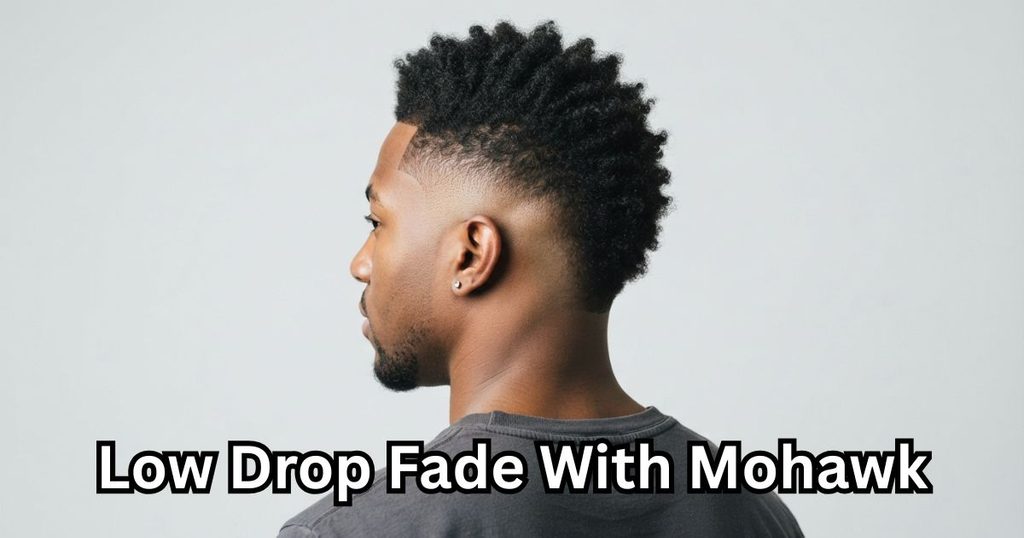
A mohawk adds height through the center while the low drop fade controls the sides. This creates a noticeable shape without requiring a completely shaved head around the top.
The style works especially well with thick, curly, or coily hair. Oval and angular faces handle the height nicely. Use strong-hold styling cream and expect higher maintenance than shorter cuts.
Low Drop Fade Vs Low Fade Vs Low Taper
These three cuts can look similar at first glance, but their fade placement and shape differ. Knowing those differences helps you explain exactly what you want.
Low Drop Fade Vs Low Fade
A low drop fade curves downward behind the ears, while a traditional low fade usually follows a more level path around the head. That difference changes the overall silhouette.
Both work across many hair textures and face shapes. Choose the drop version for more curved definition or the standard low fade for a simpler transition.
Low Drop Fade Vs Low Taper
A low drop fade blends more hair away around the sides and back, while a low taper focuses mainly on the temples and neckline.
The low taper preserves more side weight and usually grows out more subtly. Both suit professional settings, but your choice depends on how much contrast and definition you prefer.
Low Drop Fade Vs Mid Drop Fade
A low drop fade starts lower around the head, while a mid drop fade begins higher and removes more weight from the sides.
Low placement preserves more hair and creates a softer silhouette. Mid placement adds stronger contrast and can emphasize facial angles. Both work with curls, waves, straight hair, and textured tops.
How To Choose The Right Low Drop Fade
The best low drop fade depends on your hair texture, face shape, preferred top length, and willingness to maintain the cut between appointments.
Choose The Fade Height
Fade height controls how much hair remains around your sides. A lower fade preserves more weight, while slightly higher placement creates stronger contrast and makes the haircut feel sharper.
Consider your face shape before choosing. Round faces can benefit from controlled height, while longer faces may prefer more side weight. Show your barber a clear reference.
Choose Skin, Shadow, Or Guard Length
Your fade can finish with visible stubble, a shadow, or more length from a guard. Each option changes the contrast and affects how quickly the cut grows out.
Skin fades look sharper but need frequent maintenance. Shadow finishes appear softer between visits. Guard lengths offer easier upkeep and work well if you prefer a more natural transition.
Choose The Right Top Length
Top length determines whether your haircut feels textured, polished, relaxed, or bold. Shorter tops simplify styling, while longer hair gives you more options for shaping and movement.
Match the length to your texture and routine. Fine hair often benefits from shorter textured layers, while thick or curly hair can support more length and volume.
Consider Your Face Shape
Face shape helps you decide where to keep volume and where to remove weight. The right balance can make the haircut look more proportional and intentional.
Oval faces handle most variations, while round faces often benefit from controlled top height. Square faces can carry stronger lines. Longer faces may look better with extra side weight.
How To Ask Your Barber For A Low Drop Fade
Clear instructions prevent the classic barber-chair surprise. Tell your barber exactly where you want the fade, how much weight to keep, and how you style your top.
What To Tell Your Barber
Tell your barber that you want a low drop fade and explain where you want the transition to sit. Mention your preferred guard length and top length.
Also describe your natural texture and styling routine. If you want a beard, V shape, textured fringe, or specific neckline, mention those details before cutting begins.
Show A Reference Photo
A reference photo gives your barber a clearer target than vague descriptions. Bring pictures showing the sides, back, and top whenever possible for better communication.
Choose a photo with hair texture and length similar to yours. Then explain what you want changed. A picture guides the shape, but your barber can adapt it realistically.
How To Style A Low Drop Fade
Good styling starts with the right foundation. Clean hair, suitable products, and controlled drying can make your low drop fade look sharper without taking all morning.
Start With Clean Hair
Clean hair gives your styling product a better surface and prevents buildup from weighing down the top. Wash according to your scalp and hair texture rather than daily by default.
Use a gentle shampoo and conditioner when needed. Curly and coily hair may need more moisture, while fine hair often benefits from lighter formulas that preserve volume.
Use The Right Product
Your product should match the finish you want and your hair texture. Matte clay adds texture, pomade creates shine, while styling cream keeps curls flexible and natural.
Start with a small amount and build gradually. Too much product can flatten fine hair or make thick hair feel heavy. Your hairstyle shouldn’t feel like helmet territory.
Blow-Dry For Shape
Blow-drying helps direct your top hair and create volume before finishing with product. Use your fingers for a casual finish or a brush for more controlled shapes.
Apply heat protectant before drying, especially when using high temperatures regularly. Keep the dryer moving instead of concentrating heat in one spot. Finish with cool air for hold.
Also Read: Blowout Taper Curly Hair: The Complete Guide to Cuts, Curls, and Styling
How To Maintain A Low Drop Fade
A low drop fade looks sharpest when you maintain the transition, neckline, sideburns, and top. Small touch-ups prevent the haircut from becoming noticeably overgrown.
How Often Should You Get A Low Drop Fade?
Most people need a fade touch-up every two to three weeks to keep the sides crisp. Your hair growth rate and preferred level of sharpness can change that timing.
If you prefer a softer appearance, you can stretch appointments longer. Skin fades usually show growth faster, while longer guard lengths remain presentable for more time between visits.
Maintain The Top Between Barber Visits
Don’t neglect the top while focusing on the fade. Trim split ends when necessary and keep your preferred length consistent with your styling routine.
Use conditioner regularly when your hair needs moisture, especially with curls, waves, or longer styles. A small amount of styling product can control shape without creating buildup or stiffness.
Keep The Neckline And Sideburns Clean
A clean neckline and sideburns can make an aging fade look fresher instantly. These small details frame the haircut and keep the overall shape looking intentional.
You can ask your barber for a quick cleanup between full appointments. Avoid aggressive home trimming unless you’re comfortable handling clippers. One uneven line can become surprisingly obvious.
Low Drop Fade Vs Other Fade Styles
Understanding nearby fade styles helps you choose the finish that matches your preferred contrast. Small differences in blending can completely change the haircut’s overall appearance.
Low Drop Fade Vs Shadow Fade
A low drop fade describes the placement and curved shape of the fade, while a shadow fade describes how softly the hair transitions through the blend.
You can actually combine both concepts in one haircut. A low drop fade with a shadow finish keeps the curved placement while creating a softer, less dramatic transition.
Low Drop Fade Vs Skin Fade
A low drop fade describes where the fade sits and how it curves, while a skin fade describes how closely the hair disappears at the bottom.
You can request a low drop skin fade for maximum contrast around the lower sides. Choose a softer guard finish if you’d rather extend time between barber visits.
Low Drop Fade Vs Taper Fade
A low drop fade removes more hair around the sides and back, while a taper fade usually focuses on the temples and neckline with more surrounding weight.
Tapers offer a subtler appearance and often grow out naturally. Low drop fades create a more noticeable curved transition. Both can pair with crops, curls, waves, side parts, and longer tops.
Final Thoughts
Low Drop Fade Haircut: 30 Fresh Styles for Every Hair Type shows how versatile this cut can be. A low drop fade haircut keeps the sides clean while following your head’s natural curve. You can pair a low drop fade haircut with curls, waves, crops, dreads, or longer styles. It’s easy to personalize for your look.
The right fade height, top length, and finish can make a big difference. Think about your hair type, face shape, and daily routine before choosing. A low drop fade haircut also needs regular touch-ups to stay sharp. With the right barber and simple styling products, you can keep this haircut fresh, balanced, and easy to manage.
FAQs
How Often Should I Get a Low Drop Fade Haircut?
You’ll usually need a touch-up every two to three weeks. Wait longer for a softer look, or visit sooner for sharper edges.
Is a Low Drop Fade Haircut Good for Curly Hair?
Yes, it works especially well with curls. The low sides highlight your natural texture while keeping the shape clean, balanced, and easy to manage.
What Face Shape Works Best With a Low Drop Fade Haircut?
A low drop fade suits most face shapes. Your barber can adjust fade height and top length to balance round, square, oval, or longer faces.
Can I Get a Low Drop Fade Haircut With a Beard?
Absolutely. A beard adds definition and creates a balanced transition from your haircut. Keep the neckline and sideburns trimmed for a polished finish.
How Do I Ask My Barber for a Low Drop Fade Haircut?
Tell your barber you want a low fade that drops behind the ears. Show a reference photo and explain your preferred top length.

Serena Luna, the voice behind JournalHair. I share the latest hairstyle ideas, haircut trends, and easy hair inspiration to help you find your perfect look every day.
