

A low fade haircut men is one of the most requested styles at barbershops right now, and it’s easy to see why. This cut keeps things sharp near the ears and neckline, then blends smoothly into longer hair up top. It works for almost any hair type, from thick and curly to fine and straight. Whether you’re heading into the office or grabbing coffee on a Saturday, a low fade haircut adapts to your life without asking much upkeep in return.
What makes the low fade haircut stand out is its subtlety. The fade starts low, just above the ears, so you get a clean look without the drama of a high or skin fade. It pairs well with beards, curls, waves, and even a solid pompadour on top. You’ll get a style that feels sharp, current, and completely your own.
Trending Low Fade Haircut for Men
The low fade haircut keeps evolving, and 2026 brings fresh takes on this barbershop staple. From curly textures to sleek pompadours, there’s a version for every guy who wants sharp sides without going too bold.
Below, you’ll find nineteen ways to wear the low fade. Each style suits different face shapes, hair types, and lifestyles, so you can pick the one that actually fits you instead of copying a random photo.
Classic Low Fade
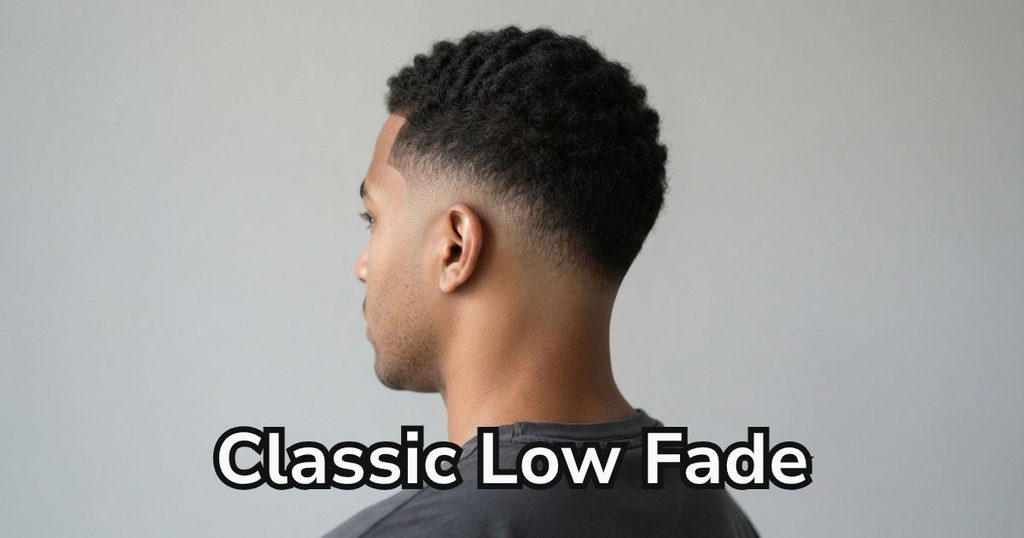
The classic low fade blends short sides into a slightly longer top, creating a timeless look that never really goes out of style. It’s clean, sharp, and works with almost any outfit.
This cut suits oval and square faces best, though round faces benefit too with added height on top. Straight and wavy hair styles easiest here. Grab a matte pomade, visit your barber every 3-4 weeks, and you’re set for work or weekends.
Low Fade with Curly Hair
Curly hair and a low fade make a killer combo. The fade tightens up your sides while your natural curls stay full and bouncy on top, giving you texture without the bulk.
Round and heart-shaped faces look great with this style, since curls add width where you need it. Use a curl-defining cream, not gel, to avoid crunch. Expect touch-ups every three weeks to keep curls from creeping into fade territory.
Low Fade with Straight Hair
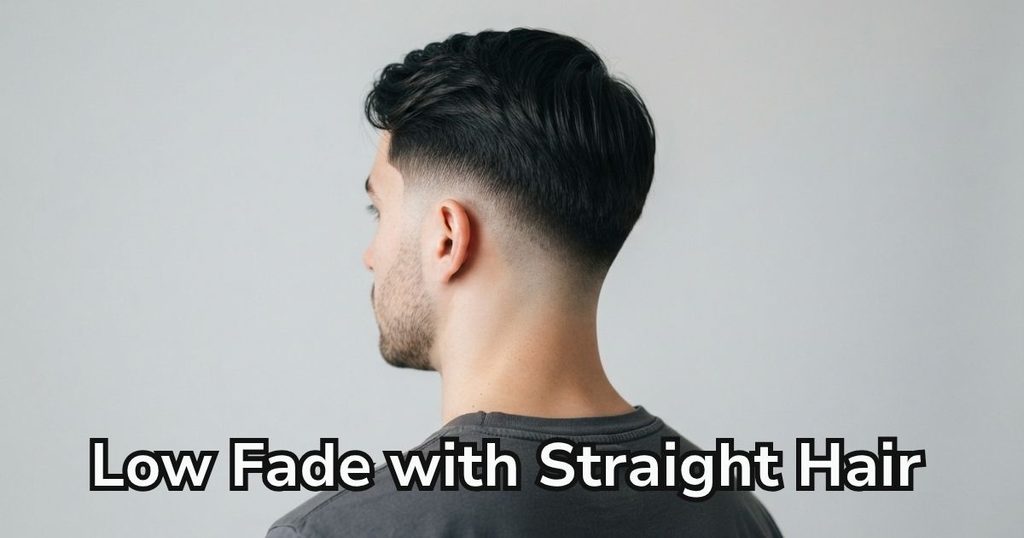
Straight hair gives the low fade a razor-sharp, polished finish. Every strand lies flat against the blend, so the transition from short to long looks almost seamless up close.
This works especially well on oval and square faces, letting the clean lines do the talking. A lightweight pomade or texture spray adds just enough grip. Straight hair grows out fast, though, so plan on barber visits every three weeks.
Low Fade with Wavy Hair
Wavy hair brings natural movement to a low fade, striking a nice middle ground between curly volume and straight precision. It’s the low-maintenance option that still looks intentional.
Oval, round, and diamond face shapes all pair nicely with wavy textures. A sea salt spray enhances the natural wave pattern without weighing hair down. Maintenance sits at the easy end, roughly every four weeks between trims.
Low Taper Fade
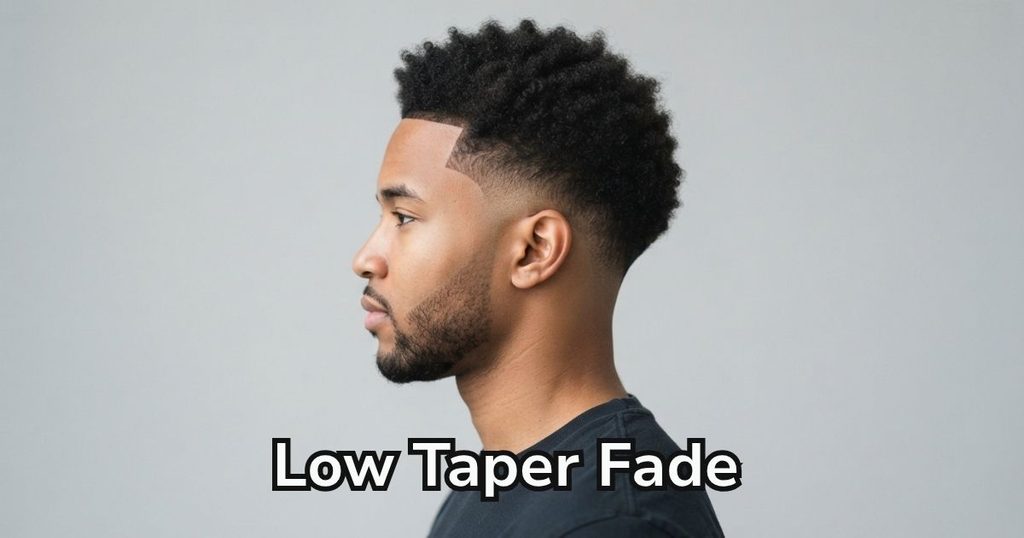
A low taper fade tapers gradually from the neckline upward, staying subtle instead of dramatic. It’s the safest bet for guys who want something barely-there but still deliberate.
Every face shape handles a taper fade well, which explains its popularity. It suits fine, thick, straight, or curly hair equally. Light pomade keeps things neat, and you can stretch appointments to five weeks without it looking messy.
Low Skin Fade
The low skin fade shaves down to bare skin near the ears before blending upward, creating sharper contrast than a taper. It reads as bolder and more done-up.
Square and oval faces show off this contrast best. Any hair texture on top works, since the drama happens at the sides. You’ll need a barber every two to three weeks to keep that skin-close blend crisp.
Low Drop Fade
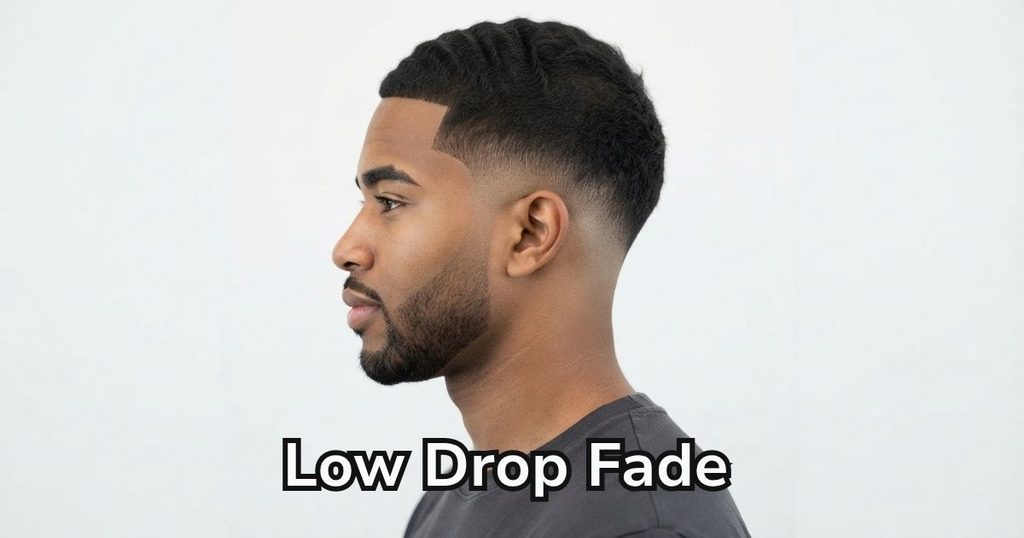
A low drop fade curves downward behind the ear instead of staying level, adding a rounded shape that frames the back of your head differently than a standard fade.
Round and oval faces benefit from the curved line, which softens angles nicely. It works with thick or curly hair especially well. Ask your barber to maintain the drop shape every three to four weeks.
Buzz Cut with Low Fade
Pairing a buzz cut with a low fade turns an already low-maintenance style into something with more definition. The top stays short, but the sides taper for added polish.
This combo flatters square, oval, and heart-shaped faces alike. It suits every hair type since there’s minimal length to style. Skip the product entirely, or use a light matte wax. Touch-ups every two weeks keep it fresh.
Pompadour with Low Fade
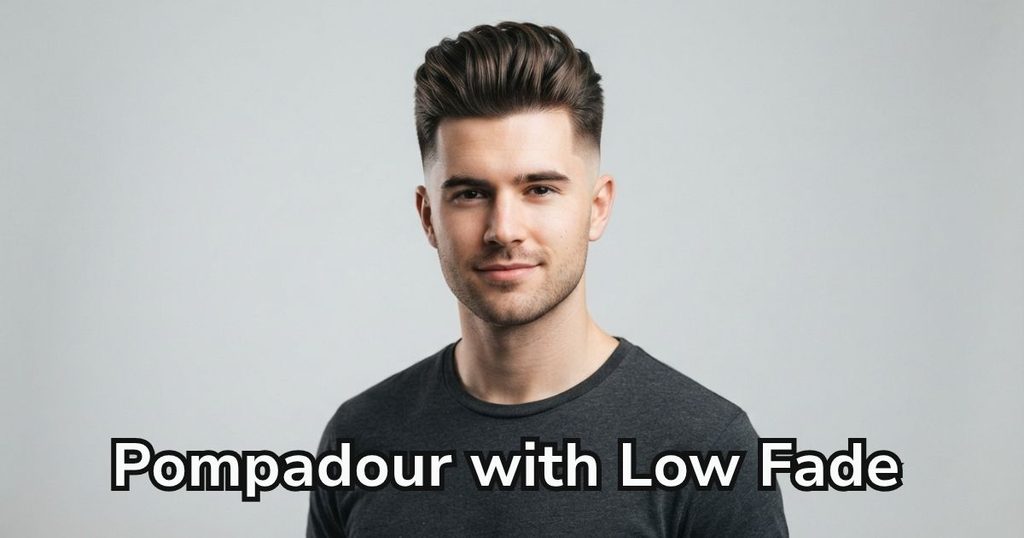
The pompadour with a low fade contrasts sharp sides against dramatic height and volume up top. It’s a dressier option, equal parts vintage barbershop and modern edge.
Oval and long faces wear this best, since the height balances proportions. Thick, straight hair holds a pompadour longest. You’ll want strong-hold pomade and a blow dryer. Plan for barber visits every three weeks, plus daily styling.
Fringe with Low Fade
A fringe with a low fade brings soft, forward-swept bangs down over the forehead while the sides stay tight and tapered. Casual, a little edgy, genuinely low-effort.
Round, oval, and square faces all take well to a fringe, since it can be angled to suit different foreheads. Straight and wavy hair fall naturally into place. A texturizing paste adds separation, and you’ll trim every four weeks.
Faux Hawk with Low Fade
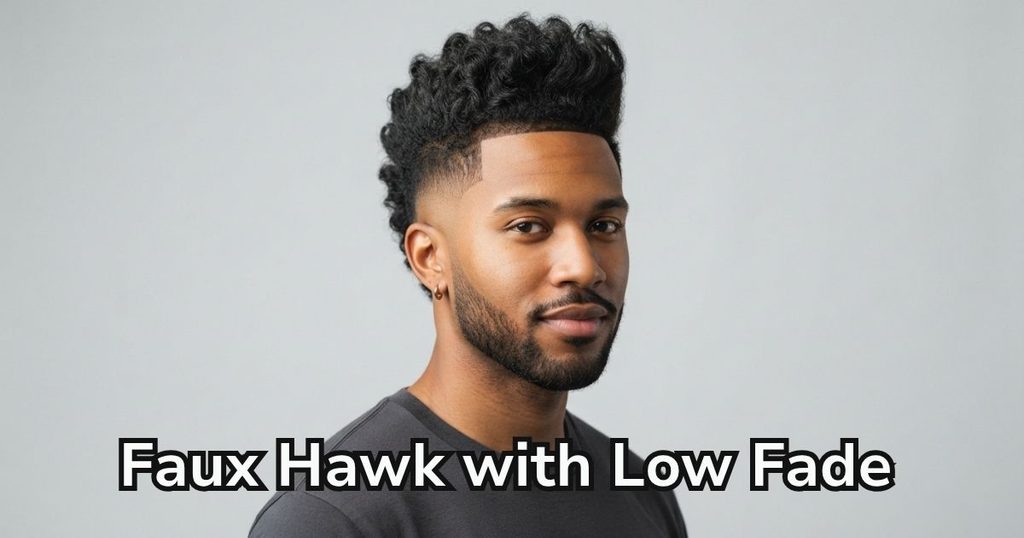
The faux hawk with a low fade channels mohawk energy without the commitment. Hair builds up along the center, tapering into short, faded sides for a bold, structured shape.
Oval and diamond faces balance this style’s height nicely. Thick or coarse hair holds the shape longest. Strong-hold gel or wax is non-negotiable here. Expect to restyle daily and visit your barber every three weeks.
Undercut with Low Fade
An undercut with a low fade shaves the sides dramatically shorter than the top, creating stark contrast. Think disconnected drama rather than the smooth blend of a typical fade.
Square and oval faces handle this contrast well. Thick, straight, or wavy hair on top gives the best payoff. Use a strong pomade for slick styling or texture paste for a messier finish. Rebook every three to four weeks.
Comb Over with Low Fade
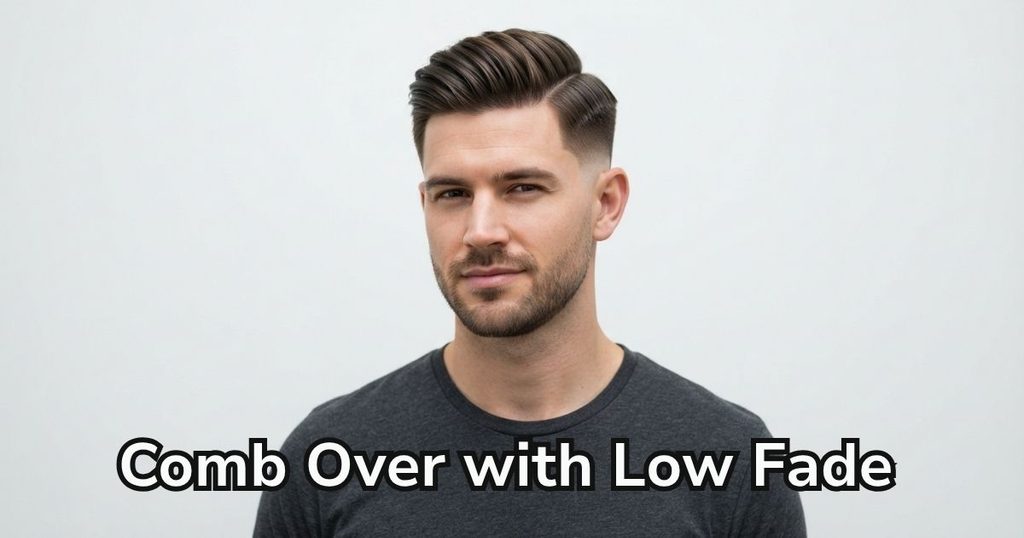
The comb over with a low fade sweeps longer top hair to one side, landing somewhere between business-casual and boardroom-ready. It’s polished without feeling stiff or dated.
Oval, square, and heart-shaped faces suit this side-swept style especially well. Straight or slightly wavy hair combs over most cleanly. A medium-hold pomade with shine works best. Trim every three weeks to maintain the sharp part line.
Spiky Hair with Low Fade
Spiky hair with a low fade adds texture and height through short, gel-styled spikes, while the sides stay clean and tapered. It’s playful without tipping into messy.
Round and oval faces gain definition from the added height. Straight, medium-length hair spikes up easiest. Strong-hold gel or clay does the heavy lifting here. Maintenance runs every three weeks, with quick daily restyling.
Afro Low Fade
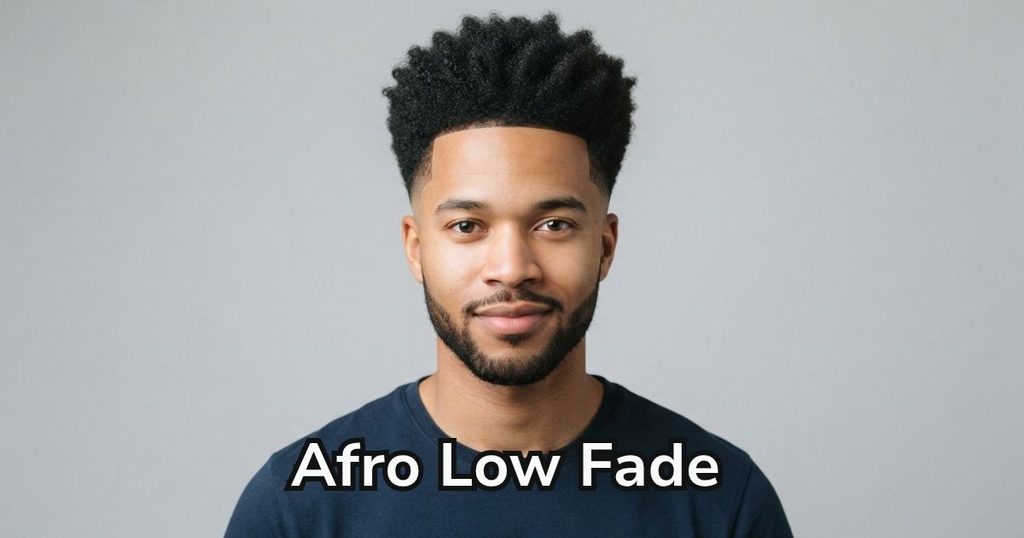
The afro low fade keeps natural curl volume intact on top while tapering the sides low and tight. It celebrates texture instead of fighting against it.
This style flatters round, oval, and square faces equally well. It’s built specifically for coily and curly hair types. A curl cream or leave-in conditioner keeps shape defined. Barbers recommend touch-ups every two to three weeks for sharp sides.
Low Fade Mullet
The low fade mullet keeps things short and tapered up front, then lets length hang loose in the back. It’s a throwback that’s found new life lately.
Oval and square faces pull off the mullet’s asymmetry best. Straight and wavy hair let the back layers move naturally. A texturizing spray adds grit without stiffness. Expect trims every four to six weeks since growth patterns vary.
Low Fade for Black Men
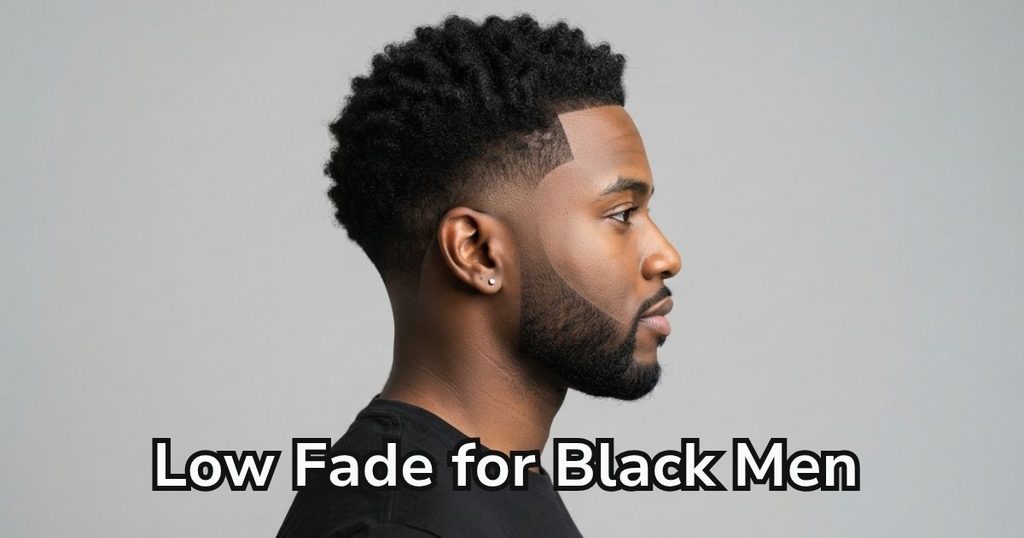
The low fade works beautifully with coily, kinky, and tightly curled hair types common among Black men, tapering close to the skin while preserving volume and shape up top.
Round, square, and oval face shapes all wear this cut confidently. Edge control and a light oil sheen keep lines crisp. Weekly line-ups plus a full fade touch-up every two weeks keep everything sharp.
Low Fade with Beard
Pairing a low fade with a well-groomed beard creates a cohesive, put-together look from hairline to jawline. The fade’s clean lines echo the beard’s sharp edges.
Square, oval, and round faces all benefit from this combo, since the beard adds definition where needed. Beard oil and a trimmer keep growth even. Plan on fade touch-ups every three weeks alongside weekly beard maintenance.
Low Fade with Design (Hard Part/Lines)
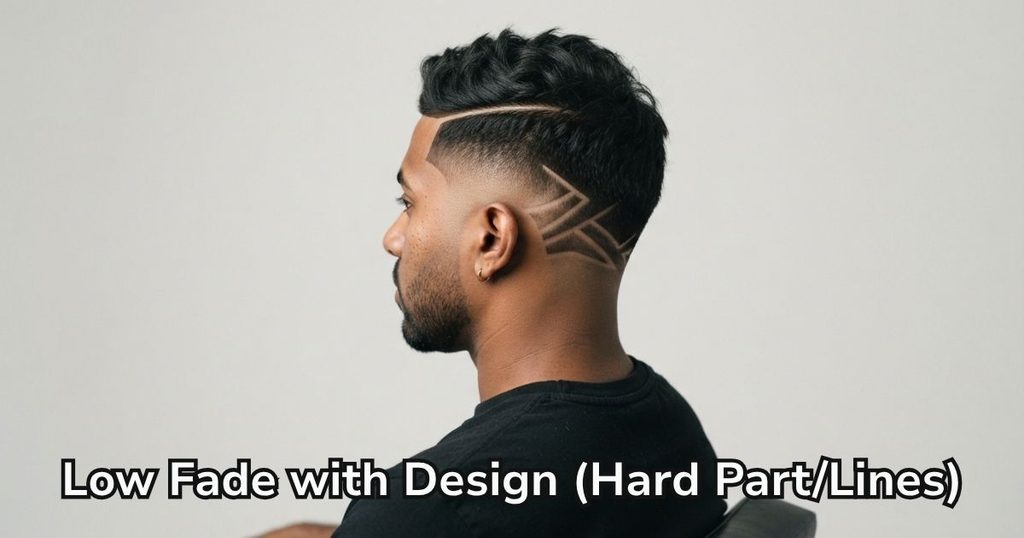
Adding a hard part or shaved line design to a low fade injects personality into an otherwise simple cut. It’s a small detail that makes a noticeable difference.
Oval and square faces showcase line work cleanly. Straight and wavy hair hold a hard part best. Ask your barber to refresh the line every two weeks, since fast-growing hair blurs designs quickly.
Low Fade vs Mid Fade Haircut
Choosing between a low fade and a mid fade comes down to where the tapering starts. A low fade begins near the ears, while a mid fade starts higher, around the temple.
Both styles work with the same hair types and products, but they create different visual proportions. Your face shape and personal style preference should guide which one you pick, not just current trends.
Key Differences Between Low Fade and Mid Fade
The main difference sits in placement. A low fade starts just above the ear, staying subtle, while a mid fade climbs higher and creates more visible contrast against the top.
Low fades suit guys who want understated style for daily wear. Mid fades read bolder and pair well with shorter tops. Both need similar upkeep, roughly every three to four weeks at the barber.
Which Fade Is Better for Your Face Shape?
Round faces often look sharper with a mid fade, since the higher taper adds visual length. Low fades, on the other hand, suit oval and square faces without altering their natural balance.
Long faces should stick with low fades to avoid adding extra height. Heart-shaped faces can go either way depending on how much top volume they’re working with. When in doubt, ask your barber directly.
Here’s What Separates a Good Fade from a Great One?
A good fade looks fine on day one. A great fade still looks sharp three weeks later, with no visible line where the blend should be smooth.
The difference comes down to technique, not just clipper skill. Blending, hair type awareness, and consistent maintenance separate an average cut from one that photographs well from every angle.
Clean Blend and Smooth Transition
A smooth transition means no harsh lines between lengths, just a gradual fade from skin to hair. You shouldn’t be able to point to where one length ends and the next begins.
Skilled barbers use multiple clipper guards, not just two, to build that gradient. Ask specifically for a “blended” fade rather than a basic taper if seamlessness matters most to you.
Choosing the Right Fade for Your Hair Type
Coarse, curly hair holds a fade’s shape longer than fine, straight hair, which tends to show regrowth faster. Your barber should adjust technique based on texture, not use one method for everyone.
Fine hair often needs a slightly higher fade line to look intentional. Thick, curly hair can handle a lower start point without looking uneven. Mention your hair type before the clippers come out.
Why Regular Maintenance Matters
A fade grows out fast, sometimes within two weeks depending on your hair’s growth rate. Skipping appointments means the sharp lines blur into an awkward in-between phase nobody wants.
Set a recurring reminder every three to four weeks, earlier if you have fast-growing or coarse hair. Consistent visits also let your barber catch styling issues before they become bigger problems.
How to Ask Your Barber for the Right Low Fade Haircut?
Walking into a barbershop without a plan often ends in a haircut you didn’t quite want. A little prep beforehand goes a long way toward getting exactly what you pictured.
Bring specifics, not vague requests. Barbers work faster and more accurately when you give clear reference points instead of saying “just make it look good” and hoping for the best.
Show a Reference Photo
Photos remove guesswork entirely. What you call a “low fade” might look totally different from what your barber pictures, so a clear image bridges that communication gap instantly.
Save two or three photos from different angles, including the back and sides. Front-facing shots alone don’t show fade height or blend quality. Angles matter more than you’d think here.
Explain Your Preferred Fade Length
Tell your barber exactly where you want the fade to start, whether that’s right above the ear or slightly lower along the hairline. Vague terms like “not too short” invite mistakes.
Use guard numbers if you know them, like a #2 blending into a #4. If you don’t, point to reference photos and let your barber translate that into clipper settings.
Discuss the Top Hairstyle and Texture
The fade is only half the equation. Talk through how much length you want on top, whether you plan to style it daily, and how your natural texture behaves.
Mention if you’re growing out length or keeping things short-term. Curly and wavy hair often needs different top lengths than straight hair to achieve the same overall silhouette you’re after.
Also Read: Long Curly Hair Fade Ideas: Styling Tips & Maintenance
The Evolution of Low Fade Haircut
The low fade haircut didn’t appear overnight. It’s been shaped by decades of barbershop culture, military grooming standards, and shifting ideas about what counts as professional or stylish.
Understanding where this cut came from helps explain why it’s stuck around so long. It’s flexible, it’s classic, and it keeps adapting to whatever’s trending without losing its core identity.
How the Low Fade Became Popular
Fades trace back to military haircuts from the mid-20th century, prized for practicality and neatness. Barbershops later adapted the style, softening it into something more fashion-forward for everyday wear.
By the 1990s, fades had crossed into mainstream pop culture through music and film. The low fade specifically gained traction as a subtler alternative to the high and skin fades of that era.
Modern Low Fade Trends in 2026
This year’s low fade trends lean toward texture and personalization, mixing curls, waves, and design elements rather than sticking to one uniform look across every client.
Barbers now customize fade height and blend based on hair type more than ever before. Expect to see more curly low fades, mullet hybrids, and beard pairings dominating searches and salon requests throughout 2026.
Final Thoughts
That wraps up our full look at the low fade haircut men everywhere are asking for right now. Whether you want a classic taper, a bold skin fade, or something paired with curls or a beard, there’s a version that fits your style and your hair type.
A low fade haircut men can wear to work, the gym, or a night out is hard to beat. It’s sharp, adaptable, and never really goes out of style. Bring your barber a photo, ask the right questions, and you’ll walk out with a low fade that actually works for you.
FAQs
What is a low fade haircut for men?
A low fade haircut starts tapering just above the ears, blending short sides into longer hair on top. It’s subtle, clean, and works with almost any hairstyle or occasion.
How often should you get a low fade touched up?
Most guys need a touch-up every three to four weeks. Fast-growing or coarse hair might need trims every two weeks to keep the fade looking sharp and defined.
Does a low fade work for curly hair?
Yes, a low fade works great with curly hair. The sides stay tight and tapered while your natural curls keep their volume and bounce right on top.
What’s the difference between a low fade and a low taper?
A low fade uses more contrast, sometimes down to skin, while a low taper blends more gradually. Both start low, but the taper looks softer overall.
Can you pair a low fade with a beard?
Definitely. A low fade with a beard creates a clean, put-together look. The sharp fade lines echo your beard’s edges for a cohesive style.

Serena Luna, the voice behind JournalHair. I share the latest hairstyle ideas, haircut trends, and easy hair inspiration to help you find your perfect look every day.
