

The low fade haircut is one of the most requested cuts at barbershops right now. It’s simple, sharp, and easy to wear. You don’t need a bold style on top to make it work. A low fade alone gives you a clean, put-together look. That’s why so many guys pick it as their go-to cut.
You’ve seen it on every barbershop wall and half your Instagram feed: the low fade haircut. It’s subtle, it’s sharp, and it works with almost anything you do on top. If you’ve ever left a barber’s chair with a fade that felt too aggressive or too plain, the low fade might be the fix you didn’t know you needed.
What Is a Low Fade Haircut?
A low fade haircut blends hair gradually, starting low near your ears and neckline before tapering into your natural length higher up. It’s subtle by design, never drawing too much attention to the sides.
Unlike higher fades, it keeps things understated and professional. Barbers use clippers with varying guard lengths to create the gradual blend, giving you a clean, tailored look that suits nearly any setting.
What Are the Best 25 Low Fade Haircut Styles?
From classic and skin fades to bold mullets and man buns, the low fade pairs with nearly any top style you can imagine. Each version below offers something a little different.
Whether you want low maintenance or a style that turns heads, there’s a low fade variation for you. Here are twenty-five worth showing your barber at your next appointment.
1. Classic Low Fade

The classic low fade blends hair gradually from skin near the neckline up into your natural length. No hard lines, no drama, just a smooth transition that works with almost any hairstyle on top.
This cut suits nearly every face shape and hair type, from straight to curly. It needs a trim every three weeks, pairs well with light pomade, and fits both office days and weekend plans.
2. Low Skin Fade
A low skin fade takes the sides down to bare skin right at the base, then blends upward. It’s crisper and bolder than a standard low fade, with sharper contrast near the hairline.
Guys with straight or wavy hair see the cleanest results here. Oval and square faces handle it best. Matte clay keeps the top textured, and you’ll want touch-ups every two weeks to stay sharp.
3. Low Taper Fade

The low taper fade skips the hard skin line and tapers hair gradually instead. It’s softer and more forgiving, blending sides and back without ever looking too severe or overly styled.
Curly and thick hair types benefit most, since the gradual blend hides growth longer. It suits round and oval faces, needs less frequent trims, and works for both casual and formal settings.
4. Low Drop Fade
A low drop fade curves downward behind the ear before rising back up. That subtle dip softens harsh angles and adds a bit of shape you won’t find in a straight-line fade.
Square and rectangular face shapes gain the most from this curve. It works with straight or curly hair, needs a skilled barber for clean lines, and looks sharp for work and nights out.
5. Low Temp Fade

Low temp fade is another name for a low temple fade, where the blend stays close to your temples and neckline. It’s subtle enough for conservative workplaces yet still looks intentional and tidy.
This one flatters most face shapes and hair textures equally. It pairs naturally with a comb over or side part, needs light styling cream, and holds its shape well between barber visits.
6. Shadow Fade
The shadow fade skips the skin-close blend entirely, fading into a soft gradient instead. There’s no harsh line anywhere, just gentle shading that looks polished without trying too hard.
Thick and wavy hair types wear this well, especially on oval or heart-shaped faces. It’s low maintenance, needs minimal product, and suits professional settings where you want subtlety over statement-making style.
7. Low Burst Fade
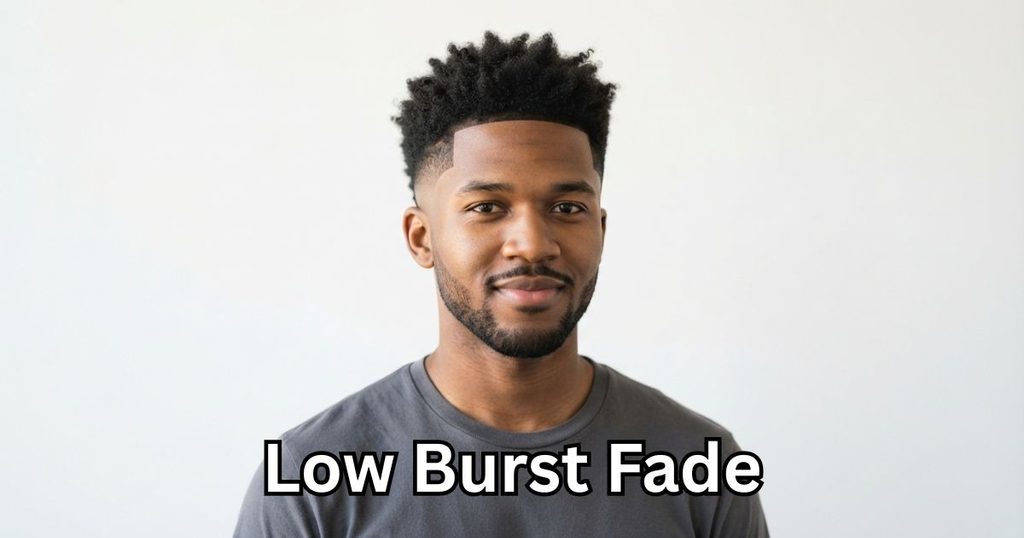
A low burst fade curves around your ear instead of running in a straight line across the side. That curved shape creates a natural break, especially when paired with a beard.
Guys with beards or fuller hair on top get the most out of this style. It suits round and oval faces, pairs with texturizing spray, and needs a barber visit every two to three weeks.
8. Low Fade Haircut for Curly Hair
This version keeps curls intact on top while the sides fade low and clean. The contrast between tight curls and a smooth blend gives the whole cut natural texture and movement.
Curly and coily hair types are the obvious fit here, flattering most face shapes. Curl cream defines the top without weighing it down, and monthly trims keep the shape from growing too bulky.
9. Low Fade Crew Cut

The low fade crew cut keeps the top short and uniform, then fades the sides low and tight. It’s a no-fuss cut that still looks deliberate and sharp every single day.
Straight and thick hair types handle this best, and it suits nearly every face shape. Maintenance stays minimal, a small amount of matte paste works fine, and it’s ideal for gym days or office weeks.
10. Low Fade Textured Crop
A textured crop pairs choppy, piece-y layers on top with a low fade underneath. The rougher texture up top contrasts nicely against the clean, smooth blend along the sides.
Wavy and thick hair textures create the best movement here. Round and square faces both work well with the added height. Styling cream or clay adds texture, and touch-ups run every three weeks.
11. Low Fade French Crop
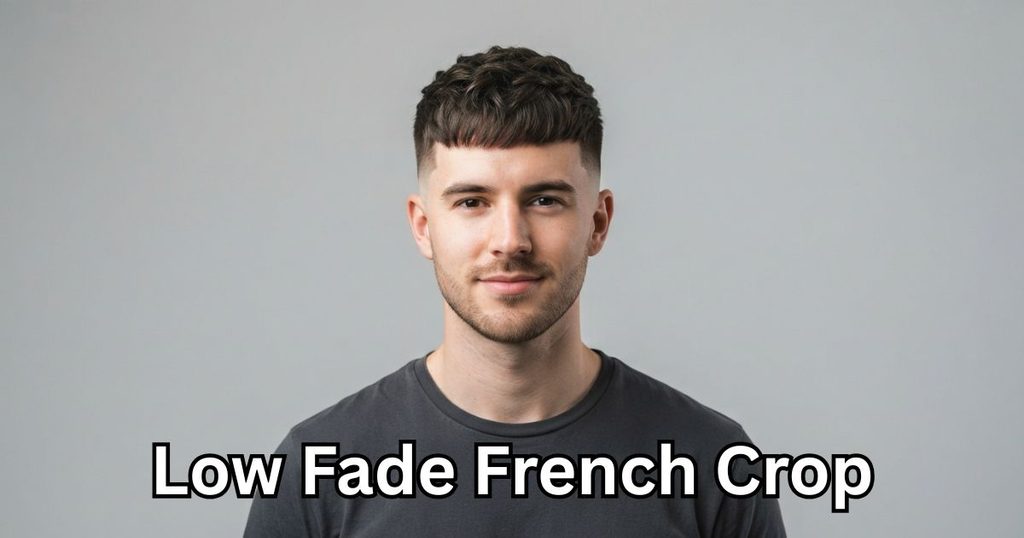
The French crop brings a blunt, straight-across fringe paired with a tight low fade. It’s structured, a little edgy, and gives off effortless European styling without much daily work.
Straight or slightly wavy hair holds the fringe shape best, and it flatters oval or square faces. A light pomade defines the fringe, and this style suits both casual outings and smart-casual events.
12. Low Fade Pompadour
A low fade pompadour keeps length and volume swept up and back on top, while the low fade underneath keeps things tidy. It’s a classic combo with a slightly formal edge.
Thick, straight hair holds the pompadour’s height best, and it suits oval or long face shapes especially well. Strong-hold pomade is essential, daily styling takes a few minutes, and it’s perfect for events.
13. Low Fade Quiff

The quiff pushes hair up and slightly forward, creating volume without the pompadour’s formal sweep. Paired with a low fade, it feels more relaxed and easier to style day to day.
Straight and wavy hair types style this quickly with a blow dryer. It suits most face shapes, needs a medium-hold paste, and works equally well for casual days and slightly dressed-up occasions.
14. Low Fade Comb Over
A comb over parts hair to one side and sweeps it across the top, contrasting cleanly against the low fade beneath. It’s one of the most timeless combinations in men’s grooming.
This works on straight to wavy hair and flatters nearly every face shape. It needs a fine comb and light pomade for the part, plus regular trims to keep the line looking sharp.
15. Low Fade with Beard

Pairing a low fade with a full or stubble beard creates a balanced, framed look. The fade keeps the sides tidy while the beard adds structure around your jawline.
This combo suits square, round, and oval faces particularly well. Beard oil keeps things soft, regular trims on both fade and beard matter, and it works for casual and professional settings alike.
16. Low Fade Buzz Cut
A buzz cut on top paired with a low fade is about as low-effort as haircuts get. Everything stays short and uniform, with just a slight blend near the neckline.
Nearly any hair type and face shape can pull this off. There’s little to no product needed, trims happen roughly every two weeks, and it works for gym life, work, or lazy mornings.
17. Low Fade with Straight Hair

Straight hair paired with a low fade tends to look sleek and structured, since the top holds its shape without much frizz or unpredictable movement getting in the way.
This pairing suits most face shapes and works with several top styles, from a comb over to a slick back. Light styling cream is usually enough, and upkeep stays fairly simple overall.
18. Low Fade Mohawk
A low fade mohawk keeps a strip of longer hair down the center while the sides fade low and close. It’s bold on top but still restrained near the ears and neck.
Thick or coarse hair holds the center strip best, and it suits oval or square faces. Strong-hold gel keeps the mohawk upright, daily styling is required, and it’s better suited for casual settings.
19. Low Fade Edgar

The Edgar cut brings a straight, blunt fringe across the forehead, paired with a low fade on the sides. It’s become a favorite among younger guys wanting a bold, structured look.
Thick, straight hair shapes the fringe cleanest, and it suits round or square faces well. A flat brush and light gel define the fringe, with trims needed roughly every two to three weeks.
20. Low Fade Blowout
A blowout adds noticeable height and volume on top through blow-drying, while the low fade underneath keeps the sides controlled and neat. It’s a bigger, bolder statement than most fade styles.
Thick or coarse hair creates the fullest blowout, and it suits oval or long faces best. A blow dryer and volumizing spray are essential, and this style works especially well for nights out.
21. Low Fade Mullet

The modern mullet keeps length in the back while the sides fade low and tight. It’s a throwback style that’s found new life through a cleaner, more tailored fade underneath.
Wavy or thick hair adds the most texture to the back section, and it suits square or oval faces. Sea salt spray enhances texture, and trims are needed roughly every four weeks.
22. Low Fade Slick Back
A slick back pushes hair straight back with a wet or matte finish, contrasting sharply against the clean, low blend at the sides. It’s polished without feeling overly formal.
Straight and wavy hair slicks back most easily, suiting oval and square faces well. A firm-hold pomade or gel does the job, and this style transitions easily from office to evening plans.
23. Low Fade with Design
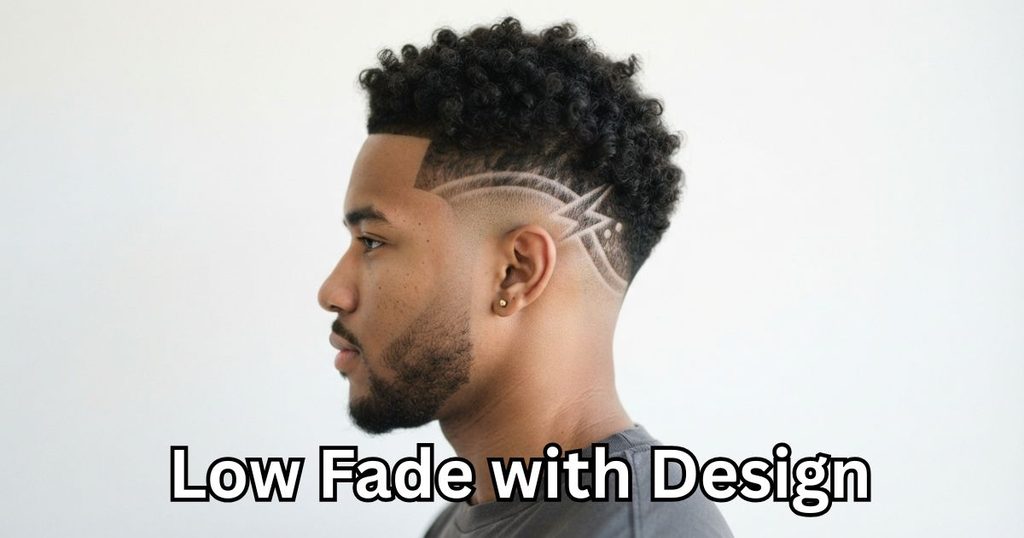
Adding a shaved line, part, or small pattern near the temple gives a low fade a personal, custom touch without overwhelming the overall clean shape of the cut.
This works with any hair type and most face shapes, since the design sits in a small area. It requires a skilled barber and monthly touch-ups, and suits casual or creative settings best.
24. Low Fade Middle Part
A middle part splits hair evenly down the center, paired with a low fade for contrast. It’s a trend-driven look that leans casual and slightly retro at the same time.
Straight or wavy hair holds a middle part most naturally, suiting oval and heart-shaped faces. Light pomade defines the part, and it works well for casual days and relaxed social occasions.
25. Low Fade Man Bun

For guys with longer hair on top, a low fade keeps the sides tidy while the length gets pulled back into a small bun. It balances neat with laid-back.
Thick, straight, or wavy hair ties up easiest, and this suits most face shapes. A hair tie and light texturizing spray help, with maintenance focused mainly on the fade every three weeks.
How Does a Low Fade Compare to a Mid Fade?
A low fade keeps the blend close to the ears and neckline, while a mid fade starts higher, around the middle of the head. The mid fade shows more skin and contrast overall.
If you want something subtle for work, choose the low fade. If you want a bolder, more noticeable style, the mid fade delivers sharper lines and a more modern silhouette.
Also Read: Low Taper Fade: 35 Sharp Haircut Ideas for Men in 2026
How Does a Low Fade Compare to a High Fade?
A high fade climbs several inches up the sides, creating dramatic contrast between skin and hair. A low fade stays much closer to the bottom, offering a far more conservative result.
High fades suit guys wanting a bold, edgy look, while low fades fit conservative workplaces and classic styling. Your daily environment and personal taste should guide which one you choose.
What Is the Biggest Mistake Men Make with a Low Fade?
The most common mistake is waiting too long between trims. A low fade grows out fast near the neckline, and after three weeks the clean blend turns into a fuzzy, undefined mess.
Another mistake is picking a fade height without consulting your barber first. Face shape and hair type matter, so skipping that conversation often leads to a cut that doesn’t actually suit you.
How to Keep a Low Fade Looking Sharp
A crisp fade doesn’t stay crisp forever. Hair grows, and the blend you loved on day one starts to blur by week three. Here’s how to stretch the time between cuts.
- Book touch-ups every 2 to 3 weeks. The neckline and blend grow out fastest, so a quick trim keeps the shape without a full redo.
- Use the right product for your top length. A matte clay works for shorter, structured styles like a crew cut or textured crop. Longer styles like a quiff or slick back do better with a lightweight pomade or styling cream.
- Don’t skip the scalp. Dry scalp under a fresh fade is uncomfortable and it shows. A light oil or moisturizer keeps things looking healthy, not flaky.
- Growing it out? Talk to your barber, not Google. If you’re transitioning from a low fade to something longer, tell your barber the plan at your next visit. They can adjust the blend gradually instead of leaving you with an awkward in-between stage.
One more distinction worth knowing: a “tapered haircut” and a “fade” aren’t quite the same thing. A taper gradually shortens hair without ever reaching the skin, while a fade blends all the way down to nothing near the hairline. Ask for a taper if you want subtlety over sharpness, or a fade if you want that clean, barbershop-fresh line.
Final Thoughts
This low fade haircut guide covered a lot of ground. But the takeaway is simple. A low fade works for almost anyone. It suits different face shapes. It suits different hair types. And it fits almost any occasion.
Pick a low fade style from this list. Show your barber a photo. Be clear about the blend and the length on top. That’s how you get a low fade haircut that actually looks right on you, not just in the picture.
FAQs
What is a low fade haircut?
A low fade haircut blends hair close to your ears and neckline, then tapers upward into your natural length. It’s subtle, clean, and works for almost any occasion.
How often should I get a low fade touched up?
Most guys need a touch-up every two to three weeks. The neckline and blend grow out fastest, so regular trims keep your low fade looking sharp and defined.
Does a low fade work with curly hair?
Yes, a low fade works great with curly hair. The sides stay clean while your curls keep their natural bounce on top, creating nice contrast without much extra effort.
What’s the difference between a low fade and a high fade?
A low fade stays close to your ears and neck, while a high fade climbs several inches up the sides. High fades look bolder, low fades look more understated.
Can I get a low fade with a beard?
Absolutely. A low fade with a beard is a popular combo. The clean sides pair naturally with beard shape, giving your whole look a balanced, put-together finish.

Serena Luna, the voice behind JournalHair. I share the latest hairstyle ideas, haircut trends, and easy hair inspiration to help you find your perfect look every day.
