

A textured fringe low taper gives you a sharp shape without making your hair look overly styled. It keeps the sides neat while leaving plenty of movement through the top and fringe. That balance makes this cut easy to wear with straight, wavy, or curly hair. You can keep the fringe short and messy or let it fall forward for a softer finish. Either way, the textured fringe low taper adds character without demanding hours in front of the mirror.
The best part is its versatility. A textured fringe low taper works with casual outfits, smart looks, and everything between. You can use sea salt spray for a natural finish or matte clay for stronger texture. It also grows out nicely when your barber keeps the tapered sides and clean neckline balanced. If humidity turns your hair into a rebellious puffball, a little styling cream can help.
What Is a Textured Fringe Low Taper?
A textured fringe low taper combines a choppy forward fringe with neatly tapered sides. The top keeps natural movement while the neckline and temples stay clean.
This cut suits oval, round, square, and heart faces. Straight, wavy, curly, thick, or fine hair can work. Use matte clay or texture powder for everyday styling.
What Is a Textured Fringe?
A textured fringe keeps the front slightly uneven, creating movement instead of a flat, heavy finish. The layered fringe can look messy, sharp, or softly broken.
You can adjust the length to suit your face and hair texture. Sea salt spray works well for natural movement while matte paste gives stronger separation.
What Is a Low Taper?
A low taper gradually shortens hair around the temples and neckline without taking the fade too high. It creates a clean outline while preserving fullness above.
This taper works across many face shapes and hair types. It suits school, work, weekends, and formal events. Regular touch-ups keep the edges looking fresh.
How These Two Haircuts Work Together
The textured fringe creates movement on top while the low taper controls the edges. Together, they create contrast without making the haircut look overly sharp or dramatic.
This combination suits men wanting a modern haircut with manageable styling. It works especially well with straight, wavy, and curly textures using lightweight matte products.
Why This Haircut Is So Popular
The textured fringe low taper balances a fashionable shape with everyday practicality. You get visible texture and a clean finish without spending forever styling your hair.
Its flexibility makes it useful for different ages, lifestyles, and hair types. A quick blow dry and small amount of matte clay usually provide enough definition.
Why Choose a Textured Fringe Low Taper?
This haircut gives you texture where it matters while keeping the sides controlled. It feels current without relying on an exaggerated fade or complicated styling.
Choose it if you want flexibility between messy and polished looks. It suits casual outings, work settings, dates, and weekends with minimal maintenance between appointments.
Clean Yet Modern Look
Clean sides and a textured top create a polished silhouette with enough irregularity to prevent the style from looking stiff. The fringe adds personality without overwhelming your features.
This version works nicely for oval, square, and heart faces. Straight or wavy hair needs little effort. Matte paste keeps separation visible while avoiding unnecessary shine.
Easy to Style
A textured fringe low taper doesn’t require complicated techniques. You can create movement quickly with damp hair, sea salt spray, and a short blow dry.
Men with straight, wavy, or fine hair can benefit most. Use texture powder for lift or matte clay for control. Maintenance stays moderate between regular barber visits.
Works for Different Hair Types
Natural texture gives this haircut plenty of personality. Straight hair creates sharper separation, while waves and curls make the fringe look fuller and more dynamic.
The style suits thick, fine, coarse, and curly hair with small adjustments. Choose lightweight products for fine hair and stronger matte formulas for thicker textures.
Suitable for Many Face Shapes
The fringe can change how your face appears by adding horizontal texture across the forehead. Meanwhile, tapered sides keep the overall outline neat and balanced.
Oval, square, heart, and diamond faces have plenty of styling options. Round faces can benefit from controlled height, while oblong faces suit a softer fringe.
Grows Out Naturally
Unlike an aggressive fade, a low taper doesn’t create a dramatic contrast as it grows. The sides gradually soften while the textured top maintains its shape.
This makes the haircut useful for busy schedules and longer gaps between visits. Straight, wavy, and curly hair can all grow out naturally with proper shaping.
A Good Choice for Different Ages
The textured fringe low taper can look youthful without feeling childish. Adjusting the fringe length and taper height makes the haircut suitable across different age groups.
Teenagers can wear messy texture, while adults may prefer cleaner separation. Nearly any hair type works when products and styling match your natural texture.
Is a Textured Fringe Low Taper Right for You?
This haircut makes sense if you want a modern shape with texture and relatively simple upkeep. It offers more personality than a basic taper without becoming extreme.
Consider your hair density, natural movement, and styling routine before choosing it. If you dislike daily styling, keep the fringe shorter and request manageable texture from your barber.
Best Textured Fringe Low Taper Styles
The best version depends on your hair texture, face shape, and preferred finish. Some styles emphasize messy movement, while others create cleaner lines and stronger contrast.
Think about your daily routine before choosing a variation. Curly hair may need cream, straight hair may need texture powder, and thick hair often benefits from matte clay.
Textured Fringe Low Taper Straight Hair
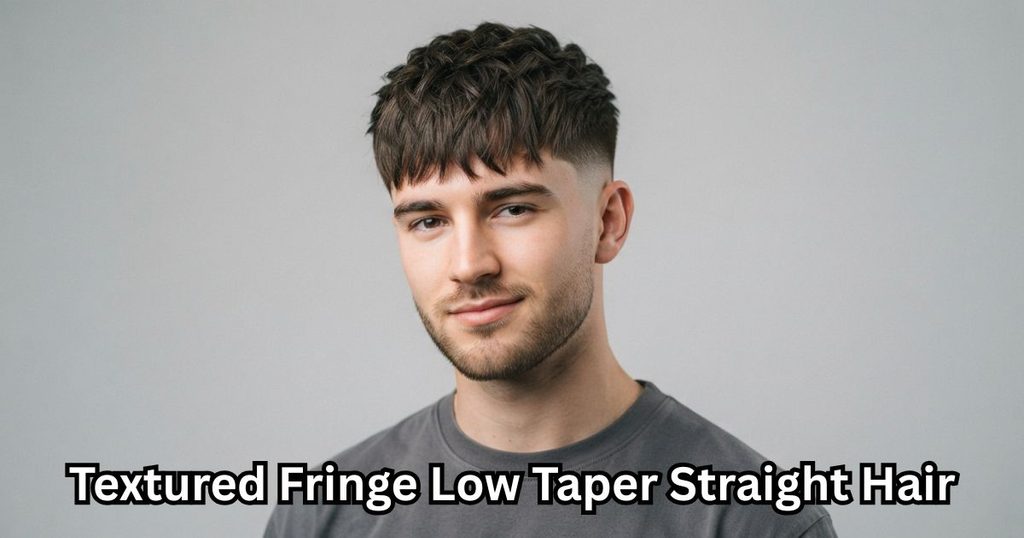
Straight hair gives the fringe a clean, defined appearance that highlights every layer. A slightly uneven edge prevents the front from looking too flat or rigid.
This style suits oval, square, and heart faces especially well. Use sea salt spray before blow drying, then finish with matte paste for separation and flexible control.
Textured Fringe Low Taper Curly Hair
Curly hair gives the fringe natural volume and movement, creating a fuller silhouette. The low taper keeps the temples and neckline tidy without removing too much personality.
This variation suits oval, round, and square faces. Apply styling cream to damp curls, then use light scrunching. Avoid heavy clay that can make curls crunchy.
Textured Fringe Low Taper Fade
A low taper fade creates a cleaner transition around the edges while keeping the fringe textured and forward. The result looks sharper without sacrificing top length.
It works across straight, wavy, and curly hair. Oval and square faces handle the contrast well. Matte clay or texture powder provides definition without excessive shine.
Textured Fringe Mid Taper
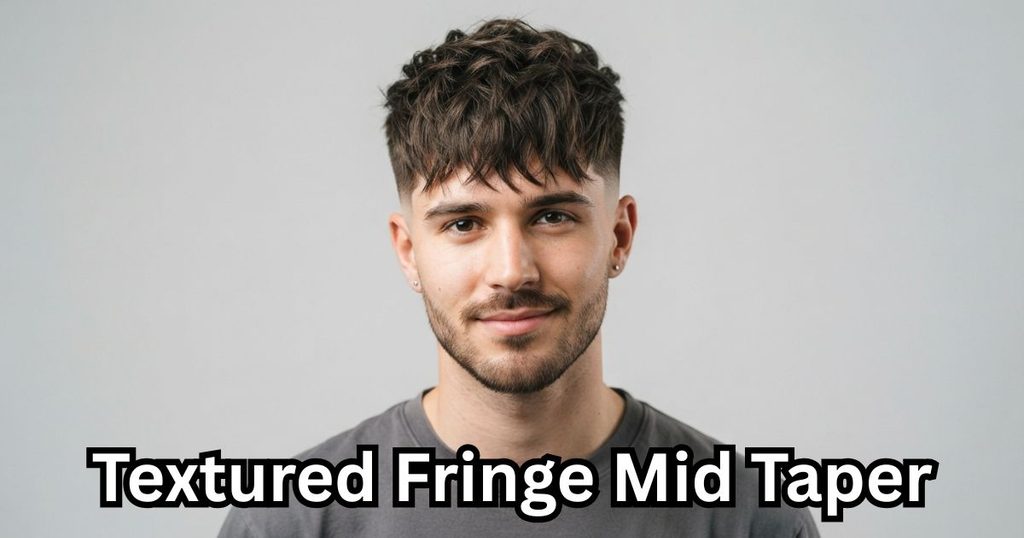
A mid taper starts higher than a traditional low taper, creating more visible contrast around the sides. It gives the haircut a stronger, slightly sportier profile.
This option suits thicker hair and oval or square faces. Use matte paste for controlled texture. Maintenance runs slightly higher because the taper becomes noticeable sooner as hair grows.
Textured Fringe Low Taper Asian
This variation works well with naturally straight, dense hair that holds structured shapes. The fringe creates movement while the low taper reduces bulk around the sides.
It suits oval, round, and heart faces with suitable fringe length. Texture powder adds lift, while matte clay helps separate thicker strands without creating a greasy finish.
Textured Fringe Low Taper Black Hair
Black hair can create striking definition between textured strands and tapered edges. Curly or coily textures add natural fullness, while the low taper keeps the outline controlled.
This style works across several face shapes when the fringe matches your proportions. Use styling cream for curls or matte products for stronger definition and separation.
Textured Fringe Low Taper with Mullet
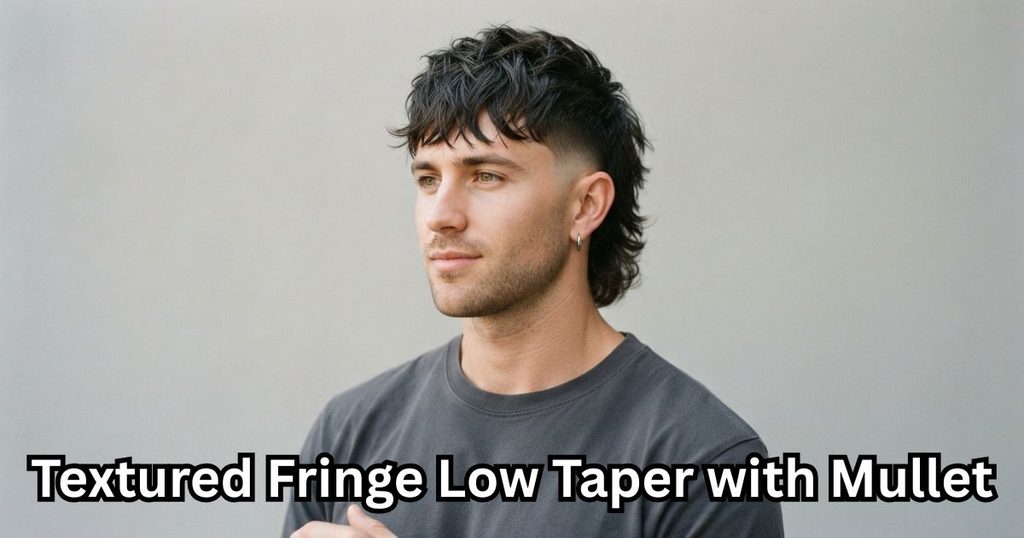
Adding a subtle mullet leaves extra length toward the back while the textured fringe keeps attention around the face. The low taper connects both areas cleanly.
This bold variation suits confident casual styling and works best with wavy, curly, or thick hair. Matte paste adds separation while regular touch-ups prevent the shape becoming messy.
Textured Fringe Low Taper Blowout
A blowout version adds height and volume behind the textured fringe while keeping the taper neat around the edges. It feels fuller and more dramatic than standard styling.
Thick and wavy hair naturally supports this shape, while fine hair needs volumizing products. Use sea salt spray before blow drying and finish lightly with matte clay.
Textured Fringe Low Taper Fade Blowout
This style combines a lifted blowout with cleaner tapered edges, creating noticeable contrast without removing too much top length. The fringe remains textured rather than perfectly smooth.
It suits oval, square, and diamond faces particularly well. Thick or wavy hair provides natural body. Use heat protectant, sea salt spray, and matte paste for lasting control.
Textured Fringe Low Taper Fade Straight Hair
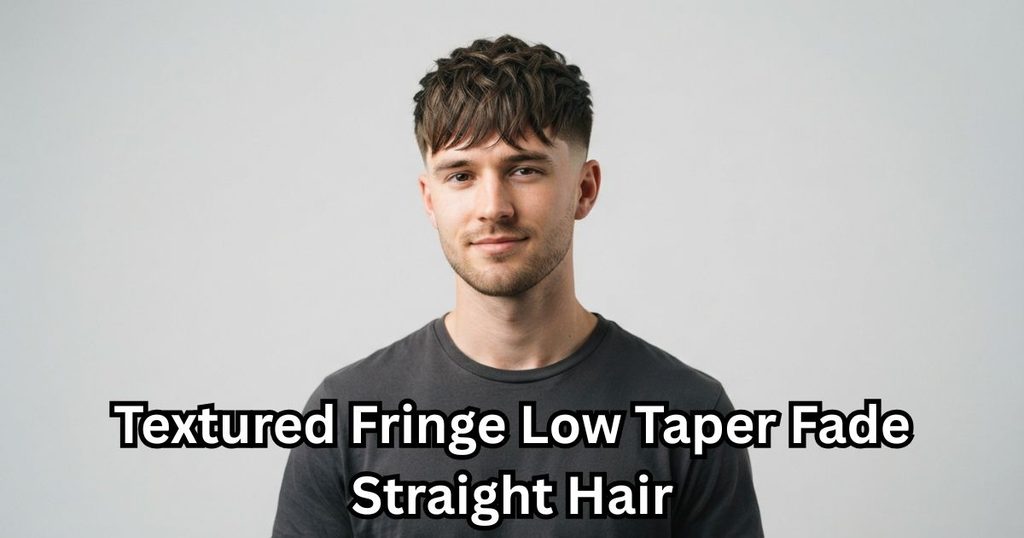
Straight hair makes this version look crisp because the textured fringe creates deliberate separation against clean tapered sides. Small layers prevent the top from appearing flat.
This style suits oval, square, and heart faces. Fine hair benefits from texture powder, while thick hair handles matte clay well. Expect moderate maintenance around the edges.
Messy Textured Fringe Low Taper
A messy fringe keeps the haircut deliberately imperfect, giving straight or wavy hair a casual shape with plenty of movement. The low taper prevents the style becoming unkempt.
This version suits relaxed wardrobes and casual occasions. Oval, round, and heart faces can wear it well. Use matte paste sparingly and leave some natural separation visible.
Messy Textured Fringe Low Taper Fade
Adding a sharper taper fade makes the messy fringe stand out with stronger contrast. The top stays loose while the sides create a cleaner visual frame.
Wavy, thick, and straight hair can carry this look. Use matte clay for separation and texture powder when extra lift helps. Regular touch-ups keep the fade balanced.
Curly Textured Fringe Low Taper
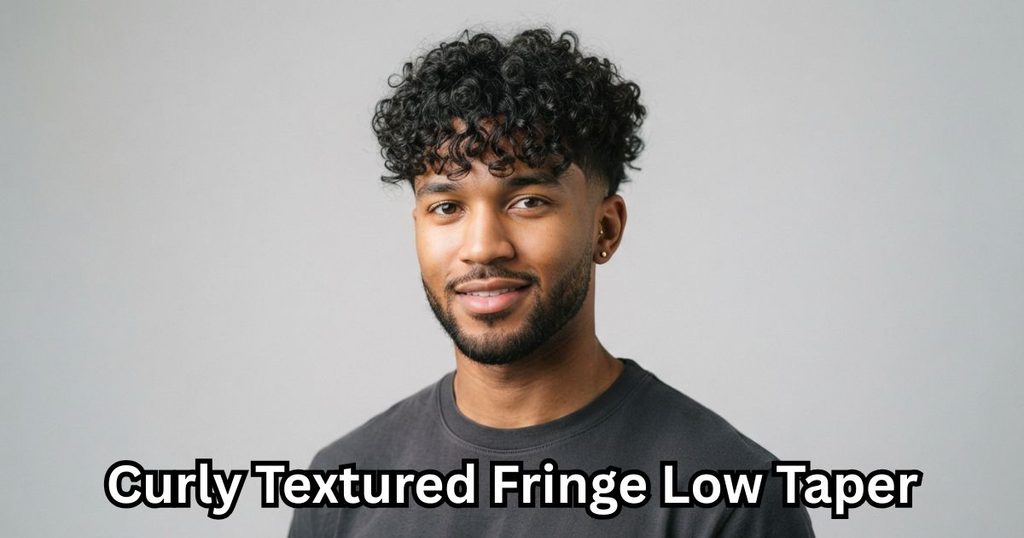
Curly texture gives the fringe natural dimension, making each curl contribute to the overall shape. The low taper controls the sides while preserving useful volume above.
This style works well for oval, square, and round faces. Use curl cream on damp hair, then air dry or diffuse gently for definition without stiffness.
Short Textured Fringe Low Taper
A short fringe creates a cleaner, easier shape while retaining enough texture to avoid looking basic. The shorter front also makes daily styling quicker and more predictable.
Fine, straight, and wavy hair can benefit from this length. It suits most face shapes with small adjustments. Use texture powder or matte paste for lightweight definition.
Blonde Textured Fringe Low Taper
Blonde hair can make textured layers especially visible because light catches the separated strands. A low taper keeps the overall shape neat while allowing the fringe to stand out.
This style suits straight, wavy, and curly blonde hair. Oval and square faces offer plenty of flexibility. Use matte products to preserve texture without making lighter hair look oily.
16 Guard Textured Fringe Low Taper
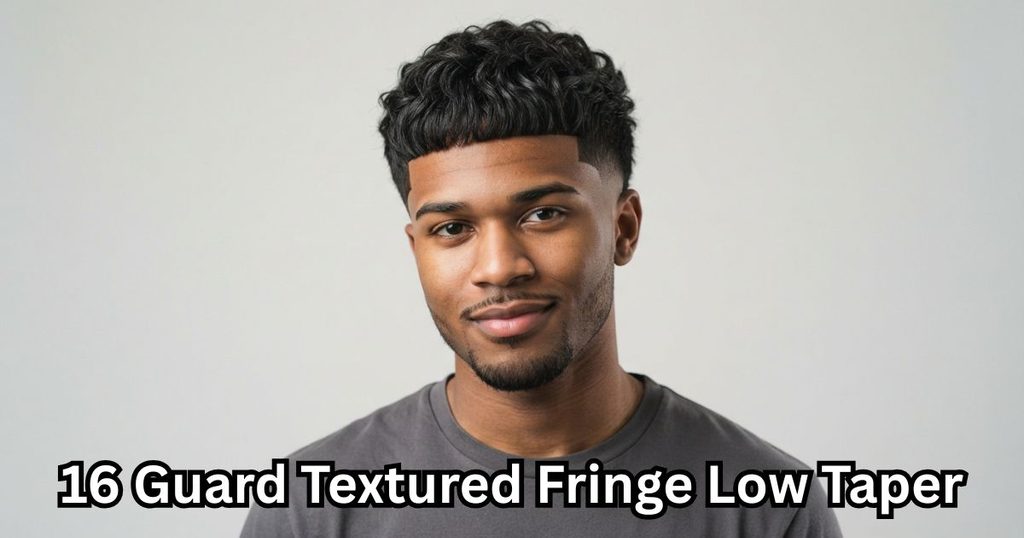
A 16 guard leaves noticeably more length than shorter clipper settings, creating a softer transition around the tapered areas. It keeps the haircut fuller and less aggressive.
This approach suits thick or straight hair when you prefer subtle contrast. Oval, square, and heart faces work well. Ask your barber to blend the length naturally.
Which Hair Type Works Best?
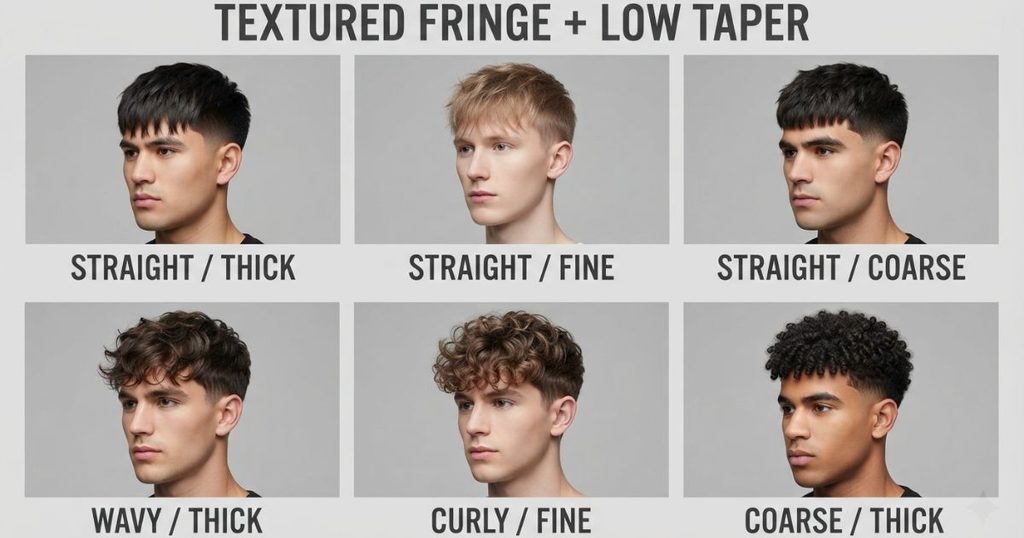
There isn’t one perfect hair type for this haircut. The textured fringe low taper adapts to different densities and patterns when your barber adjusts length, layering, and product choice.
Straight hair offers control, while waves and curls create natural movement. Thick hair needs weight management, and fine hair benefits from lightweight products that build texture without buildup.
Straight Hair
Straight hair gives you predictable fringe movement and clear separation between layers. It can look polished with minimal effort, although very straight strands may need added texture.
Oval, square, and heart faces suit this shape well. Try sea salt spray before blow drying, then use matte paste or texture powder for definition.
Wavy Hair
Wavy hair naturally creates the broken texture this haircut needs. The fringe can fall forward with loose bends, giving the style movement without extensive product or heat.
This texture suits oval, round, and square faces. Use sea salt spray for enhancement and styling cream when waves become dry. Let some natural bends remain visible.
Curly Hair
Curly hair adds volume and character to the fringe, making the haircut look fuller without excessive styling. The low taper creates a clean frame around natural curls.
Oval, square, and round faces can suit this combination. Apply styling cream while damp, then diffuse or air dry. Avoid brushing the curls once they set.
Thick Hair
Thick hair gives the textured fringe plenty of body but can become bulky without careful layering. Your barber should remove weight selectively while preserving the overall shape.
This hair type works with most face shapes after proper shaping. Matte clay controls stubborn sections, while texture powder helps create separation without adding greasy weight.
Fine Hair
Fine hair can make a textured fringe look lightweight and airy. Keeping enough length through the top helps create fullness while avoiding heavy products that flatten individual strands.
Oval, heart, and diamond faces can work particularly well. Use texture powder or lightweight matte paste for lift. Blow dry the fringe upward before directing it forward.
Coarse Hair
Coarse hair naturally creates strong texture and structure, making it ideal for a fuller fringe. The main challenge involves controlling bulk without making the haircut look too heavy.
This texture suits square, oval, and round faces with balanced proportions. Use styling cream for softness or matte clay for stronger control. Regular trims prevent excess bulk.
Best Face Shapes for a Textured Fringe Low Taper

The fringe changes the visual balance around your forehead while the taper shapes the sides. Small adjustments can make the haircut complement different facial proportions.
Face shape shouldn’t dictate one rigid style. Fringe length, texture, taper height, and top volume all matter. Your barber can adjust each detail for better overall balance.
Oval Face
An oval face offers plenty of flexibility because its proportions already appear balanced. You can wear a short, messy, curly, or longer textured fringe with a low taper.
Straight, wavy, and curly hair all work well here. Try matte paste for everyday texture or sea salt spray when you want softer movement and less structure.
Round Face
A textured fringe can work on a round face when you avoid excessive width at the sides. Keeping the taper neat and adding slight top texture creates better visual structure.
Straight, wavy, and thick hair can support this approach. Use texture powder for subtle height and matte clay sparingly. Avoid overly heavy, blunt fringe shapes.
Square Face
A square face already has strong angles, so a textured fringe can soften the overall appearance. Slightly broken edges create movement without hiding your natural structure.
Most hair types can work with this shape. Wavy and curly textures add softness naturally. Use styling cream for flexible movement or matte paste for sharper separation.
Diamond Face
A diamond face has prominent cheekbones and a narrower forehead, making fringe placement especially useful. A textured front can add visual width while the taper keeps sides controlled.
Straight, wavy, and curly hair can work well. Keep the fringe moderately full and use lightweight styling products. Texture powder works nicely for fine hair.
Heart Face
A heart-shaped face usually has a broader forehead and narrower chin. A textured fringe can balance those proportions by adding controlled coverage across the upper face.
Straight and wavy hair make styling simple, while curls create additional volume. Use matte paste for separation. Avoid excessive height that makes the forehead appear broader.
Oblong Face
An oblong face benefits from a fringe that reduces the appearance of extra length. Keeping the top moderately textured instead of very tall can create a more balanced profile.
Wavy, straight, and curly hair can all work. Use styling cream for flexible control and keep the taper low. Avoid excessive height or overly tight sides.
Textured Fringe Low Taper vs Other Haircuts
Comparing similar cuts helps you choose the right amount of taper, texture, length, and maintenance. Small differences can change the overall appearance more than you might expect.
Think about your styling habits as well as appearance. A low taper stays subtle, while stronger fades and cropped styles create more noticeable contrast and structure.
Textured Fringe Low Taper vs Mid Taper
A low taper keeps the transition close to the temples and neckline, preserving more fullness around the sides. A mid taper moves that transition higher for stronger contrast.
Choose based on the look you want and how quickly you tolerate visible growth. Both work with textured fringes, although maintenance and overall sharpness differ slightly.
Choose a Low Taper If You:
Choose a low taper when you want clean edges without removing too much side fullness. It creates a softer silhouette and works well for conservative or versatile styling.
This option suits round, oval, square, and heart faces. Most hair types can handle it. Expect moderate maintenance with touch-ups every few weeks for neat edges.
Choose a Mid Taper If You:
A mid taper makes the haircut look more defined by starting the taper higher around the sides. It creates stronger contrast and a slightly sportier overall profile.
Thick, straight, and wavy hair can carry this shape particularly well. It suits casual settings and sharper outfits. Regular touch-ups help maintain the cleaner transition.
Textured Fringe Low Taper vs High Taper
A low taper keeps the sides fuller, while a high taper creates more noticeable contrast higher around the temples. The choice changes the haircut’s overall visual weight.
Low tapers suit flexible everyday styling, while high tapers create a bolder silhouette. Both work with textured fringes, but face shape and hair density should guide proportions.
Textured Fringe Low Taper vs French Crop
Both styles feature forward-facing hair, but the textured fringe usually offers more movement and flexibility. A French crop often keeps the fringe more defined and compact.
Choose the textured fringe for a looser finish with visible separation. Choose a French crop when you prefer stronger structure. Both suit straight, wavy, and thick hair.
Textured Fringe Low Taper vs Edgar Haircut
An Edgar typically features a sharper, straighter fringe with more defined edges. The textured fringe low taper uses broken movement and a softer front for greater flexibility.
The textured version suits casual and smart settings more easily. Straight or thick hair works especially well. Use matte paste rather than glossy products for natural separation.
Textured Fringe Low Taper vs Textured Crop
A textured crop generally keeps the top shorter and more compact, while a textured fringe can offer additional length and movement through the front.
Choose the fringe when you want more styling flexibility. Choose a crop for shorter maintenance. Both work across straight, wavy, and thick hair with suitable layering.
Low Taper vs Low Taper Fade
A low taper gradually cleans the temples and neckline, while a low taper fade usually creates a tighter, more visibly blended transition around those areas.
The difference can be subtle depending on your barber’s technique. Ask for a specific finish and show a reference photo. Your hair density also affects the final result.
How to Ask Your Barber for a Textured Fringe Low Taper
Clear instructions help your barber understand the shape you’re actually imagining. Don’t rely on the haircut name alone because barbers may interpret length and texture differently.
Explain the fringe, taper placement, top length, and desired finish. A reference photo helps enormously. Also mention how much time you realistically spend styling your hair.
Explain the Fringe Length
Tell your barber exactly where you want the fringe to sit when dry. You can request eyebrow length, shorter texture, or a slightly longer forward finish.
Consider your natural hair pattern before choosing length. Curly hair shrinks as it dries, while straight hair shows its true length. Bring a photo whenever possible.
Choose the Right Low Taper
Explain whether you want a subtle taper around the temples and neckline or a tighter blended appearance. This prevents confusion about how much side hair should remain.
Your face shape and hair density matter here. A softer taper suits fuller sides, while a tighter finish can help control thick hair around the edges.
Ask for Texture
Tell your barber you want visible movement rather than a flat, uniform top. Ask for texture that works with your natural hair pattern.
Straight hair may need layered cutting, while curly hair needs careful curl preservation. Explain whether you prefer messy separation or cleaner definition for daily styling.
Show a Reference Photo
A clear reference photo gives your barber information that haircut names can’t always communicate. Bring front, side, and back images when possible for better comparison.
Choose a photo with similar hair density and texture. Your barber can then adjust the fringe, taper, and proportions rather than copying an unsuitable shape.
Explain Your Daily Routine
Tell your barber how you normally handle your hair each morning. Mention whether you blow dry, air dry, use products, or prefer almost no styling.
This information helps determine practical lengths and texture. If you have five minutes before work, don’t request a haircut that needs twenty minutes every morning.
How to Style a Textured Fringe Low Taper
Good styling starts with the right amount of moisture and product. You don’t need a shelf full of bottles; a few well-chosen products can create plenty of movement.
The goal is controlled texture rather than a stiff helmet. Build light layers of product, shape the fringe with your fingers, and stop before your hair feels overloaded.
Start With Clean Hair
Clean hair gives styling products a better base and prevents old buildup from weighing down the fringe. Use a gentle shampoo suited to your scalp and hair type.
Don’t wash aggressively every day if your hair becomes dry easily. After cleansing, apply a suitable conditioner and rinse thoroughly before beginning your styling routine.
Towel Dry Gently
Rough towel rubbing can create unnecessary frizz and disturb natural texture. Instead, gently squeeze excess water from your hair and pat it with a soft towel.
This approach works especially well for curly and wavy hair. Leave the fringe slightly damp so products spread evenly and the hair remains easier to shape.
Apply Sea Salt Spray
Sea salt spray adds grip and natural-looking texture before you blow dry the fringe. Spray lightly through damp hair instead of soaking one area with product.
It works particularly well for straight and wavy hair. If your hair feels dry afterward, use a small amount of styling cream to restore softness.
Blow Dry the Fringe
Blow drying helps direct the fringe while creating extra volume and separation. Use your fingers or a vent brush to guide the hair forward without flattening it.
Keep the dryer moving instead of blasting one spot. For curly hair, use a diffuser and lower heat to protect your natural pattern and reduce frizz.
Apply a Styling Product
Once your hair feels mostly dry, warm a small amount of matte clay, paste, or cream between your palms. Start with less than you think you need.
Work the product through the top before shaping the fringe. Add more only where necessary. Too much product can turn textured hair into a greasy block.
Shape the Fringe
Use your fingers to separate the fringe into natural sections rather than forcing every strand into place. Slight irregularity creates the texture that makes this haircut work.
Push the front forward, then pinch small sections for definition. Finish with a light touch of product if loose strands need extra control.
Best Hair Products for a Textured Fringe Low Taper
The right product depends on your hair density, texture, and preferred finish. Matte formulas usually suit this haircut because they preserve movement without making the fringe look greasy.
Start with one product and adjust gradually. Mixing everything at once can create buildup, flatten fine hair, and make natural texture disappear under unnecessary weight.
Texture Clay
Texture clay gives medium to strong control while keeping the finish matte. It’s useful when thick hair refuses to stay separated or the fringe loses shape during humid weather.
Use a small amount on dry hair and build gradually. This product suits thick, coarse, and wavy textures particularly well. Fine hair may need something lighter.
Matte Paste
Matte paste provides flexible separation without making the hair look overly sculpted. It’s a practical everyday choice when you want texture that still moves naturally.
This product works across straight, wavy, and moderately curly hair. Use less on fine strands and more on thick hair. Rub it between your palms first.
Sea Salt Spray
Sea salt spray creates grip and enhances natural movement before styling. It’s especially useful when straight or fine hair struggles to hold a textured fringe.
Spray lightly through damp hair before blow drying. Avoid excessive amounts if your hair feels dry easily. Follow with a lightweight styling cream when extra softness is needed.
Texture Powder
Texture powder adds instant grip and lift without making hair feel heavily coated. It’s excellent for fine hair that needs volume through the fringe and textured top.
Apply a small amount directly near the roots, then work it through with your fingers. Don’t overuse it because buildup can make hair feel rough and dull.
Styling Cream
Styling cream provides lightweight control while keeping natural movement and softness. It’s particularly useful for curly, wavy, or dry hair that doesn’t respond well to heavy matte products.
Apply it to damp hair before air drying or diffusing. Use a small amount first. Too much cream can reduce the separation that gives the fringe character.
Lightweight Pomade
Lightweight pomade offers subtle control with a smoother finish than clay or matte paste. It works when you want the fringe neat without making it look completely rigid.
Straight and wavy hair can benefit from its flexible hold. Use a tiny amount through dry hair and avoid the roots if your hair becomes oily quickly.
Heat Protectant Spray
Heat protectant spray helps reduce damage when you regularly use a blow dryer or other heated tools. It’s especially useful for dry, fine, bleached, or chemically treated hair.
Apply it evenly to damp hair before heat styling. Don’t drench the fringe because excess moisture can slow drying. Use moderate heat and keep the dryer moving.
How to Maintain a Textured Fringe Low Taper
Maintenance keeps the haircut looking intentional instead of accidentally grown out. The taper usually needs attention before the textured top becomes difficult to manage.
Keep the fringe trimmed according to your preferred length and refresh the edges regularly. At home, focus on gentle washing, sensible products, and limited heat exposure.
Visit Your Barber Every 3 to 4 Weeks
A three-to-four-week schedule usually keeps the low taper, neckline, and temples looking clean. Your exact timing depends on how quickly your hair grows and how sharp you prefer it.
Ask your barber to preserve the existing shape during each visit. Avoid changing the taper dramatically every time unless you want a different overall silhouette.
Trim the Fringe When Needed
The fringe can become heavy or block your vision as it grows. A small trim restores movement without requiring a complete haircut or major length change.
Don’t cut large sections yourself unless you’re confident with the shape. Curly hair especially needs care because it can appear shorter after drying and spring upward.
Use Quality Hair Products
Quality doesn’t mean buying the most expensive styling product. Choose formulas that match your hair’s density, texture, and desired finish instead of following trends blindly.
Fine hair usually benefits from lightweight products, while thick hair can handle stronger control. If your scalp feels greasy or irritated, reduce product buildup and reassess.
Wash Your Hair Properly
Use shampoo to cleanse the scalp rather than aggressively scrubbing every strand. Massage gently with your fingertips, then rinse thoroughly to remove sweat, oil, and styling residue.
Condition the lengths when needed, especially with curly, coarse, or dry hair. Avoid very hot water because it can leave hair feeling drier and more difficult to style.
Avoid Using Too Much Product
More product doesn’t automatically create better texture. Heavy layers can flatten fine hair, create buildup, and make the fringe look greasy instead of naturally separated.
Start with a small amount and add gradually. Matte clay, paste, and powder all become harder to distribute when you apply too much at once.
Protect Your Hair From Heat
Frequent high heat can leave hair dry, brittle, and harder to manage. Use a heat protectant before blow drying and choose moderate temperatures whenever possible.
Keep the dryer moving across the hair instead of concentrating heat on one section. Curly hair benefits from diffusing gently, especially when preserving natural definition matters.
Also Read: Taper Fade Long Hair: 30 Best Styles and Haircut Ideas for Men
Common Mistakes to Avoid
Small styling mistakes can change the entire appearance of this haircut. Most problems come from incorrect proportions, excessive product, neglected trims, or ignoring the way your natural hair behaves.
Your barber can solve many issues before they start. Be realistic about your routine and choose a version that works with your actual hair rather than fighting it.
Letting the Fringe Grow Too Long
An overly long fringe can become heavy, block your eyes, and lose the separated texture that defines the haircut. It may also collapse forward instead of holding movement.
Trim it when the front starts feeling bulky or difficult to style. Curly hair may need less frequent trimming because shrinkage changes the visible length.
Choosing the Wrong Taper
A taper that’s too high can remove the side fullness you wanted, while an overly subtle taper may not provide enough definition around the edges.
Consider your face shape, hair density, and preferred maintenance level before deciding. Show your barber a reference and explain exactly where you want the transition.
Using Too Much Hair Product
Heavy product can turn textured hair flat, greasy, or stiff. This happens easily when you keep adding more because the first application doesn’t immediately produce enough hold.
Start with a pea-sized amount and distribute it thoroughly. Add another tiny amount only if necessary. Your hair should still move naturally when you’re finished.
Skipping Regular Haircuts
Even a low-maintenance haircut eventually loses its shape. The neckline grows out, the taper becomes less defined, and the fringe can start looking heavier.
Regular appointments keep the original proportions intact. If you prefer longer intervals, ask your barber for a softer taper that grows out more naturally.
Ignoring Your Natural Hair Texture
Trying to force straight hair into curls or flattening naturally curly hair can make styling frustrating. Your haircut should work with your natural movement rather than constantly fight it.
Tell your barber how your hair behaves after washing and drying. That information helps determine the right fringe length, layering, taper, and product strategy.
Using the Wrong Styling Products
A heavy pomade can flatten fine hair, while a weak cream may struggle with thick or coarse strands. Product choice should match the job your hair needs.
Use texture powder for lightweight lift, matte clay for stronger control, or styling cream for softer curls. Adjust the formula when seasons, humidity, or hair condition change.
Pros and Cons
The textured fringe low taper offers a strong mix of modern texture and manageable edges. Still, every haircut has trade-offs that depend on your hair and routine.
Understanding both sides helps you choose a version that fits your lifestyle. The same feature that makes one style convenient can create extra work for someone else.
Benefits
The haircut offers natural texture, clean tapered edges, and plenty of styling flexibility. You can wear the fringe messy, polished, curly, wavy, or slightly lifted depending on the occasion.
It suits many hair types and face shapes with proper adjustments. Maintenance stays manageable, while lightweight products can create definition without making the hairstyle look overly styled.
Drawbacks
The textured fringe can require daily styling if your hair grows flat or moves unpredictably. Humidity may also increase frizz, especially with curly, wavy, or coarse textures.
The taper needs regular touch-ups to stay crisp. Product buildup can become another issue if you rely heavily on clay, paste, powder, or sea salt spray.
Final Thoughts
“Textured Fringe Low Taper” shows why this haircut remains such a flexible choice. A textured fringe low taper gives you clean sides, natural movement, and a modern shape. You can keep the fringe short, messy, curly, or softly layered. The textured fringe low taper also works with different hair types and face shapes. Small changes can make the cut feel completely personal.
Good styling keeps the finish sharp without making it stiff. Use the right products for your hair texture and avoid heavy buildup. Regular touch-ups keep the taper and neckline clean. With simple care, a textured fringe low taper can look fresh, balanced, and easy to wear.
FAQs
How do you style a textured fringe low taper?
Apply sea salt spray to damp hair, blow dry the fringe forward, then finish with a small amount of matte clay for definition and flexible hold.
Is a textured fringe low taper good for straight hair?
Yes, straight hair works really well. Sea salt spray, texture powder, or matte paste can add movement and prevent the fringe from looking flat.
How often should you maintain a textured fringe low taper?
Visit your barber every three to four weeks to keep the taper, neckline, and fringe looking neat without letting the overall shape become bulky.
Does a textured fringe low taper work with curly hair?
Absolutely. Curly hair adds natural volume and movement. Use styling cream on damp curls, then air dry or diffuse gently for a defined finish.
What face shape suits a textured fringe low taper?
It suits many face shapes, including oval, square, round, heart, and diamond. Adjust the fringe length and taper height to balance your facial proportions.

Serena Luna, the voice behind JournalHair. I share the latest hairstyle ideas, haircut trends, and easy hair inspiration to help you find your perfect look every day.
