

A textured fringe mid taper gives you a sharp shape without making your hair look too perfect. The clean taper keeps the sides neat while the textured fringe adds movement up front. It works especially well when you want a modern men’s haircut that still feels natural. You can wear it messy for a laid-back finish or style it neatly for work. The best part is its flexibility.
With the right cut, a textured fringe mid taper can suit straight, wavy, or curly hair. Your barber can use textured layers and point-cut layers to create natural movement without removing too much weight. Add a little matte clay for control or texture powder for extra lift. If humidity turns your fringe into a tiny weather event, a light styling cream can help keep everything in place. A textured fringe mid taper keeps your look fresh, practical, and easy to style.
What Is a Textured Fringe Mid Taper?
A textured fringe mid taper combines a layered front with tapered sides that gradually tighten around the temples and neckline. The result looks clean, modern, and naturally styled.
This cut suits straight, wavy, and curly hair while working across several face shapes. Use matte clay, texture powder, or styling cream for flexible control and definition.
Key Features of a Textured Fringe Mid Taper
The defining feature is its textured fringe, which creates movement across the forehead while the mid taper keeps the sides balanced. Point-cut layers add separation without stiffness.
You can adjust the fringe length, taper height, and texture for your hair type. Oval and square faces handle many versions while regular trims keep everything sharp.
Why the Textured Fringe Mid Taper Is So Popular
This haircut hits the sweet spot between neat and casual. You get tapered sides, natural movement, and a textured front that looks styled without appearing overly polished.
It works for school, work, dates, weekends, and nights out. A little sea salt spray creates texture while matte clay adds control when your fringe needs extra direction.
Who Should Get a Textured Fringe Mid Taper?
Choose this style if you want a modern haircut with visible texture and manageable sides. It offers enough structure for polished outfits while keeping the top youthful.
Straight, wavy, curly, thick, and fine hair can work with the right cutting approach. Your barber can adjust fringe length and layers to match your features.
Best Face Shapes
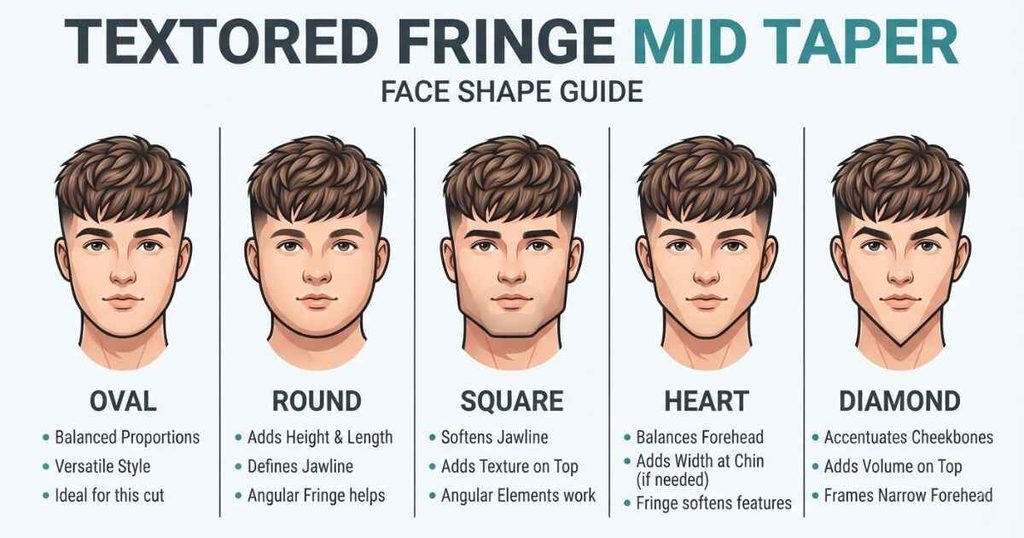
Face shape matters because the fringe changes how your forehead and upper face appear. A skilled barber can alter length, volume, and taper height for better balance.
Oval faces offer plenty of flexibility, while round faces benefit from controlled height. Square, heart, and diamond shapes can use texture strategically to soften or balance proportions.
Oval Face
An oval face pairs easily with a textured fringe because its balanced proportions suit different lengths and shapes. You can wear the fringe messy, straight, or slightly lifted.
Keep the taper clean without taking the sides excessively tight. Matte clay works well for definition, while texture powder creates volume without making the fringe heavy.
Round Face
A textured fringe can complement a round face when you avoid excessive width across the forehead. Slight height and controlled layers create a more balanced overall shape.
Ask your barber for tapered sides that don’t puff outward. Texture powder helps lift the top while matte clay keeps the fringe separated and controlled.
Square Face
Strong jawlines pair naturally with textured fringe styles because the soft movement contrasts nicely with sharper facial angles. A slightly uneven fringe can make the finish look relaxed.
Avoid creating excessive width around the sides. Styling cream gives flexible movement while matte clay adds separation when you want a sharper finish for evenings.
Heart Face
Heart-shaped faces often look balanced with a textured fringe that adds visual weight across the forehead. Keep the fringe moderately full without making it overly heavy.
A mid taper can maintain structure around the temples and sides. Lightweight styling cream works well, especially when your hair needs movement rather than firm, rigid control.
Diamond Face
A textured fringe can soften prominent cheekbones while adding useful width around the forehead. Keep the fringe layered and slightly broken rather than completely flat across your face.
Ask for controlled tapering around the temples instead of an extremely tight finish. Sea salt spray and matte clay can create natural texture without hiding your hair’s shape.
Best Hair Types
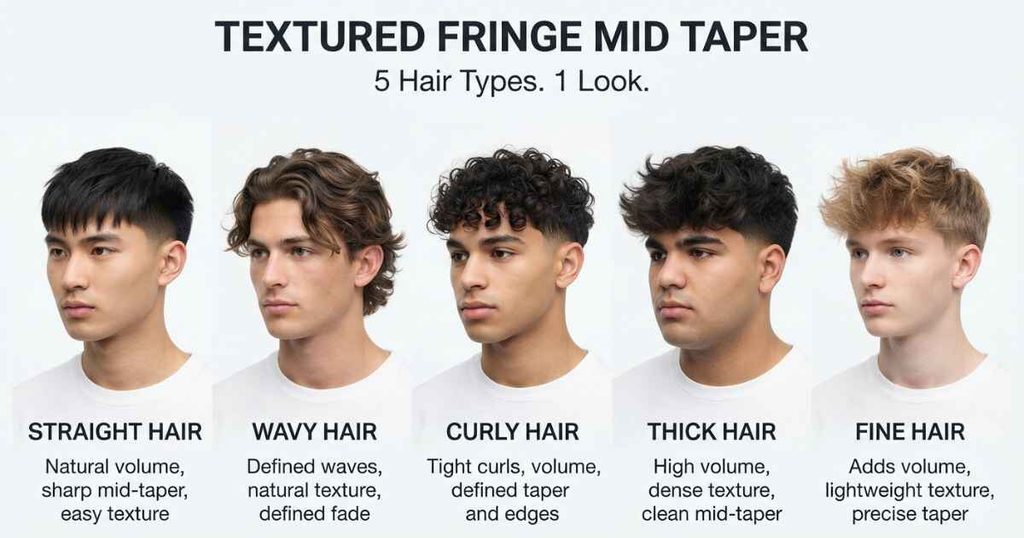
The textured fringe mid taper adapts surprisingly well to different hair textures. Your barber simply changes the layering, fringe length, and product choice to control movement.
Straight hair can gain volume, while waves and curls gain definition. Thick hair benefits from weight removal, whereas fine hair needs strategic layering that preserves fullness.
Straight Hair
Straight hair gives the textured fringe a crisp, visible shape that responds well to point-cut layers. The finished style can look sharp without appearing overly formal.
Use sea salt spray before blow drying for movement, then finish with matte clay. Keep the fringe slightly uneven so the style doesn’t look flat or helmet-like.
Wavy Hair
Wavy hair naturally creates the movement this haircut needs. A textured fringe can emphasize those bends while the mid taper keeps the overall silhouette neat.
Don’t brush the waves completely flat during styling. Apply styling cream or sea salt spray, then use your fingers to shape the fringe as it dries.
Curly Hair
Curly hair creates a bolder version of the textured fringe mid taper with plenty of natural character. The key involves controlling shape without crushing your curls.
Keep enough length for curls to form properly. Curl cream helps define individual sections while a lightweight leave-in conditioner prevents dryness and keeps the fringe flexible.
Thick Hair
Thick hair gives this haircut impressive volume but can become bulky without thoughtful layering. Your barber should remove excess weight while preserving enough length for texture.
Ask for internal layers rather than excessive thinning everywhere. Matte clay works for separation while texture powder can lift the roots without creating unnecessary heaviness.
Fine Hair
Fine hair can make a textured fringe look surprisingly full when the cut preserves density. Shorter layers create movement without stripping away too much weight.
Avoid heavy products that flatten the fringe. Texture powder offers lightweight lift while a small amount of matte clay provides separation without making fine strands greasy.
Best Textured Fringe Mid Taper Styles
Different variations let you customize the same basic haircut around texture, length, taper height, and personal style. Small changes can make the finished look completely different.
You might prefer a clean classic finish or something messier and more expressive. Consider your hair type, face shape, styling routine, and usual occasions before choosing.
Classic Textured Fringe Mid Taper
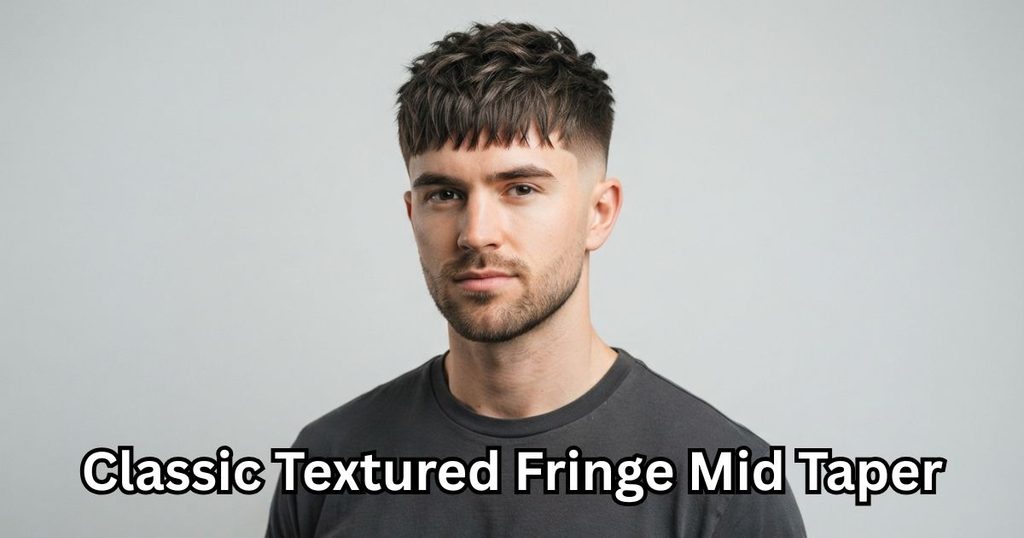
The classic version keeps the fringe moderately short with controlled texture and a balanced mid taper. It looks polished enough for work while retaining youthful movement.
This option suits oval, square, and heart faces especially well. Use styling cream for softer control or matte clay when you want stronger definition and separation.
Textured Fringe Mid Taper Fade
A textured fringe mid taper fade creates more contrast between the textured top and progressively tighter sides. The fade makes the haircut look sharper and more defined.
It suits people who enjoy clean outlines and noticeable structure. Straight and wavy hair work particularly well, while matte clay keeps the fringe controlled without creating unwanted shine.
Messy Textured Fringe Mid Taper
Messy texture gives the haircut a deliberately undone finish, with separated strands moving naturally across the forehead. Think weekend coffee run rather than boardroom perfection.
This version works well with wavy, straight, and moderately curly hair. Sea salt spray builds movement while texture powder adds lift when the roots need extra body.
Short Textured Fringe Mid Taper
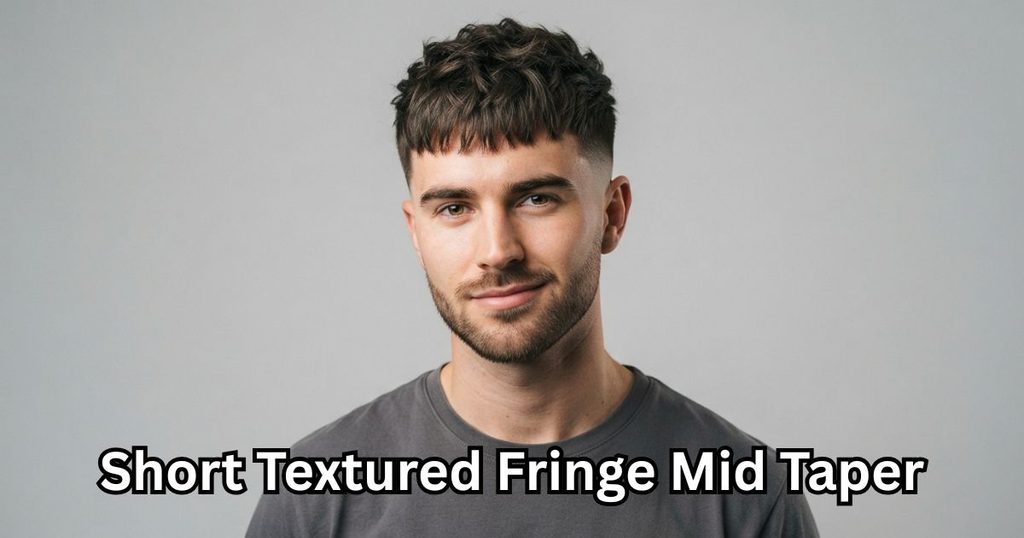
A short fringe creates a cleaner appearance and requires less daily styling. The mid taper keeps the sides tidy while short textured layers prevent the top from looking flat.
It’s useful for active routines and warmer weather. Matte clay provides definition, while a quick blow-dry can create enough shape without requiring a complicated styling session.
Curly Textured Fringe Mid Taper
Curly texture gives this haircut more volume and personality, especially when the fringe follows your natural curl pattern. The taper prevents the overall shape from becoming too wide.
This style suits oval, square, and diamond faces. Use curl cream followed by lightweight styling cream to define curls while keeping them soft, flexible, and touchable.
Textured Fringe Mid Taper Straight Hair
Straight hair makes the textured fringe clearly visible, especially when your barber creates separated point-cut layers. The mid taper adds structure without competing with the front.
Keep the fringe slightly broken instead of perfectly straight. Sea salt spray adds movement while matte clay helps create separation without turning the hair stiff.
Textured Fringe Mid Taper Asian
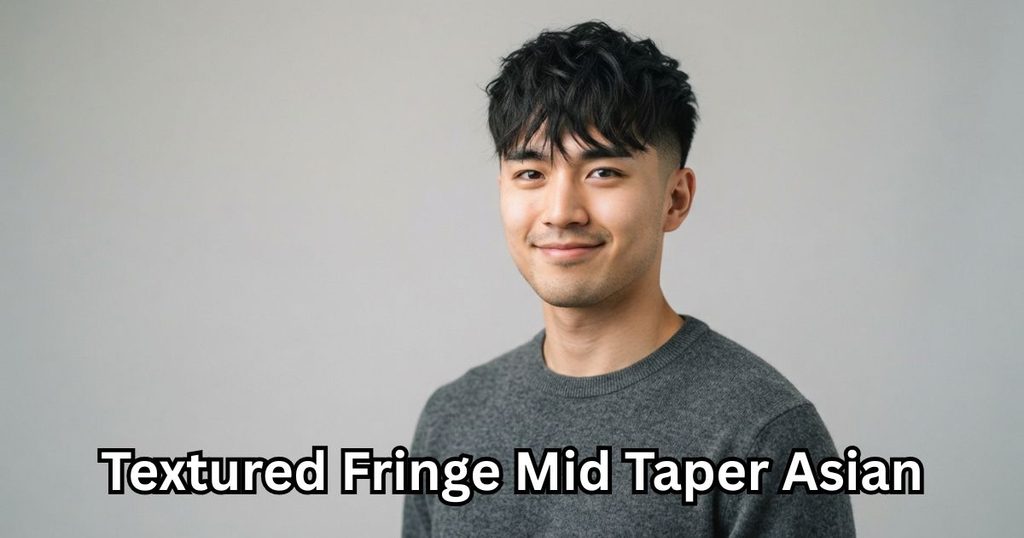
This variation works well with dense, straight hair often associated with Asian hair textures. Strategic layering removes bulk while preserving the strong natural shape of the strands.
Ask for texture without excessive thinning, especially if your hair feels heavy. Matte clay gives definition, while texture powder can add lift near the roots.
Textured Fringe Mid Taper Mullet
The textured fringe mid taper mullet adds extra length toward the back while keeping the sides controlled. It creates a more expressive silhouette than the classic version.
This look suits confident styling and casual settings especially well. Wavy or straight hair makes the shape easy to see, while matte clay emphasizes separation through the fringe.
Textured Fringe with Blowout Taper
A blowout taper combines fuller sides near the temples with textured volume on top. The result feels bigger and more energetic than a standard mid taper.
This style suits thick and wavy hair particularly well. Use a blow dryer with sea salt spray, then finish lightly with matte clay for controlled volume.
Textured Fringe with Low Taper
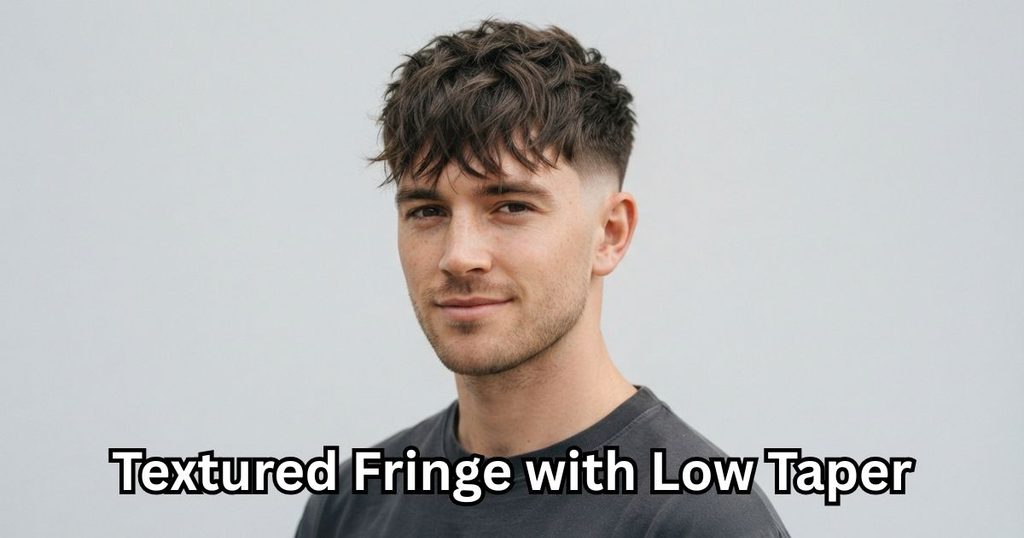
A low taper keeps the transition closer to the ears and neckline, creating a softer alternative to the standard mid taper. The textured fringe remains the focal point.
This version works well for conservative workplaces and subtle styling. It suits most hair types, while styling cream provides natural movement without making the finish look overly rigid.
Textured Fringe High Taper
A high taper creates stronger contrast by taking the sides tighter higher toward the temples. Combined with a textured fringe, it produces a bolder, sharper haircut.
Choose this variation when you like visible structure and stronger contrast. Straight and thick hair handle it well, while matte clay keeps the top defined and controlled.
Blonde Textured Fringe Mid Taper
Blonde hair can make textured layers especially noticeable because individual strands catch the light differently. A mid taper keeps the sides clean while the fringe adds visible movement.
This style suits casual and smart-casual settings. Sea salt spray enhances separation, while a lightweight styling cream helps maintain softness without dulling naturally bright blonde tones.
Textured Fringe with Beard
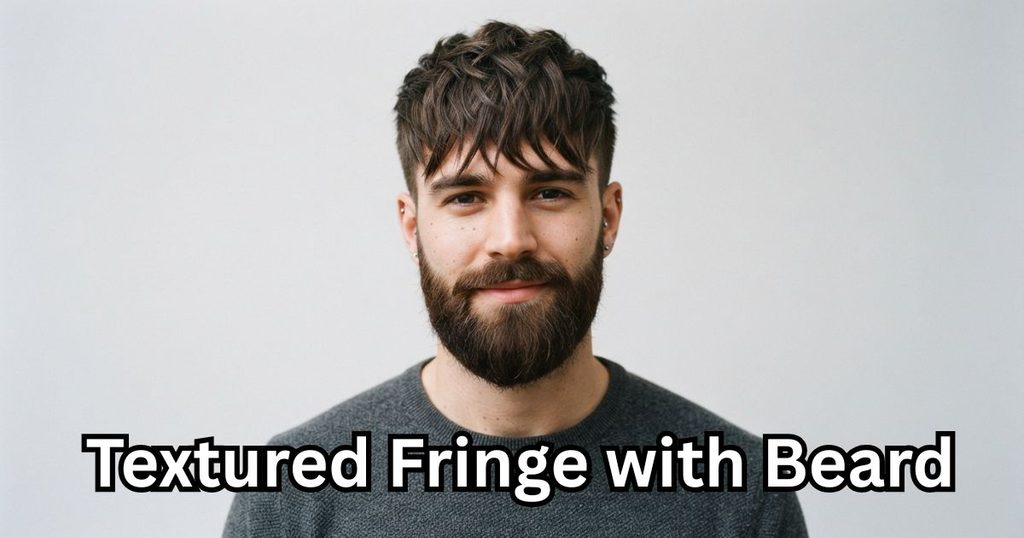
Adding a beard gives the textured fringe mid taper more visual weight around the lower face. The contrast between facial hair and tapered sides creates a balanced appearance.
Keep the beard shape aligned with the haircut’s clean edges. This combination suits square, oval, and diamond faces, while matte clay maintains texture without competing with facial hair.
French Crop Inspired Textured Fringe
A French crop inspired fringe keeps the front relatively short and forward while adding broken texture through the top. The result looks cleaner than a messy fringe.
This option works well for straight, wavy, and fine hair. Texture powder adds lift while matte clay creates separation, making the style practical for everyday wear.
Layered Textured Fringe Mid Taper
Layered texture creates multiple lengths through the fringe and top, giving the haircut more movement than a single-length cut. The taper keeps the sides visually organized.
This style benefits thick and wavy hair most, although fine hair can gain useful movement too. Styling cream works for softness while matte clay adds stronger definition.
Mid Taper vs Low Taper vs High Taper
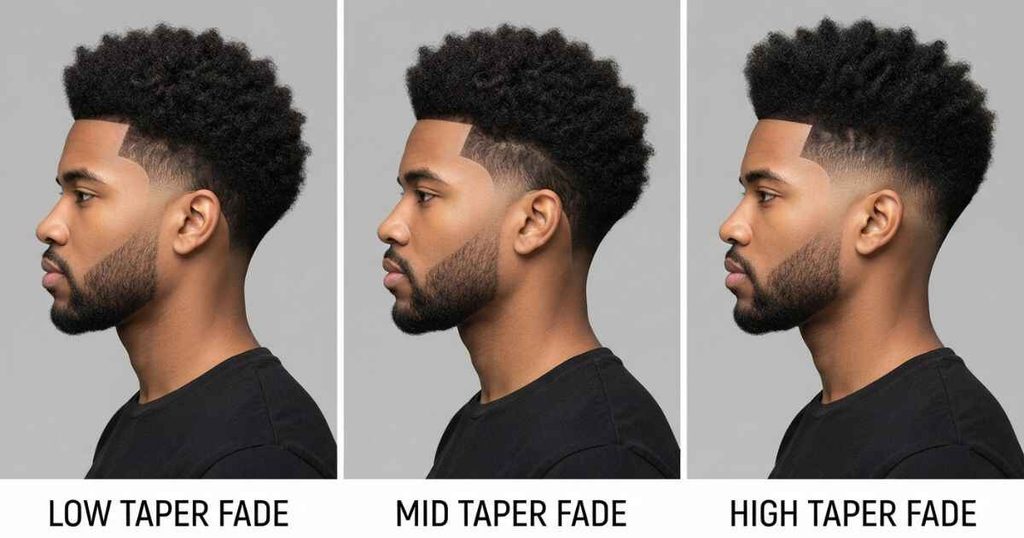
A mid taper begins around the middle of the sides, while a low taper stays closer to the ears. A high taper creates stronger contrast higher around the temples.
Choose based on your preferred silhouette and daily setting. Low tapers feel subtle, mid tapers balanced, and high tapers more dramatic without changing the textured fringe itself.
Textured Fringe Mid Taper for Different Hair Types
Your hair type determines how the fringe moves, how much layering you need, and which products make styling easier. The same haircut can look completely different.
Straight strands may need added texture, while curls need definition. Thick hair needs weight control, fine hair needs fullness, and coarse hair often needs moisture and flexibility.
Straight Hair
Straight strands show every layer clearly, making cutting precision especially important. A textured fringe prevents the top from appearing too flat while the taper keeps everything organized.
Use sea salt spray before blow drying, then add a tiny amount of matte clay. Avoid overworking the fringe because excessive product can make straight hair limp.
Curly Hair
Curly hair gives the textured fringe natural volume and movement without requiring much manipulation. Your barber should shape the curls instead of forcing them into straight layers.
Leave enough length for your natural curl pattern to form. Apply curl cream after washing, then gently scrunch and allow the fringe to settle naturally.
Wavy Hair
Wavy hair often provides the easiest route to a naturally textured fringe. Its built-in bends create movement while the mid taper prevents the sides from becoming bulky.
Enhance the waves rather than flattening them. Sea salt spray works well for texture, while styling cream controls frizz and keeps the finish touchable throughout the day.
Thick Hair
Thick hair needs thoughtful weight control because excess density can make the fringe heavy. Layering helps create movement without sacrificing the fullness that makes the haircut attractive.
Ask your barber where the bulk feels excessive. Matte clay provides separation, while texture powder adds root lift without coating every strand in heavy product.
Fine Hair
Fine hair benefits from a textured fringe because strategic layering can create the appearance of greater movement and fullness. The key involves avoiding aggressive thinning.
Keep enough density through the top and fringe. Texture powder works especially well for lightweight lift, while a small amount of styling cream controls flyaways.
Coarse Hair
Coarse hair can produce a strong textured fringe with plenty of natural presence. However, dryness and stiffness may make the finished style harder to control without proper moisture.
Use leave-in conditioner before styling to improve softness. A lightweight styling cream adds flexibility, while matte clay gives definition without making coarse strands feel overly rigid.
How to Style a Textured Fringe Mid Taper
Good styling starts with the right foundation rather than a handful of heavy products. Clean hair, gentle drying, controlled heat, and lightweight texture create better results.
Your routine doesn’t need ten steps. A few minutes with sea salt spray, a blow dryer, and your preferred finishing product can shape the fringe effectively.
Step 1: Start with Clean Hair
Clean hair gives styling products a better surface to work with and prevents old product buildup from weighing down your fringe. Use a shampoo suited to your scalp.
Don’t shampoo aggressively every day if your hair becomes dry. Follow with conditioner when needed, especially for curly, coarse, or chemically treated hair.
Step 2: Towel Dry Gently
After washing, gently squeeze excess water from your hair instead of aggressively rubbing it with a towel. Rough drying can create unnecessary frizz and disrupt texture.
Leave the hair slightly damp before applying styling products. This gives sea salt spray and styling cream a more even starting point.
Step 3: Apply Sea Salt Spray
Sea salt spray adds grip, movement, and natural-looking texture before you begin blow drying. Apply a few light sprays through the top and fringe rather than soaking everything.
Distribute the product with your fingers, focusing on areas needing movement. Fine hair often needs less product, while thick hair may handle slightly more without looking overloaded.
Step 4: Blow Dry for Shape
Use your blow dryer to direct the fringe where you want it to sit. Your fingers can create separation while warm air shapes the top without flattening it.
Finish with cooler air to help the style settle. Avoid blasting one area too long because excessive heat can leave hair dry and brittle.
Step 5: Add Texture
Once your hair feels mostly dry, add a small amount of your preferred finishing product. Work matte clay or styling cream through the top using your fingers.
Start with less than you think you need. You can always add more, but removing excess product usually means starting the styling process again.
Step 6: Make Final Adjustments
Now check the fringe from different angles and separate any strands that look too uniform. Use your fingertips to create natural movement instead of repeatedly brushing everything.
If the roots look flat, use a tiny amount of texture powder. Keep the sides clean and let the textured fringe remain the main feature.
Best Hair Products for a Textured Fringe Mid Taper
The best product depends on your hair texture and desired finish. Lightweight formulas usually work better because the fringe needs movement rather than a stiff, shell-like coating.
Think about hold, shine, moisture, and volume before choosing. Fine hair needs weightless control, while thick or coarse hair may require stronger styling products.
Sea Salt Spray
Sea salt spray gives the fringe grip and loose texture before blow drying. It works particularly well when your hair needs movement but still feels too smooth.
Use a light amount on damp hair, then shape with your fingers. If your hair feels dry afterward, add leave-in conditioner to your routine.
Texture Powder
Texture powder creates root lift and separation without adding much weight. It’s especially useful for fine hair that struggles to hold volume throughout the day.
Apply a small amount near the roots, then massage gently with your fingertips. Too much powder can make hair feel gritty, so start conservatively.
Matte Clay
Matte clay provides stronger definition without the glossy finish associated with traditional pomades. It works well when you want the fringe separated and controlled.
Warm a tiny amount between your palms before applying. Focus on the ends and textured sections rather than coating the entire head heavily.
Styling Cream
Styling cream offers softer control and works particularly well for wavy, curly, and coarse hair. It reduces frizz while preserving natural movement through the fringe.
Apply it to damp or mostly dry hair depending on the product. Use your fingers to shape the fringe instead of forcing every strand into place.
Pomade
Pomade gives stronger control and can create a more polished textured fringe. Choose a lighter formula if you want movement rather than a slick finish.
Use pomade sparingly because too much can flatten the fringe. It’s better suited to straight or thick hair that needs additional control.
Hair Wax
Hair wax provides flexible hold with enough texture for separated strands. It works well when you want the fringe to look styled without becoming completely rigid.
Warm a small amount before applying it through dry hair. Concentrate on individual sections that need definition rather than spreading wax everywhere.
Leave-In Conditioner
Leave-in conditioner supports softer, healthier-feeling hair while reducing dryness and frizz. It’s particularly useful for curly, coarse, or frequently heat-styled hair.
Apply a small amount after washing while your hair remains damp. Keep it away from the roots if your hair becomes oily or flat easily.
Hair Dryer
A hair dryer helps create the direction, volume, and texture that products alone can’t always provide. Use your fingers to guide the fringe during drying.
Medium heat usually gives enough control without unnecessary stress. Finish with cool air once the shape looks right, then add your finishing product.
What to Tell Your Barber
Clear instructions help your barber understand the exact balance you want between fringe length, texture, and taper height. Reference photos make the conversation much easier.
Explain how you normally style your hair too. A great haircut still needs to match your routine, product habits, hair type, and willingness to maintain it.
Fringe Length
Tell your barber how much forehead coverage you want and whether you prefer a short, medium, or longer fringe. Mention how your hair behaves when dry.
Your natural texture can change the final length significantly. Curly hair often springs upward, while straight hair stays closer to the length originally cut.
Texture
Ask for visible texture rather than simply saying you want messy hair. Your barber can create movement through point-cut layers while keeping enough weight for a full shape.
Show a reference photo with texture similar to your own hair. That makes expectations clearer and reduces the chance of an overly thinned-out finish.
Taper Height
Specify whether you want a low, mid, or high taper before cutting begins. A mid taper generally creates the balanced transition associated with this haircut.
Tell your barber how much contrast you prefer around the temples. Subtle changes in taper height can noticeably alter the haircut’s overall silhouette.
Sideburns and Neckline
Sideburns and the neckline affect how polished your haircut looks from the side and back. Ask for clean edges that complement the taper rather than competing with it.
Your barber can choose between a natural or sharper neckline depending on your preference. Consider how quickly these areas grow before choosing a maintenance-heavy outline.
Styling Advice
Ask your barber how to recreate the finished shape at home. They can recommend a suitable product based on your hair’s texture, density, and natural movement.
Mention how much time you spend styling each morning. A low-maintenance routine may need different layering and product choices than a detailed daily styling routine.
Also Read: Mid Drop Fade: 25 Sharp Haircuts to Upgrade Your Look
Barber Tips for the Best Results
The haircut looks better when the cutting plan matches your natural hair behavior. Good communication matters just as much as the reference image you bring.
Tell your barber about previous cuts that worked or failed. Details about growth patterns, cowlicks, density, and styling habits can help guide better decisions.
Bring Reference Photos
Reference photos show your barber the fringe length, taper height, texture, and overall shape you want. Bring several angles whenever possible, not just one front-facing image.
Choose photos featuring hair similar to yours. A style shown on fine straight hair may behave very differently on thick curls.
Be Honest About Your Hair Routine
Tell your barber how often you wash, style, and use heat. Mention whether you usually spend five minutes or thirty minutes getting ready.
This information helps them choose practical layering and fringe length. There’s little value in a high-maintenance haircut if you rarely use styling products.
Trust Professional Advice
Your barber can spot details that photographs don’t show, including cowlicks, uneven density, growth direction, and areas that need additional weight control.
Stay open to small adjustments when your hair behaves differently from the reference. A personalized variation often works better than copying another person’s haircut exactly.
Maintenance Tips for a Textured Fringe Mid Taper
A textured fringe mid taper looks sharp when the taper stays clean and the fringe keeps its shape. Simple maintenance prevents the haircut from becoming bulky or untidy.
Your routine should focus on healthy hair, controlled styling, and regular trims. You don’t need constant salon visits, but letting the taper grow too long changes its shape.
Get Regular Haircuts
Most people need regular barber visits to keep the taper defined and the fringe balanced. The exact timing depends on how quickly your hair grows.
Ask your barber when your particular cut needs a touch-up. If the sides become bulky before the fringe grows out, schedule a cleanup instead of recutting everything.
Use the Right Shampoo
Choose shampoo based on your scalp and hair needs rather than simply buying the strongest cleansing formula. Overwashing can leave textured hair dry and harder to manage.
If your hair feels rough after washing, reduce shampoo frequency and use conditioner more consistently. Curly and coarse textures usually benefit from extra moisture.
Condition Your Hair
Conditioner helps maintain softness, flexibility, and manageable texture. This matters when your fringe needs movement instead of stiff strands that refuse to cooperate.
Apply conditioner mainly through the lengths and ends. Fine hair may need a lightweight formula, while coarse or curly hair can handle richer conditioning.
Avoid Heavy Styling Products
Heavy products can flatten the fringe and make the haircut lose its natural movement. Start with lightweight formulas before reaching for stronger hold.
Texture powder, styling cream, or a small amount of matte clay often provides enough control. Apply gradually so you don’t turn your fringe into a helmet.
Protect Hair from Heat
Frequent blow drying can dry hair out when you use excessive heat or hold the dryer too close. Keep the airflow moving across the hair.
Use moderate heat and finish with cool air. If you regularly use hot tools, consider a suitable heat-protecting product as part of your hair care routine.
Style Gently
Aggressive brushing and constant reshaping can create frizz and unnecessary breakage. Use your fingers when possible, especially when working with waves or natural curls.
Shape the fringe while your hair remains slightly damp, then leave it alone. Sometimes the best styling trick is knowing when to stop touching it.
Pros and Cons of a Textured Fringe Mid Taper
This haircut offers plenty of flexibility, but it isn’t perfect for every routine. Your hair type, styling habits, and tolerance for regular touch-ups can affect your experience.
Consider both sides before choosing the cut. A textured fringe can look fantastic with minimal effort, but the right length and maintenance schedule still matter.
Pros
The textured fringe mid taper combines a clean taper with natural movement, making it adaptable for casual and professional settings. It also works across several hair textures.
You can change the finish with different products and fringe lengths. Regular trims keep the sides sharp while the textured top remains flexible and easy to personalize.
Cons
The fringe may require daily styling if your hair naturally falls flat, separates unevenly, or grows in several directions. Fine hair can also lose texture quickly.
Tapered sides need regular touch-ups to maintain their clean appearance. Humidity may increase frizz, while heavy products can quickly flatten the textured finish.
Is the Textured Fringe Mid Taper Right for You?
A textured fringe mid taper makes sense if you want movement on top with clean, controlled sides. It gives you room to personalize the fringe without changing the overall structure.
Consider your hair type, face shape, styling time, and maintenance habits before booking the cut. With the right fringe length and taper height, it can work for everyday life.
Final Thoughts
Textured Fringe Mid Taper: 25 Modern Styles for Every Hair Type shows how flexible this haircut can be. A textured fringe mid taper gives you clean tapered sides and natural movement on top. You can keep the fringe short, messy, curly, or layered. The right version depends on your hair type, face shape, and daily routine.
A textured fringe mid taper also works for casual days and professional settings. Use sea salt spray for movement or matte clay for extra control. Regular trims keep the taper fresh. Keep your routine simple, and don’t overdo the products. With the right cut, this style can look sharp without feeling high-maintenance.
FAQs
How Do You Style a Textured Fringe Mid Taper?
Start with damp hair and apply sea salt spray. Blow dry with your fingers, then finish with matte clay for texture, movement, and control.
Is a Textured Fringe Mid Taper Good for Straight Hair?
Yes, straight hair works well with this cut. Ask your barber for textured layers, then use texture powder or matte clay for added movement.
Can You Get a Textured Fringe Mid Taper With Curly Hair?
Absolutely. Curly hair adds natural volume and movement. Keep enough fringe length for your curls, then use curl cream to define them without stiffness.
How Often Should You Trim a Textured Fringe Mid Taper?
Plan a barber visit every three to five weeks. Regular trims keep the taper clean while maintaining the fringe shape and preventing bulky sides.
Does a Textured Fringe Mid Taper Suit Round Faces?
Yes, it can suit round faces when styled correctly. Keep the sides controlled and add subtle height through textured layers to create better balance.

Serena Luna, the voice behind JournalHair. I share the latest hairstyle ideas, haircut trends, and easy hair inspiration to help you find your perfect look every day.
