

Choosing the right taper can change your entire look without taking much length off the sides. The different types of tapers offer something for every style, from clean and professional to bold and modern. Some keep the hair around your ears and neckline neat, while others create a sharper contrast with longer hair on top. The best part is that you can customize a taper to match your hair type, face shape, and daily routine.
Understanding the types of tapers makes it easier to explain exactly what you want at the barbershop. You can choose a low taper for a subtle finish, a mid taper for balanced contrast, or a high taper for a sharper look. Curly, straight, thick, and wavy hair can all work with the right approach. With the right cut, you’ll get a fresh style that suits your personality and grooming habits.
What Are the Main Types Of Taper Fade?
The main types of taper fade include low, mid, and high fades, each offering a different level of contrast. Your choice shapes the haircut’s overall appearance.
Low tapers look subtle and professional, while mid tapers create balanced definition. High tapers deliver sharper contrast, making them ideal for bold styles and textured tops.
What Are the Main Types Of Taper Fade?
Understanding taper fade variations helps you choose a haircut that fits your personality, hair texture, and grooming routine. Each option creates a slightly different finish.
From classic low tapers to modern burst fades, these styles offer plenty of flexibility. Consider your face shape, preferred length, and maintenance needs before visiting your barber.
Quick Navigation: Types Of Taper Fade At A Glance
Comparing taper fade styles side by side makes choosing your next haircut easier. Each variation changes where the hair gradually becomes shorter around the sides.
Use this quick guide to compare fade heights, finishes, and styling possibilities. Whether you prefer a conservative cut or something striking, there’s an option for you.
What Is A Taper Fade?
A taper fade gradually shortens the hair around the temples and neckline, creating a clean transition. The result looks sharp without removing too much length everywhere.
This versatile haircut suits straight, wavy, curly, and coily hair. You can pair it with textured crops, pompadours, curls, or buzz cuts for everyday wear and special occasions.
Taper Vs. Fade: What’s The Difference?
A traditional taper shortens hair around the sideburns and neckline while leaving more length around the sides. A fade usually creates a stronger transition.
Choose a taper for a classic, understated finish or a fade for sharper contrast. Both work across hair types, and your barber can blend them to match your preferred look.
The 3 Foundation Types Of Taper Fade
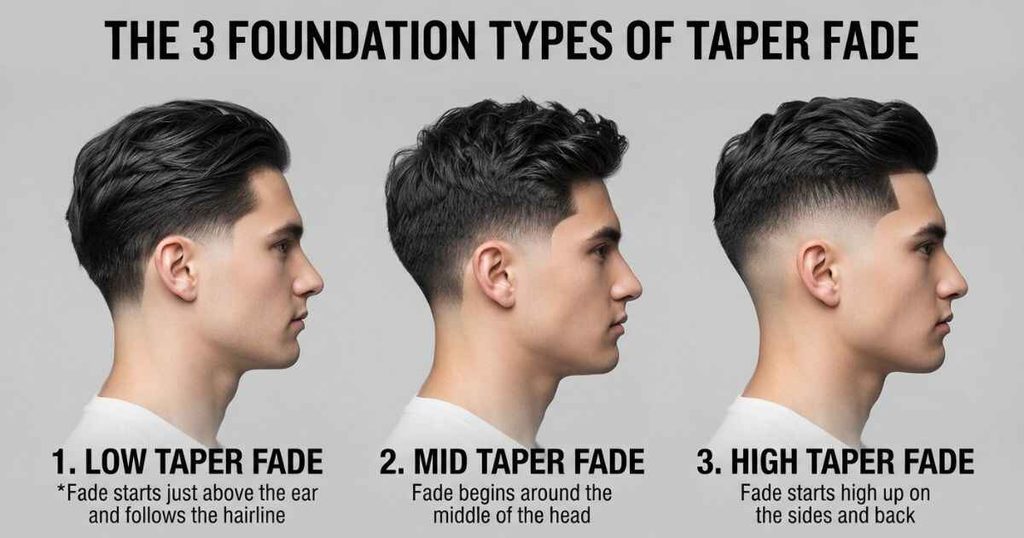
Low, mid, and high tapers form the foundation of most modern taper fade haircuts. Their main difference is where the gradual shortening begins.
Choosing the right height depends on your face shape, hairstyle, and desired contrast. These three options suit different grooming preferences, from office-friendly cuts to expressive weekend styles.
Low Taper Fade
A low taper fade starts just above the ears and around the neckline, keeping most side hair intact. It delivers a neat, understated finish.
This style flatters round, oval, and square faces while working with straight, wavy, or curly hair. Use lightweight styling cream, and schedule touch-ups every two to three weeks.
Mid Taper Fade
A mid taper fade begins around the temples, creating a noticeable transition without making the sides look extremely short. It offers a balanced, modern appearance.
Ideal for oval, square, and round faces, this cut suits most hair textures. Style the top with matte clay or curl cream, and book regular trims to preserve definition.
High Taper Fade
A high taper fade starts higher around the temples, producing stronger contrast between the sides and top. It gives modern hairstyles a sharper, more defined silhouette.
This cut suits oval and square faces, especially with textured crops or curly tops. Use matte paste for control, and expect frequent touch-ups to keep the edges crisp.
Advanced Technique Variants: Beyond Basic Height
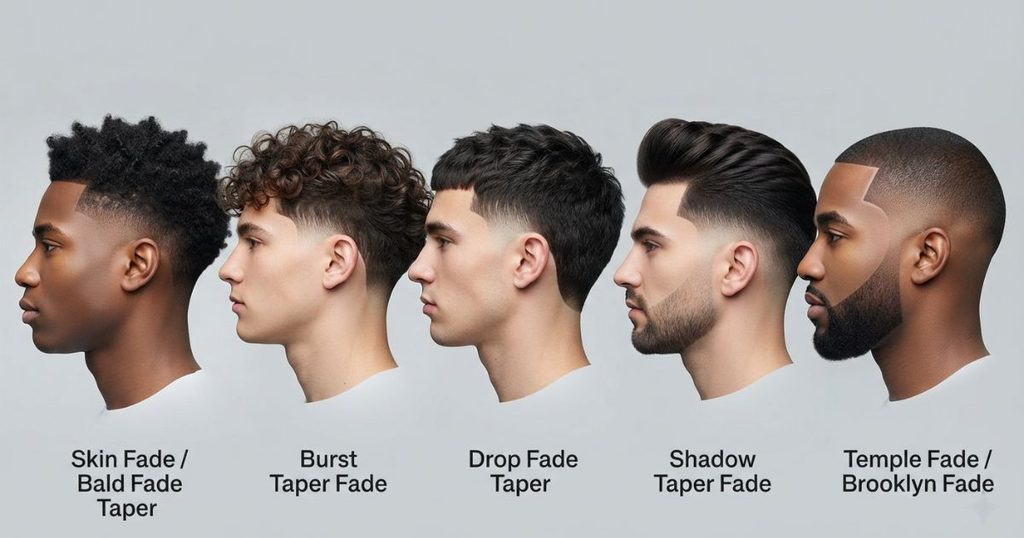
Taper fades can feature more than different starting heights. Barbers use specialized blending patterns to create rounded shapes, softer finishes, or extra-short sections.
These advanced variations let you customize your haircut around your ears, temples, and neckline. Choose one based on your hair texture, styling preferences, and willingness to maintain precise edges.
Skin Fade / Bald Fade Taper
A skin fade or bald fade tapers the hair down to bare skin, creating a striking contrast near the shortest sections. The finish looks exceptionally clean.
This option suits confident styles, oval faces, and thick hair that benefits from contrast. Use minimal product on top, and visit your barber every one to two weeks.
Burst Taper Fade
A burst taper fade curves around the ears, creating a rounded effect while leaving more length toward the back. It pairs especially well with modern, textured hairstyles.
Curly, coily, and thick hair work beautifully with this shape, particularly alongside a mohawk. Apply curl cream or lightweight mousse, and maintain the curved outline with regular trims.
Drop Fade Taper
A drop fade taper follows the head’s natural curve, lowering behind the ears toward the back. This creates a contoured finish with added visual depth.
It complements oval, square, and round faces, especially with textured or curly tops. Use styling cream or matte clay as needed, and schedule trims every two to three weeks.
Shadow Taper Fade
A shadow taper fade keeps slightly more length in the shortest sections, producing a soft, gradual blend instead of exposed skin. The result looks natural and understated.
This versatile finish suits professional settings, oval faces, and nearly every hair texture. Apply lightweight cream for definition, and maintain the shape with regular barber visits every few weeks.
Temple Fade (Brooklyn Fade)
A temple fade focuses on the temples and sideburns, creating crisp edges while preserving much of the surrounding hair. It’s also commonly associated with the Brooklyn fade.
This style works well with curls, waves, straight hair, and sharp lineups. Use edge-control products sparingly, and schedule frequent shape-ups to keep the temples looking clean.
Also Read: 55 Best Low Taper Fade Straight Hair Ideas for Men (2026 Ultimate Barber Guide)
Taper Fade Styles By Hair Type & Texture

Your natural texture affects how a taper fade looks and behaves after leaving the barbershop. The right blending technique helps your hair sit neatly without losing its character.
Consider your curl pattern, density, and daily styling routine before choosing a variation. A skilled barber can adjust the fade height to complement your natural volume and preferred top length.
Taper Fade For Curly Hair
A taper fade for curly hair keeps the sides neat while allowing natural curls to provide volume and movement on top. The contrast creates a fresh, defined silhouette.
Oval, square, and round faces can all suit this cut. Apply curl cream or leave-in conditioner, then maintain the sides every two to three weeks to prevent bulky regrowth.
Taper Fade For Straight Hair
Straight hair makes taper transitions especially visible, giving this haircut a precise and polished appearance. Pairing clean sides with textured length adds dimension without complicated styling.
This option suits oval and square faces and works well for school, work, or formal events. Use matte clay or texturizing powder, and trim regularly to preserve the blend.
Taper Fade For Afro Hair
A taper fade for Afro hair cleans up the temples and neckline while preserving the natural volume and shape of coily hair. The finish looks structured yet expressive.
It complements oval, square, and round faces, especially with a short afro or defined curls. Use moisturizing leave-in products, and book regular shape-ups to keep the outline sharp.
Taper Fade For Asian Hair
Asian hair often grows straight and dense, making a taper fade an excellent way to reduce bulk around the sides. The gradual blend creates a tidy, contemporary finish.
This cut suits oval, round, and square faces, especially with textured fringes or side-swept tops. Apply lightweight styling paste for separation, and maintain the taper every two to three weeks.
Final Thoughts
Choosing the right haircut starts with understanding the Types of Tapers and how each style fits your look. From low tapers to high fades, every option offers a different finish. Some look subtle and professional, while others add bold contrast. The best choice depends on your hair texture, face shape, and personal style.
When comparing the types of tapers, think about your daily routine and maintenance needs. Talk with your barber about the finish you want. A good taper keeps you looking sharp without making styling complicated. Choose a cut that feels comfortable and suits your lifestyle.
FAQs
1. What Are The Most Popular Types Of Tapers?
The most popular types of tapers include low, mid, and high tapers. Each offers a different level of contrast to match your personal style.
2. Which Type Of Taper Is Best For Men?
A low taper suits men who prefer subtle, clean edges. Mid and high tapers offer stronger contrast, making them great for modern hairstyles.
3. What Is The Difference Between A Low And High Taper?
A low taper starts near your ears and neckline. A high taper begins closer to your temples, creating sharper contrast and a bolder overall appearance.
4. Which Types Of Tapers Work Best For Curly Hair?
Low, mid, and high tapers all work with curly hair. Choose your preferred height based on curl volume, face shape, and daily styling habits.
5. How Often Should You Get A Taper Haircut?
Most tapers look sharp with touch-ups every two to three weeks. If you prefer crisp edges, schedule barber visits sooner to maintain your style.

Serena Luna, the voice behind JournalHair. I share the latest hairstyle ideas, haircut trends, and easy hair inspiration to help you find your perfect look every day.
