

A low taper burst fade blends two favorites into one clean look. The taper keeps things tight near your neck and ears. The burst curves around the ear instead of cutting straight across. Together, they create a low taper burst fade that feels sharp but never harsh. This style works with short hair, medium length on top, even curls. That’s the beauty of it. You get structure without losing your natural texture.
If you want a cut that’s easy to maintain, the low taper burst fade delivers. It grows out gracefully, so you’re not stuck booking weekly touch-ups. It also suits almost every face shape, which is rare for a fade this detailed. Whether you’re heading to the office or just want a fresh look for summer, this cut hits that sweet spot between polished and low-key.
What A Taper Low Burst Fade Is
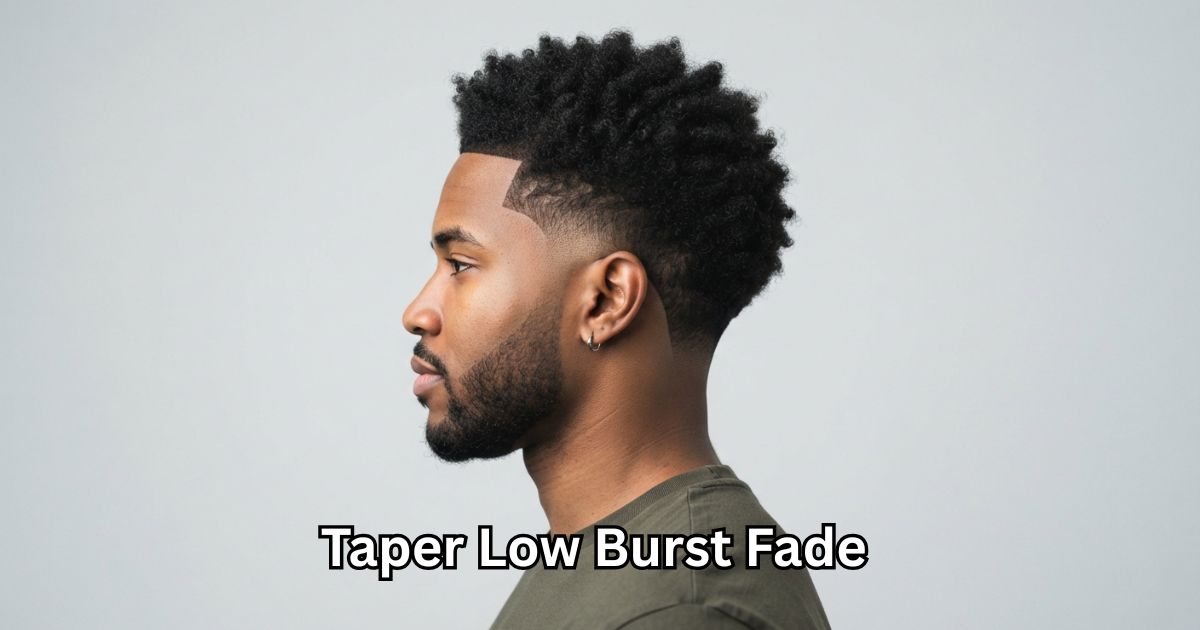
A taper low burst fade shortens hair gradually near the sides while curving the fade around your ear. It sits lower than a mid or high fade, which keeps the overall look understated rather than dramatic.
This combo gives you subtle shape without shaving too close to the skin. Barbers often recommend it to first-timers since it’s forgiving, easy to grow out, and pairs well with most top lengths.
Taper Vs Low Fade Vs Burst Fade
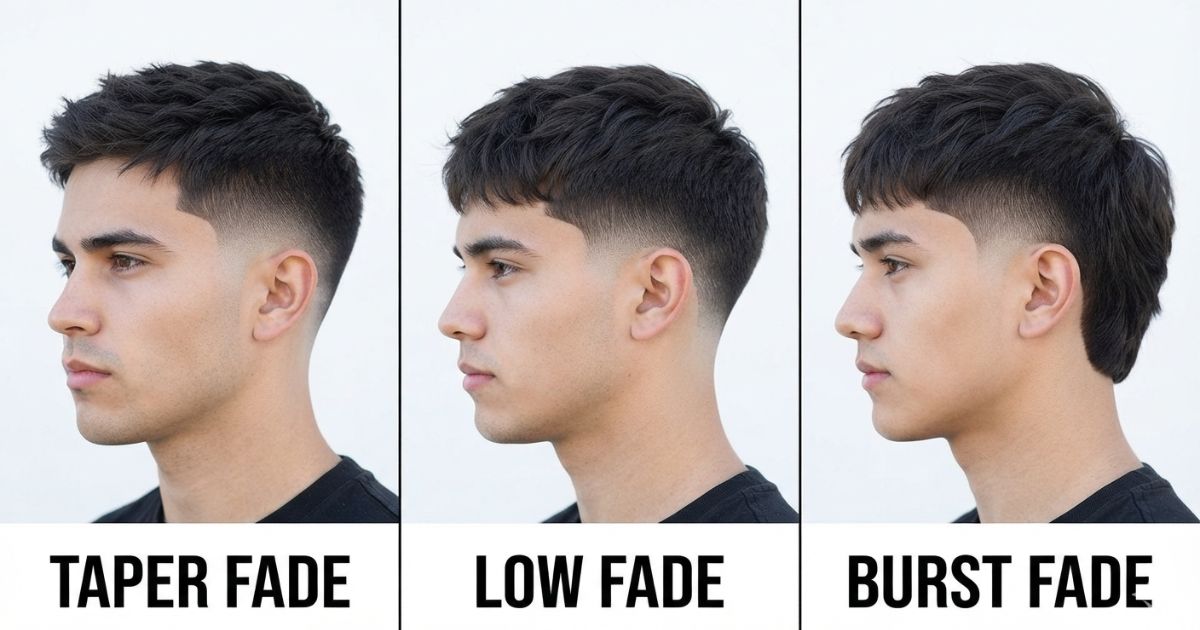
Each term describes a different piece of the puzzle. Once you know the difference, explaining what you want to your barber becomes a whole lot easier.
None of these terms overlap perfectly, and barbers sometimes use them loosely. Ask to see reference photos in the chair so you and your barber land on the same picture.
Taper
A taper gradually shortens hair as it moves down toward the neck and ears, without exposing skin. It’s the gentlest of the fade family and blends naturally into longer hair on top.
Tapers suit guys who want low maintenance styling and a natural hairline. They work on straight, wavy, and curly hair alike, and they hold up well between barber visits.
Low Fade
A low fade starts its blend just above the ears and neckline, staying close to the head throughout. It’s shorter than a taper but doesn’t climb up the sides like a high fade does.
This option suits people who want a bit more contrast without going bold. It’s office-friendly, keeps its shape longer, and flatters most hair textures with minimal upkeep.
Burst Fade
A burst fade fans out in a semicircle around the ear instead of running in a straight line across the head. It creates a rounded, eye-catching detail near the sideburn area.
Burst fades pair especially well with mullets, curly textures, and longer fringe on top. They ask for more precision, so book with a barber who has clear experience shaping curves.
Who A Taper Low Burst Fade Suits
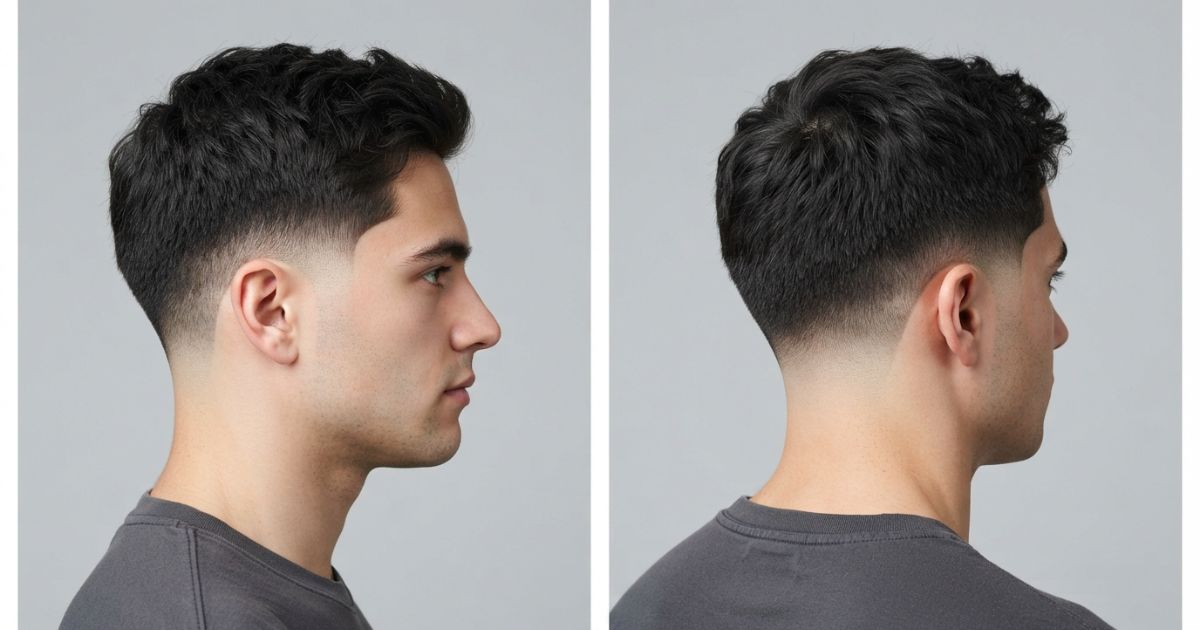
This cut flatters a wide range of guys because it’s adjustable. Barbers can dial the taper up or down depending on your hair type, density, and how bold you want the burst to look.
If you’re unsure whether it’ll suit you, bring photos and ask your barber to sketch it lightly with a comb first. That quick preview saves you from any surprises.
Face Shapes
Round and square faces benefit most since the low taper draws the eye downward, adding subtle length. Oval faces have flexibility here and can wear it almost any way they like.
Longer face shapes should ask for extra volume on top to balance proportions. A skilled barber will adjust burst height slightly to soften or sharpen your jawline as needed.
Hair Types
Straight hair takes this cut cleanly, showing off the burst’s curve with crisp lines. Wavy hair adds natural texture that softens the fade edges nicely without extra product.
Curly and coily hair can absolutely rock this style, though blending takes a bit more skill. Ask your barber about scissor-over-comb work so curls don’t bunch awkwardly near the fade line.
Best Styles To Ask For
Pairing matters as much as the fade itself. What you do on top determines whether the whole look feels modern, classic, or a little edgy.
A textured crop or messy fringe on top keeps things casual. For something sharper, a slick side part or comb-over gives the low taper burst fade a more polished, boardroom-ready finish.
How To Ask Your Barber For It
Clear communication saves you from a bad haircut day. Bring specifics, not vague requests, so your barber knows exactly how low you want the taper and how curved the burst should be.
Barbers appreciate reference photos more than descriptions alone. Save two or three images beforehand, ideally from different angles, so there’s no guessing once the clippers come out.
A Script That Works
Try this: “I’d like a low taper burst fade, blended around the ear, nothing too high on the sides.” Simple, direct language avoids confusion at the chair.
Mention your hair type too, since curly and straight hair blend differently. Adding “keep some length on top” or “I want it tighter” gives your barber useful boundaries to work within.
What To Show
Front, side, and back-angle photos help most, since the burst detail is easiest to judge from the side. A quick video turning your head also works if you have one saved.
Avoid showing only front-facing photos, since they hide the fade entirely. Barbers need to see the taper’s height and the burst’s curve to recreate it accurately.
Keeping A Taper Low Burst Fade Sharp
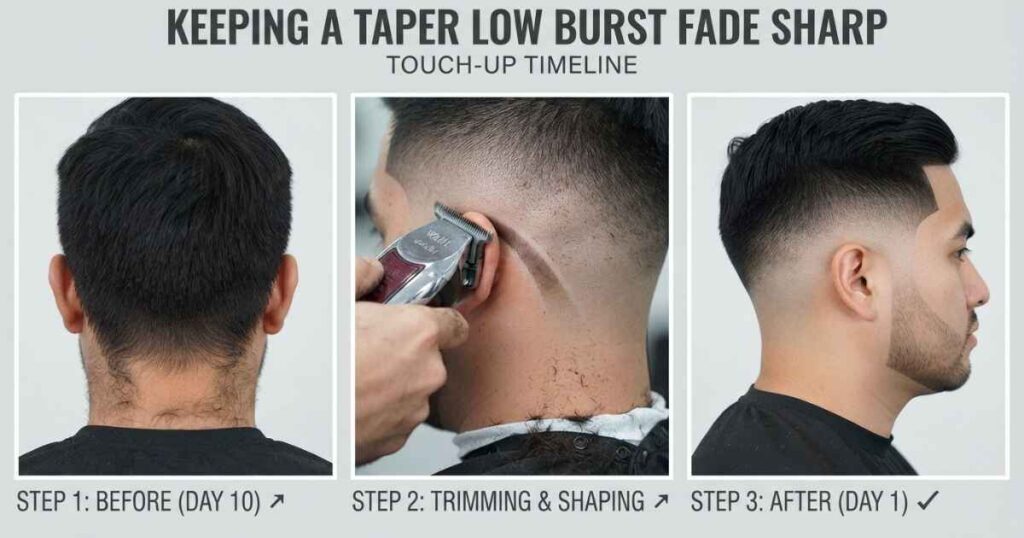
This cut holds its shape longer than a high fade, but it still needs regular attention. Skipping touch-ups too long lets the taper blend into your natural hair length.
Set a simple reminder rather than waiting until it looks messy. A little consistency keeps the burst detail crisp instead of turning fuzzy and undefined over time.
Touch-Up Timeline
Plan for a touch-up every two to three weeks, depending on how fast your hair grows. Guys with thicker or faster-growing hair may need visits slightly sooner to keep lines sharp.
Waiting past four weeks usually blurs the burst’s curve completely. If you’re stretching time between cuts, ask your barber for a slightly longer taper so it grows out more evenly.
Neckline And Sideburn Cleanup
Neckline hair grows back fastest, often within a week or two, making it look unkempt first. A quick trim at home or a barber visit keeps that line looking fresh.
Sideburns need similar attention since uneven length there throws off the whole fade. Trim them straight and level with clippers, or ask your barber to shape them during touch-ups.
Also Read: Classic Quiff Hairstyle: 28 Stylish Variations For Modern Men
Mistakes That Ruin The Cut
Going too short too soon is a common one. Rushing the burst before your barber can shape it properly usually leaves a choppy, uneven line instead of a smooth curve.
Skipping reference photos causes miscommunication more often than people expect. Another mistake is ignoring product buildup, which flattens texture and hides the fade’s detail within a day or two.
Styling It At Home
Start with towel-dried hair, not soaking wet, since product grips better on slightly damp strands. A dime-sized amount of matte clay works well for texture without heavy shine.
For extra hold, layer a light pomade underneath before applying clay on top. Finish with texture powder at the roots if you want lift without adding weight or grease.
Taper Low Burst Fade Vs Blowout Taper
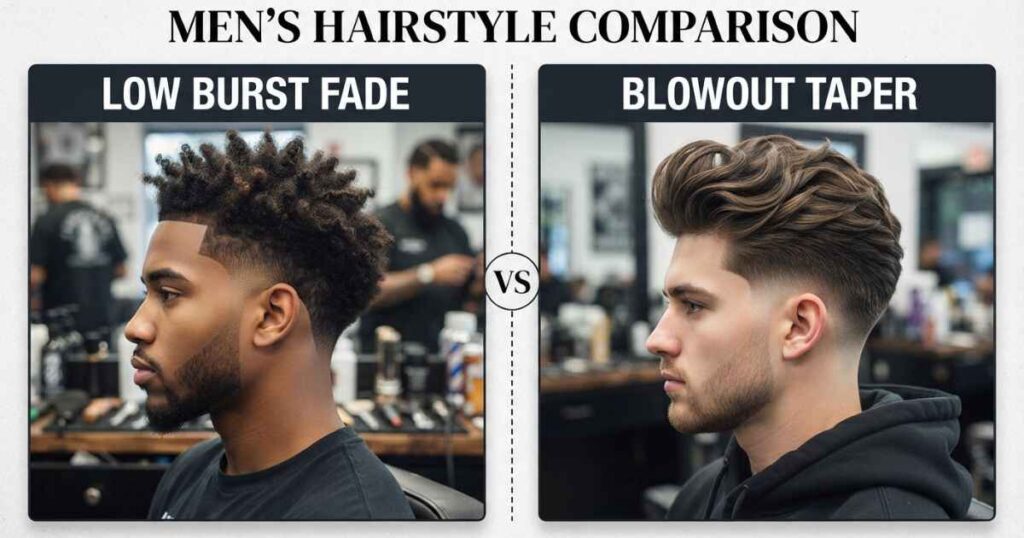
A blowout taper skips the tight fade entirely, letting curls or coils expand naturally on top while sides stay tapered. It’s bolder, higher maintenance, and leans into volume over precision.
The taper low burst fade, on the other hand, favors sharp lines and a controlled silhouette. Choose the blowout if you love natural texture, or the burst fade if you want structure.
Is It Okay For School, Work, Or Formal Settings?
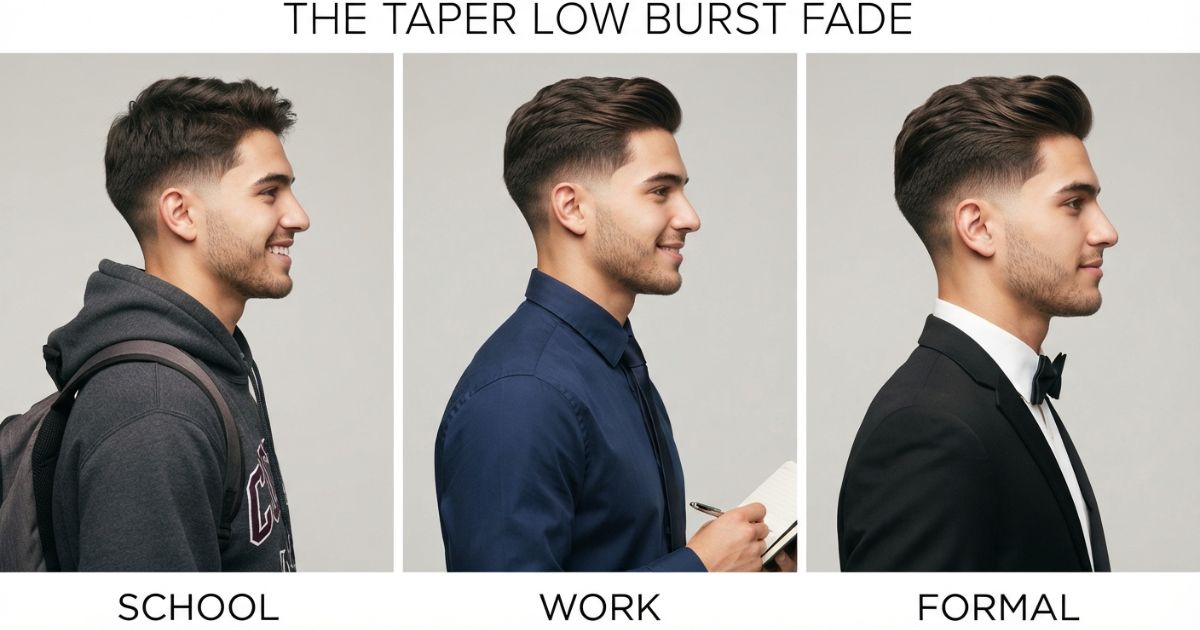
Yes, this cut reads as clean and professional in most settings. The low placement keeps things subtle, so it won’t draw unwanted attention in a classroom or office environment.
That said, keep the burst detail modest if your workplace has strict grooming policies. A slightly softer blend still looks sharp while staying safely within most dress code expectations.
Final Thoughts
This guide on the low taper burst fade covers everything you need before your next barber visit. It’s a cut that works for busy schedules and stays sharp without much fuss. Whether you have straight, wavy, or curly hair, the low taper burst fade adapts to fit you.
Bring your photos. Use clear words. Your barber will thank you for it. A low taper burst fade rewards good communication and regular touch-ups. Try it once, and you’ll likely stick with it for a long time.
FAQs
What is a low taper burst fade?
A low taper burst fade blends short sides near the neck with a curved fade around the ear. It’s subtle, clean, and works with almost any hair type.
How often should you get a low taper burst fade touched up?
Plan on visiting your barber every two to three weeks. This keeps the low taper burst fade looking sharp instead of growing out and losing its defined curve.
Does a low taper burst fade work for curly hair?
Yes, it works great on curly hair. Ask your barber for scissor-over-comb blending so your curls sit smoothly around the low taper burst fade’s edges.
Is a low taper burst fade good for work or school?
Absolutely. It’s subtle enough for most dress codes. The low taper burst fade reads as clean and professional without looking flashy or too dramatic.
What should you tell your barber for a low taper burst fade?
Say you want it low, blended around the ear, with a curved burst. Bring photos so your barber nails the low taper burst fade exactly right.

Serena Luna, the voice behind JournalHair. I share the latest hairstyle ideas, haircut trends, and easy hair inspiration to help you find your perfect look every day.
