

Growing out your fringe but still want sharp sides? A low taper fringe might be exactly what your barber ordered. This cut blends close, gradual fading near the neckline with a soft, full fringe up top. The result feels polished but never stiff. It works with straight hair, wavy hair, even thick, unruly hair that fights every other style you’ve tried.
What makes the low taper fringe so popular right now is balance. The fade stays subtle instead of shouting for attention. The fringe adds movement and frames your face without overwhelming it. You get structure where you need it and softness where you want it. Whether you’re headed to the office or out for coffee, this style adapts. It’s low-maintenance on busy mornings and sharp enough for anything else. That’s the appeal of a low taper fringe: it does the work so you don’t have to.
What Are Low Taper Fade Fringe Haircuts?
This cut pairs a gradual, low fade at the sides with a fuller fringe on top. Hair tapers close near the ears and neckline, then builds into soft length that falls across the forehead.
You’ll find this style suits most hair types and settings. It’s subtle enough for work, sharp enough for weekends. Maintenance stays reasonable, and barbers can adjust the fade height depending on how bold you want the contrast.
Low Taper Fade Fringe vs French Crop
Both cuts keep the top textured and the sides neat, but they diverge in fringe length. The French crop keeps hair short and forward-brushed. The low taper fringe lets more length fall over the brow.
Choose the crop if you want a tighter, low-fuss silhouette. Pick the fringe version if you like styling versatility. Thick or wavy hair often looks fuller with the fringe, while fine hair suits either cut easily.
Why Barbers Recommend a Low Taper Fade Fringe
Barbers like this cut because it flatters nearly every face shape while staying easy to maintain. The gradual fade avoids harsh lines, so regrowth looks less noticeable between appointments.
It also works with your natural texture instead of against it. Curly, wavy, or straight hair all take to this shape well. That flexibility, plus a clean finish, makes it a go-to recommendation.
1. Textured Low Taper Fade Fringe

Choppy layers add depth and movement, giving the fringe a lived-in look instead of a flat, combed finish. It reads casual but still deliberate, not thrown together.
Guys with medium to thick hair get the best texture here. A matte paste works wonders for definition. Trims every four to six weeks keep the shape from growing shaggy.
2. Messy Low Taper Fade Fringe
This version skips precision for a relaxed, tousled finish that looks good without much effort. Strands fall unevenly across the forehead, giving it a just-rolled-out-of-bed charm.
Wavy and curly textures pull this off naturally. A light sea salt spray boosts texture without weighing hair down. It’s forgiving, too, so bad hair days are basically nonexistent.
3. Curly Low Taper Fade Fringe
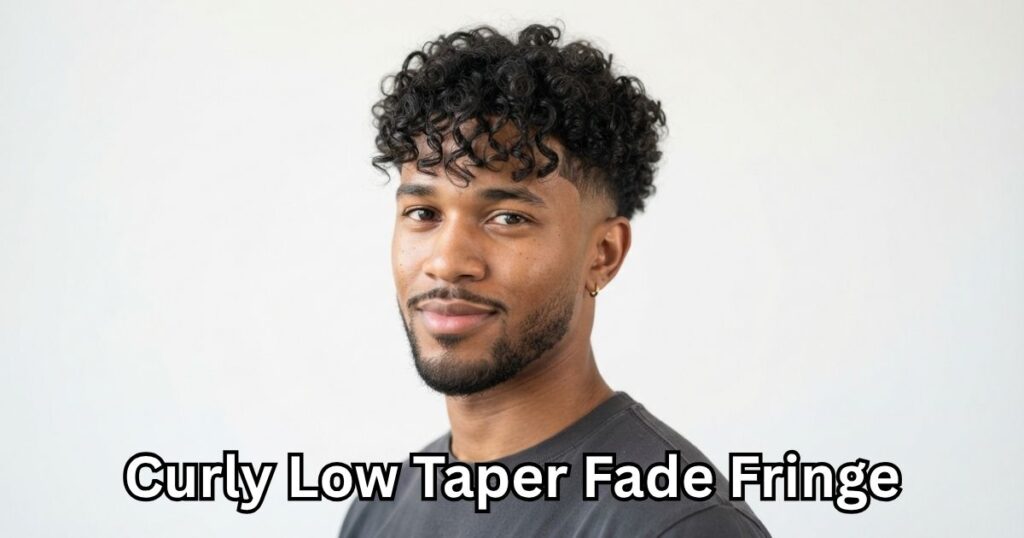
Natural curls get room to bounce on top while the fade keeps the sides controlled and tidy. The contrast between tight curls and clean edges makes this style pop.
Round or oval faces balance especially well with the added height. A curl cream tames frizz without flattening spring. Expect to detangle gently and trim curl clusters every few weeks.
4. Wavy Low Taper Fade Fringe
Waves add natural texture that most stylists don’t need to fake with product. The fringe drapes softly, catching light and movement as you walk.
This works beautifully on square or heart-shaped faces. A texturizing spray enhances the wave pattern without crunch. Air-drying usually gives the best result, so mornings stay quick and simple.
5. Korean Low Taper Fade Fringe

Inspired by K-pop styling, this look features a straight, blunt fringe with soft, rounded edges and a noticeably low fade. It leans youthful and precise at once.
Straight, fine hair suits this cut particularly well. A lightweight wax keeps strands smooth without shine overload. Regular trims are key, since blunt fringes grow out visibly fast.
6. Long Fringe Low Taper Fade
Length dominates here, with fringe hair reaching past the brow for a dramatic, face-framing effect. It’s a bolder take that still stays grounded by the tight fade below.
Oval and long face shapes handle this length best. A pomade with light hold keeps strands where you want them. Plan for more frequent styling since longer fringe moves more.
7. Choppy Low Taper Fade Fringe
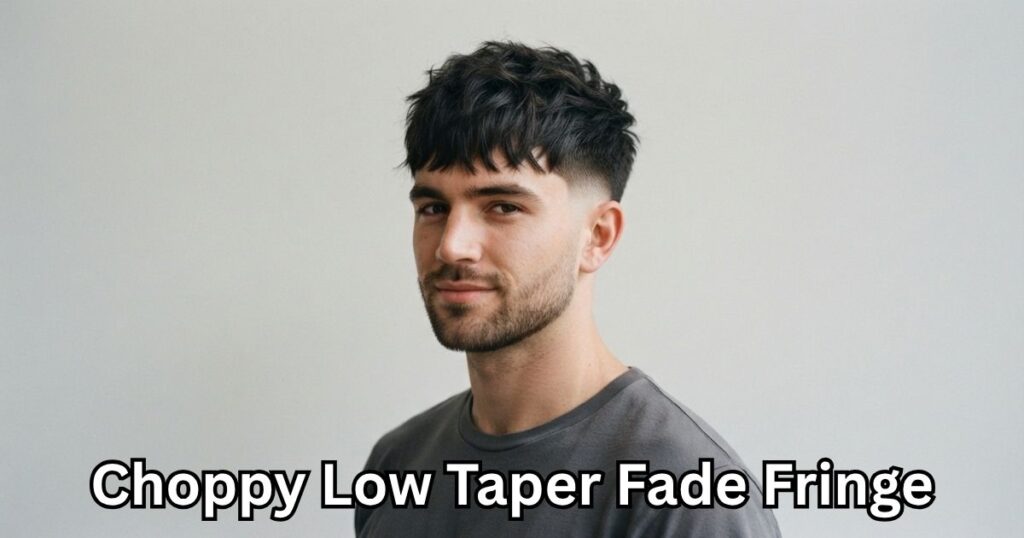
Jagged, uneven ends give this cut an edgy, unfinished quality that feels intentional rather than sloppy. Think skater style, not corporate boardroom.
Thick, coarse hair holds the choppy texture especially well. Texturizing powder or clay adds grip and separation. Because the layers are irregular, minor growing-out phases barely show.
8. Side-Swept Low Taper Fade Fringe
Instead of falling straight down, this fringe angles across the forehead toward one side, softening angular features. It suits guys who want polish without a rigid part.
Square and rectangular face shapes benefit most from the diagonal line. A cream with medium hold directs the sweep all day. Blow-drying at an angle locks the shape in place.
9. Thick Hair Low Taper Fringe

Thick strands give this cut serious volume up top, while the low fade trims away bulk at the sides. The result feels substantial but never heavy.
Round and square faces gain welcome contrast from the height. A lightweight styling cream prevents that puffy, overloaded look. Thinning shears during cuts help manage weight without sacrificing fullness.
10. Straight Hair Low Taper Fringe
Straight strands fall clean and uniform, giving this fringe a crisp, tailored edge that photographs well from any angle. It’s precise without feeling stiff.
Most face shapes adapt easily to this simple silhouette. A matte pomade adds subtle texture without unwanted shine. Since straight hair shows every stray strand, trims every three weeks keep lines sharp.
Choosing the Right Fringe Length
Fringe length changes the whole personality of this cut, from barely-there texture to full forehead coverage. Shorter lengths feel sportier, longer ones feel styled and deliberate.
Consider your forehead size and how much daily styling you’re willing to do. Shorter fringes suit active lifestyles. Longer ones need more product and patience, but they deliver bigger visual impact.
11. Feathered Low Taper Fade Fringe

Soft, wispy layers taper the fringe into delicate points instead of one solid block. It’s a gentler take that suits guys who want subtlety over drama.
Fine to medium hair textures feather most convincingly. A lightweight mousse adds lift without stiffness. This style needs frequent light trims to keep the feathered ends from losing shape.
12. Angular Fringe Low Taper Fade
Sharp, geometric lines replace the usual soft curve, creating a fringe that looks almost architectural. It’s a striking option for anyone bored of rounded shapes.
Oval and heart-shaped faces handle the angles particularly well. A strong-hold gel keeps those crisp lines from softening throughout the day. Precision cuts every month maintain the sharpness this style depends on.
13. Ivy-Inspired Low Taper Fringe

Borrowing from the classic Ivy League cut, this version keeps the fringe short, neat, and side-parted, with the fade adding a modern edge underneath.
Guys after a preppy, put-together look gravitate toward this style. A light pomade offers control without a wet-look shine. It’s low-maintenance day to day, needing just a comb and minimal product.
14. Textured Crop Fringe with Low Taper
This cut combines cropped length on top with roughed-up texture and a fringe that sits just above the brow. It’s compact, modern, and endlessly wearable.
Nearly every face shape suits this versatile silhouette. A matte clay creates definition without heaviness. Because the crop stays short, it grows out gracefully between six-week trims.
15. Modern Curtain Fringe with Low Taper

Curtain fringe parts down the middle and sweeps to both sides, framing the face like, well, curtains. Paired with a low fade, it feels current without trying too hard.
Square and oval faces get flattering symmetry from the center part. A texturizing spray or light wax defines the part lines. Regular trims keep both sides balanced as hair grows.
How to Ask Your Barber for a Low Taper Fade Fringe
Bring a photo if you can. Words like “low” and “fade” mean different things to different barbers, so visuals remove the guesswork and set clear expectations.
Specify fringe length and how much contrast you want between the fade and the top. Mention your hair type too. A good barber will adjust the technique based on texture, not just length.
Also Read: High Burst Fade Haircuts: 30 Modern Styles for Men in 2026
Best Face Shapes for a Low Taper Fade Fringe
This cut flatters a wide range of face shapes because the fringe adds height while the fade slims the sides. Few styles offer that dual benefit so easily.
| Face Shape | Why It Works |
| Oval | Nearly any fringe length suits balanced proportions |
| Round | Longer, side-swept fringe adds vertical line |
| Square | Angular or textured fringe softens strong jawlines |
| Heart | Side-swept styles balance a wider forehead |
Best Hair Types
Almost any hair type can wear this cut, though styling approach shifts depending on texture. Curls need different care than straight strands, even under the same haircut name.
| Hair Type | Recommended Approach |
| Straight | Blunt or side-swept fringe, matte pomade |
| Wavy | Textured, choppy fringe with light spray |
| Curly | Longer fringe for shrinkage, curl cream |
| Thick | Thinned layers to reduce bulk, lightweight cream |
Best Styling Products
The right product depends on the finish you want and how your hair naturally behaves. Matte products suit daytime looks, while creams add softness for curls and waves.
- Matte paste: builds texture without shine, great for choppy or textured fringes
- Sea salt spray: adds beachy grip to waves and fine hair
- Styling cream: smooths frizz and adds light hold for straight or curly types
- Light-hold gel: defines sharp, angular fringe lines without stiffness
Maintenance Tips
Keeping this cut sharp takes less effort than you’d think, but a few habits make a real difference between appointments.
- Trim every three to six weeks depending on fringe length
- Ask your barber to blend the fade so regrowth doesn’t create harsh lines
- Wash with a lightweight shampoo to avoid weighing down the fringe
- Use minimal heat styling to protect texture, especially on wavy or curly hair
Final Thoughts
A low taper fade fringe haircut works for almost anyone willing to try it. It’s sharp, low-maintenance, and easy to style. Whether you go curly, wavy, thick, or straight, the low taper fringe adapts to your hair type without much fuss.
That’s really the beauty of it. You get a clean fade, a soft fringe, and a look that fits work, weekends, and everything between. Show your barber a photo, mention your hair type, and let the low taper fringe do the rest. It’s simple, versatile, and honestly hard to get wrong.
FAQs
What is a low taper fringe?
A low taper fringe combines a subtle fade near your neckline with fuller hair on top that falls forward, framing your face nicely.
Does a low taper fringe suit curly hair?
Yes, curly hair works great with this cut. The fade keeps sides neat while curls on top get room to bounce and show natural texture.
How often should you trim a low taper fringe?
Most guys trim every three to six weeks. Shorter fringes need more frequent visits, while longer styles can stretch a bit longer between cuts.
What products work best for a low taper fringe?
Matte paste, styling cream, and light-hold gel all work well. Choose based on your hair type and whether you want texture or smooth control.
Can any face shape wear a low taper fringe?
Most face shapes suit this style. Oval, round, square, and heart shapes all look great with the right fringe length and styling approach.

Serena Luna, the voice behind JournalHair. I share the latest hairstyle ideas, haircut trends, and easy hair inspiration to help you find your perfect look every day.
